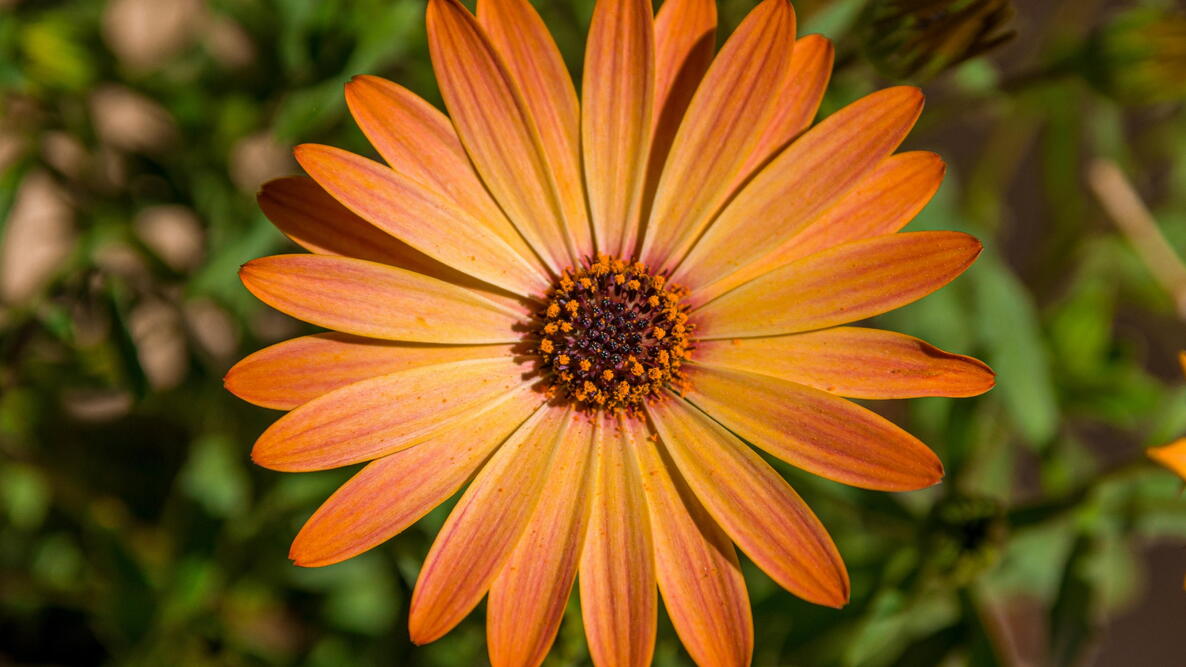
Caption
A close up of an orange African daisy. Credit: Kostas Dimopoulos, Pexels
Move over, ordinary daisies—African daisies are here to steal the spotlight. With their vivid, kaleidoscope-like colors and striking “blue-eyed” centers, these blooms look almost too exotic for the average backyard.
But here’s the secret: they’re surprisingly easy to grow. Ready to bring a little sunshine to your garden? Let’s dig in.
This South African native, discovered in the 19th century, includes about 70 species of annual, perennial, and shrublike plants that bring vibrant bursts of color and charm to any garden.
Although “osteos” (from their genus, Osteospermum) are in the same Asteraceae family as daisies and have flowers that look a lot like common daisies, these exotics are dramatically distinguished by their brilliant hues and shades.
The African daisy is easy to grow, given the proper conditions: full sun, adequate moisture, and moderate temperatures. It is also suitable for growing in the ground. Also known as Cape daisies and blue-eyed daisies, African daisies are tender herbaceous perennials hardy in Zones 9 to 11 and treated as annuals elsewhere.
This guide explores how to cultivate these sun-loving flowers, offering tips on soil, watering, and ongoing care to ensure brilliant blooms throughout most of the year.
What Does the African Daisy Look Like?

African daisies are striking flowers that are captivating with their bold colors and unique, daisy-like appearance.
They have bright, symmetrical blooms with petals that come in a spectrum of vibrant shades, including pink, purple, orange, yellow, and white. Some varieties have two-tone or multicolored petals.
At the center of each bloom is a distinct eye, often in contrasting shades of blue, yellow, or purple, creating a dramatic focal point.
They have two sets of petals: the outer ray florets and the central disc florets. The petals can vary in shape; some are smooth and rounded, while others are spoon-shaped, giving them a whimsical look.
The flowers are usually 2 to 4 inches in diameter, and the plants grow to a height of 1 to 3 feet.
These flowers grow atop green, slightly spiky foliage that forms a lush backdrop, enhancing their vivid blooms.
The versatile plants not only have a long blooming season, but they are also pretty low maintenance, are drought tolerant, and attract a variety of pollinators.
Planting

Planting The African Daisy
Most African daisies are hybrids, so seeds will not produce “true” plants. Seed-propagated ‘Passion Mix’ may be an exception. We recommend purchasing new plants or propagating from cuttings.
These flowers bring an amazing pop of color to any drab space, they establish quickly and bloom profusely from spring to frost, making them a perfect addition to any outdoor space.
Where to Plant
These flowers add a vibrant splash of color wherever you decide to locate them in your garden. As long as you choose a sunny spot with well-draining soil, they are quite versatile. Here are some suggestions about where you can plant them:
- Beds and borders: Use them as accent flowers for a mixed flower bed or as a colorful border.
- Containers and pots: African daisies grow really well in containers, so they make perfect plants for balconies, decks, or patios. Just make sure the pots have good drainage.
- Rock gardens: Due to their drought-tolerant nature, they’re great additions to rock gardens, adding a splash of color!
- Slopes and dry areas: Again, with them tolerating dry soil well, this is a great area for them.
The main place to avoid is anywhere shady or with water-logged soil.
When to Plant
Depending on the climate, they can be grown as annuals or perennials. In hardiness Zones 10 and 11, they can be grown as perennials, coming back every year. In cooler climates (Zones 9 and below), they’re typically grown as annuals and replanted each year.
If you’re planting cuttings or young plants, wait until the frost has passed and temperatures are consistently above 50°F.
If you’re planting from seed, start the seeds 6–8 weeks before the last expected frost date. Keep the soil moist until they germinate, and place them in an area with bright indirect light. Give them time to grow sturdy before you transplant them outdoors. You can then follow the advice above.
Note that you won’t be able to buy African daisy seeds for most hybrids, but you might have luck if you’re growing a pure species, like Osteospermum ecklonis.

How to Plant
In autumn, before the first frost, prepare a tray or containers with a damp, well-draining seed-starter mix. Take 4- to 6-inch cuttings with at least two leaf nodes on each, remove lower leaves and any flower buds, dip the cuttings into rooting hormone, and plant them, leaving 2 inches of cutting above the soil.
Cover with plastic and put them in a mild (60° to 68°F) spot out of direct sunlight. Allow 4 to 6 weeks for rooting, then transplant to potting mix amended with compost and/or aged manure in a well-draining container (at least 4 inches in diameter for a single plant).
The African daisy likes slightly acidic soil (pH 5.8 to 6.5). It should continue growing in a mild environment. Two weeks before moving African daisies outdoors, gradually harden them off. Purchased seedlings should be planted outdoors after the last frost.
When you’ve transplanted your flowers outside, water thoroughly to help the roots settle. Keep the soil moist but not soggy while your African daisies are adapting.
Growing
African Daisy Care Requirements
Osteospermum plants are amongst the easiest flowers to grow and care for, and they can produce vibrant, continuous blooms from early spring all the way through to the first frost. To get the most out of these daisy-like flowers, they will need:
Light: African daisies thrive in full sun (partial shade tends to reduce blooms).
Soil: They like slightly acidic soil (pH 5.8 to 6.5).
Water: Keep the soil evenly moist (about 1 inch per week) but avoid standing water. Soggy soil can encourage root rot.
Fertilizer: Apply a balanced fertilizer every 2 to 4 weeks during the growing period.
Temperature and Humidity: Moderate to cool night temperatures (below 55°F) promote flower buds.
Propagating
It’s much easier to grow these flowers from cuttings than growing them from seed. Most hybrids won’t grow true from seeds you collect from these plants.
Your best bet is to take cuttings using the following steps:
- Fill a seed tray with seed-starting mixture and dampen the soil slightly.
- Take a 4- to 6-inch cutting making sure your section has at least two node leaves.
- Remove any lower leaves and any buds.
- Dip the end of the cutting in rooting hormone and plant with 2 inches of the cutting above the soil.
- Cover with plastic and and place in a bright spot out of the way of direct sunlight.
- Allow 4 to 6 weeks for rooting and then transplant following the instructions above.
Pruning
Pruning your African daisies will consist of pinching, deadheading, and trimming.
Pinching the tips of your flower’s stem 2 or 3 times in the early season will promote full and bushy growth. Stop doing this when buds appear, as this will slow flowering.
Failure to flower can be due to lack of fertilizer (increase frequency); extreme heat or drought (provide plants with shade and/or water); and/or lack of sunlight (increase exposure).
Most varieties will need to be deadheaded to continue blooming. Some varieties now “bury their dead,” meaning new flowers quickly cover old ones.
To deadhead your flowers, cut down to the next set of leaves to encourage more growth and blooming. If you don’t deadhead, your flowers won’t bloom throughout the season.
As temperatures increase during late spring and early summer, flowering will diminish. Trim the plants at this point and continue to care for them, and plants will flower again as temperatures cool in the fall.
Overwintering
The African daisy seldom survives a transition indoors for overwintering without a greenhouse or sunroom. In frosty areas, you’ll need to overwinter cuttings under glass.
Follow the steps on propagating above to overwinter your plants if you live in an area that has frost in the winter.

Types
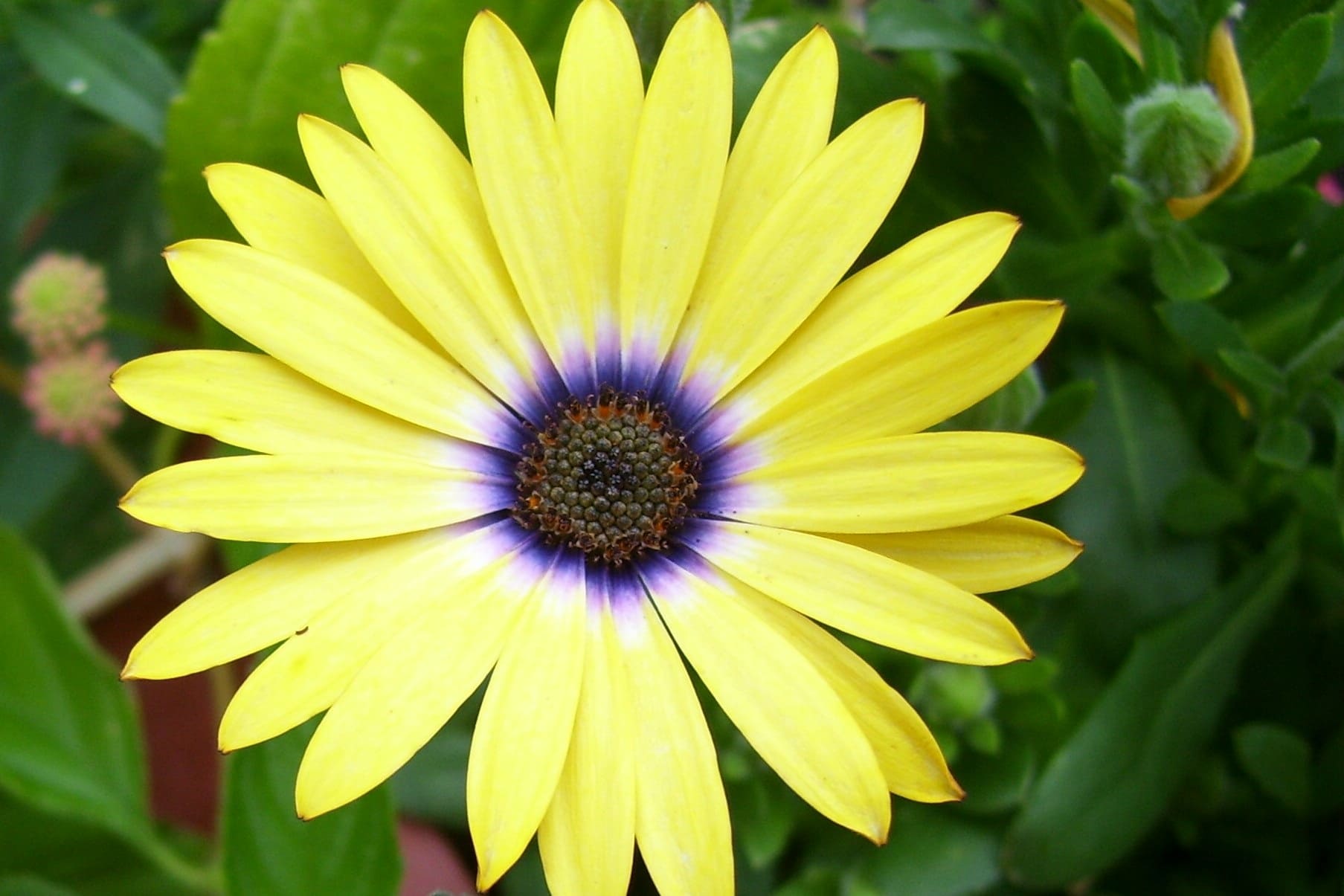
For years, many people thought that these flowers must have been dyed due to their vibrant colors. Gardeners loved these features in the original strains but became uninterested as they realized that the flowers closed up at night and on cloudy days. To recapture the public’s enthusiasm, breeders set about developing cultivars with blooms that stayed open much longer.
Newer varieties have also included other improvements, such as increased heat tolerance (the temperature at which buds will develop) and a reduced need for deadheading (now sometimes eliminated).
Here are some of the most popular varieties:
Osteospermum 4D series: uncommon double flowers, with quilled petals in the centers; flowers do not close; blooms all season long; 8 to 12 inches tall
O. ‘Astra Purple Spoon’: spoonlike petals; blooms from spring through fall; 8 to 18 inches tall
O. ‘Bright Lights Red’: reaches 8 to 12 inches tall
O. ‘Passion Mix’: pink, purple, rose, and white flowers; can bloom year-round, most profusely in spring; 6 to 18 inches tall
O. Soprano series: many color options; blooms from spring through fall; 8 to 14 inches tall
O. Symphony series: at least five colors—cream, lemon, melon, orange, and peach; pinching and deadheading not necessary; 8 to 14 inches tall

More Like This


Comments