Image Credit:
rlat/Getty Images
Botanical Name
Thuja occidentalis
Grown as
Toxicity
Sun Exposure
Water Needs
Height
Spread
Resilience
Plant Type
Types
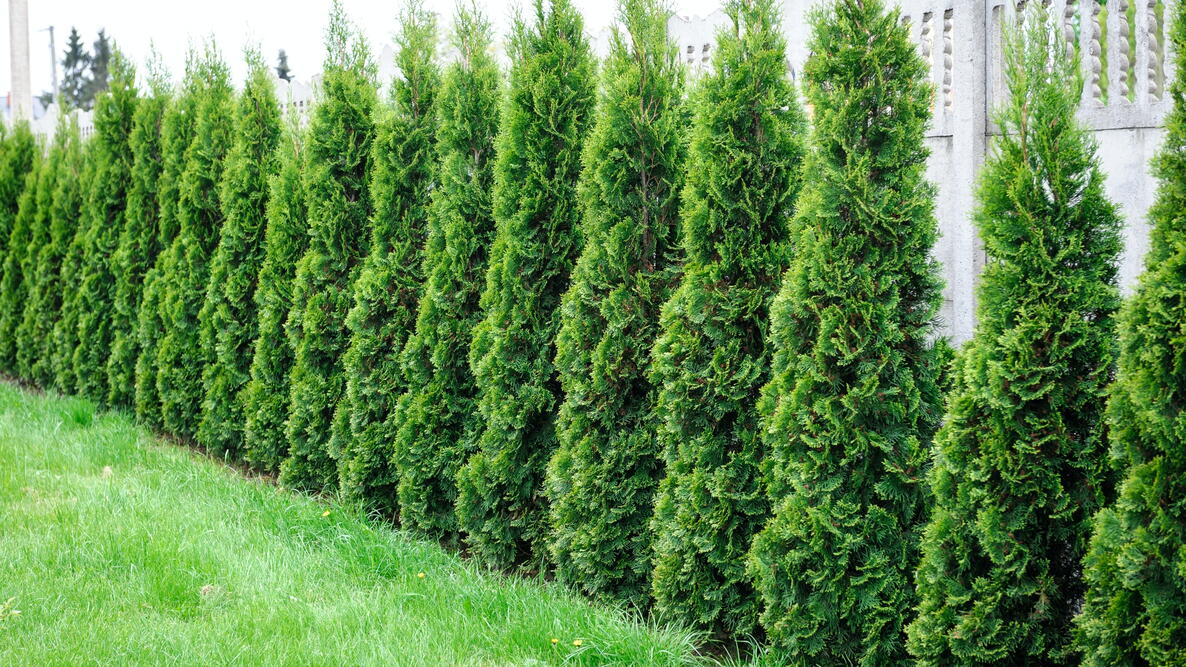
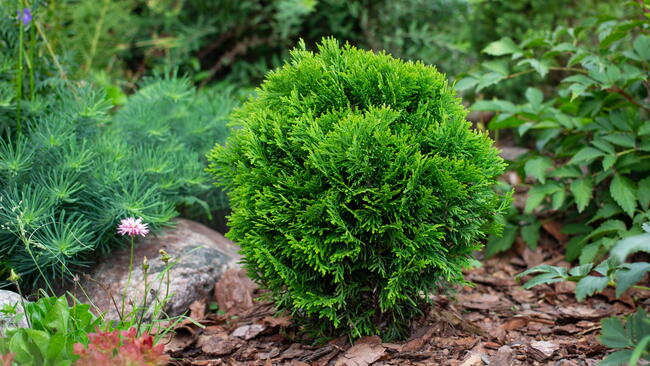
The American arborvitae is a tall, dense, native evergreen that commonly reaches heights of 40 to 60-feet. However, there are plenty of arborvitae cultivars to choose from — some of which come in more compact sizes for container use or small spaces!
- ‘Brandon’ is a conical arborvitae that grows to about 15-feet tall, tolerates a range of soil types, and has mildly fragrant needles.
- ‘Emerald Green’ is a favorite for hedges thanks to its columnar shape and tendency to keep under 15-feet in height.
- ‘Hetz Midget’ is a hardy dwarf cultivar that reaches 3 to 4-feet tall and is ideal for containers and foundation plantings.

More Like This

We had the most beautiful fence of Arborvitae at our home in Wilbraham, Ma. Until one year the deer got very hungry and ate it all ! We did try again...but that fence came down, too ! The deer love Arborvitae !! And, I guess, we didn't mind all that much...they are such beautiful creatures. My husband always said..."wait till spring, you wo'nt love them so much then !" But we always did ! We live in Florida now and will always miss NE and the changing seasons. Happy Thanksgiving !
Probably everyone with a garden has some arborvitae already but if not, get some! Plan on 5 to 7 years for maximum height and width. Rarely will you need to prune, if at all. Once established, they are nearly care free. I haven't fertilized them at all but reading the article, I suppose I could. I give a nice, long drink with a slow running hose near the base of each tree 2 or 3 times a season if it's on the dry side, maybe 5 minutes each. Spiders and spider mites, as mentioned, do seem to like making them home. I leave the spiders alone, they are harmless. Had spider mites twice, but not this year. The solution is very easy, just spray down each tree a few times per summer. They are classic along a fence or a single tree in a corner, etc. I do clean out debris from underneath in spring and fall so the trunk isn't smothered - leaf blower makes it easy. As with anything, tend carefully the first year after planting. Once established, they're usually good to go.
📣The Gardening Club Just Got Better! 3 Deliveries, 10% Store Discount, and more!

Comments