Watering
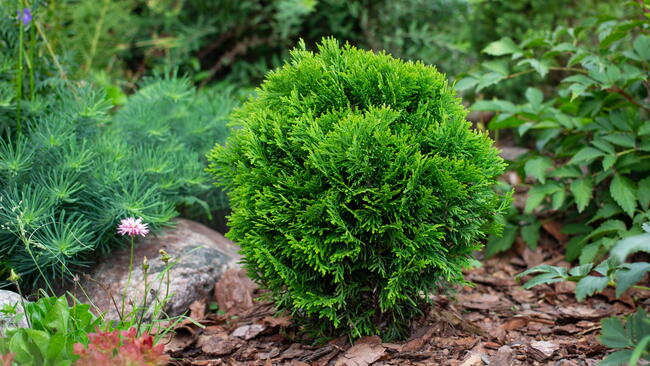
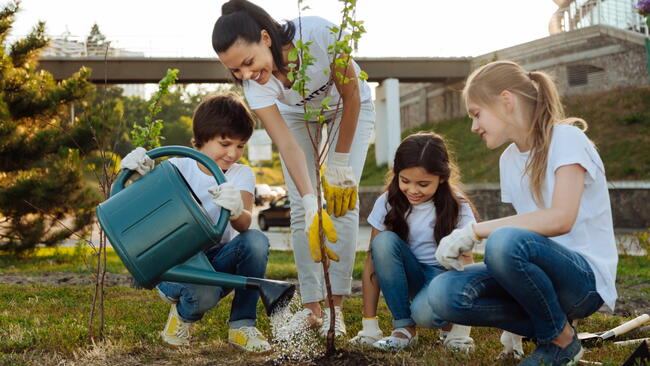
Arborvitae can turn brown if they don’t get enough water. To avoid this, water new plantings regularly and keep the soil consistently moist during the plant’s first growing season — arborvitae may need to be watered every 2 to 3 days in their first summer. Once plants are established, you’ll only need to water during periods of prolonged drought.
As with other containerized plants, potted arborvitae will need more frequent watering than plants in the garden. I check mine every day or two in summer and water when the top 2-inches of soil feels dry to the touch.
Fertilizing
Some plants crave lots of fertilizer, but arborvitae tend to be relatively undemanding in this regard. I simply side-dress my plants with compost once a year in spring. You can also feed them annually with a balanced organic or evergreen-specific fertilizer if that’s easier for you.
Pruning or Maintenance
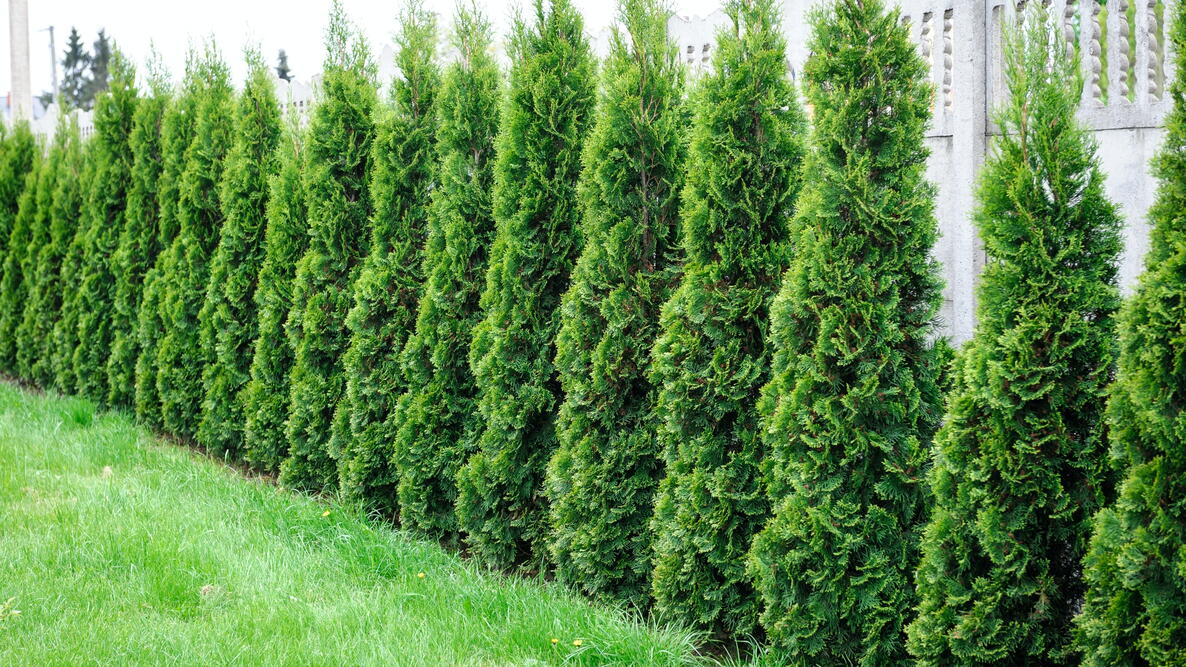
Newly planted arborvitae can be supported with stakes if needed to reduce the risk of wind damage. As far as pruning goes, arborvitae don’t require much of it for healthy growth; however, you’ll need to prune your plants more aggressively if you’re using them for topiaries or formal hedge rows.
When pruning, use hedge shears that are good and sharp and prune in early spring before new growth emerges. As you work, move from the bottom of the plant upwards and shorten the branches that need it with a good, crisp cut.
Dead, damaged, or diseased branches can be pruned away at any time of the year.
Seasonal Care
Arborvitae plants can be sensitive to cold and salt exposure — especially during their first year or two of growth. Wrapping plants with burlap during their first few winters can help avoid browning branches and prevent branch breaks from heavy snowloads too. If your arborvitae are planted near roadways that are often treated with road salt, you may want to add a burlap barrier or other windbreak to reduce salt exposure as well.
Adding mulch around the base of arborvitae can help prevent cold damage, but potted plants will need more winter protection. For these plants, either move pots into a protected area, such as a garage, or insulate the plant pots by burying them in the soil or encasing them in blankets, bubblewrap, or mulch.
If your arborvitae are exposed to a lot of road salt in winter, water the plants deeply in spring to help the excess salt wash away.


Comments