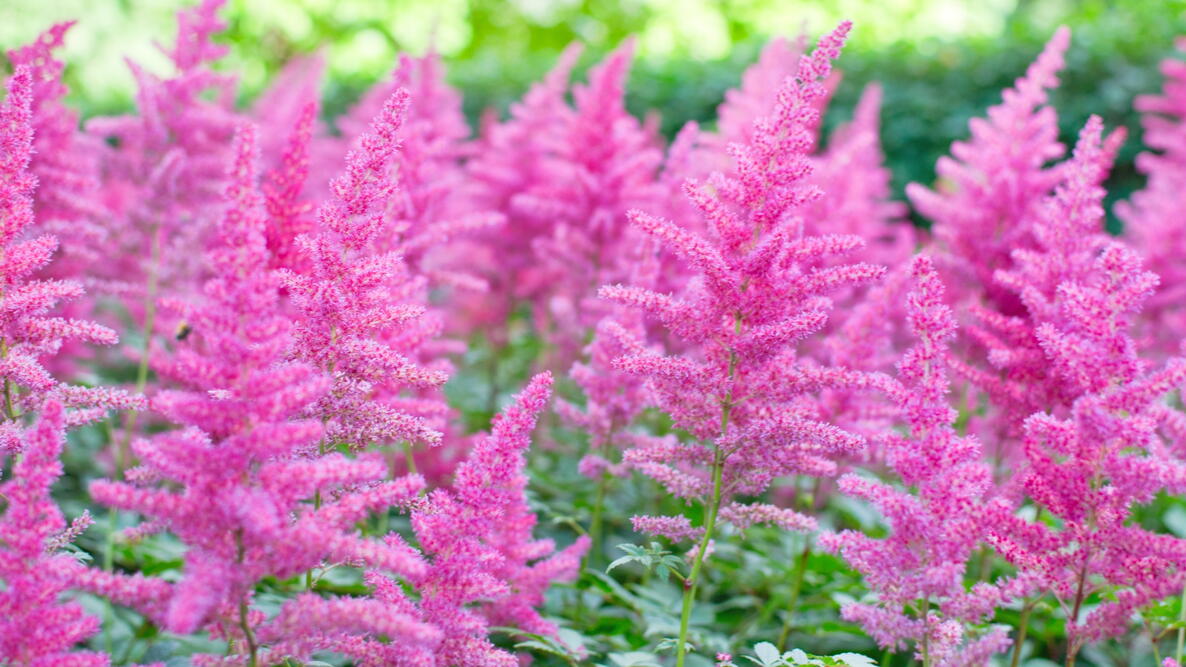
Caption
Astilbe plant with pink feathery plumes of flowers growing in the garden
Planting
When to Plant Astilbe
Most growers cultivate astilbe from nursery starts, which are best planted in spring or fall. Growing these plants from seed can be tricky, but you can also produce new astilbe from dividing established plants in early spring.

Photo: znmysteryPhoto
Where to Plant Astilbe
Astilbes prefer light to moderate shade, while deep shade can reduce flowering and full sun may burn the plant’s tender leaves. Although astilbes love moist, damp soil, they still need proper drainage and should not be grown in areas where water puddles for long periods of time. For optimal growth, amend the soil with compost or aged manure before planting astilbes to boost soil nutrient levels and improve drainage too.
If desired, you can also grow astilbes in well-draining pots that are at least 16 inches wide, or plant them in garden borders or use them as a flowering ground cover.
How to Plant Astilbe
Plant nursery starts about 1 to 3 feet apart, depending on the variety. To plant, loosen the soil to about 10 to 12 inches deep with your shovel, mix in a touch of compost, set the plant’s crown (where the roots and stems connect) just below the soil line, backfill the hole with soil, and water well.
If you’re growing bare-root plants instead, dig a hole that’s twice as wide as the plants’ roots and 4 to 6 inches deep. Place the plant so the roots are fanned out slightly and pointing downwards with the crown located 1 to 2 inches below the soil line, then cover the roots with soil, press firmly, and water your new astilbes in.
Types
Popular astilbe hybrids include …
- ‘Fanal’ boasts dark green foliage, dark crimson flowers, and grows to about 1½ feet tall.
- ‘Irrlicht’ enchants with dark green foliage, elegant white flowers, and a maximum height of up to 2 feet tall.
- ‘Visions’ is a particularly drought-tolerant option with strong stems, green leaves, and thick raspberry-hued flowers.

Comments

Beautiful as they are, astilbe can be finicky. They thrive in light shade, with moist conditions. Some even recommend waterfront or "bog" conditions. They are heavy feeders, which means they like highly organic/composted soil, and appreciate high-nitrogen fertilizer in the fall; this helps bud formation which occurs in the fall. Another factor may be soil pH: Astibles like it at 5.5 to 6.8, and that's relatively acidic.
Hope this helps!
The tree may shade your plants too much and the tree roots may compete for the moisture in the soil. We suggest that you transplant the astilbe to a different spot. Make sure that the soil drains well and that it is not compacted.
- « Previous
- 1
- 2
- …
- 10
- Next »

Yes, Mary Louise: that is how they spread, so they seedlings are most likely your astilbe. There are different varieties, and the speed with which they spread varies. It sounds like you have the botanical variety pumila—a dwarf plant that spreads more quickly than others. It has a has a foliage mound of about 6-inch-tall dark green leaves and lilac-pinkish flowers in early to mid-summer.
Even if you have a Chinese variety, the slower spreading, it is the spreading method.