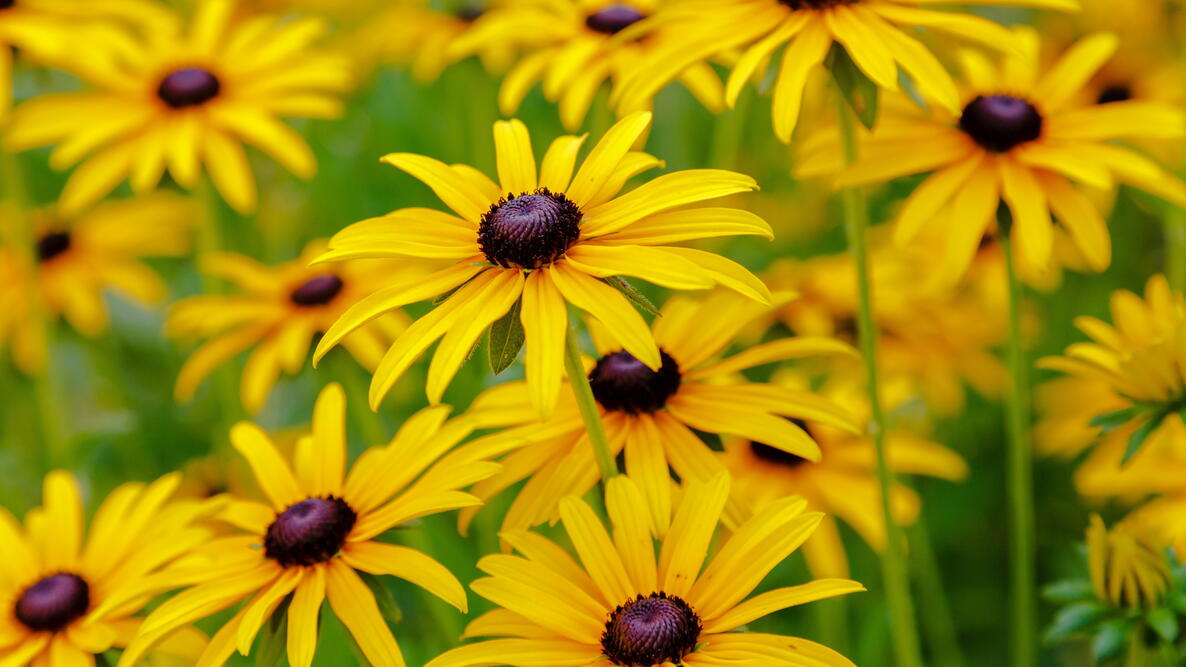
Caption
Black-eyed Susans (Rudbeckia)
Beloved by pollinators, black-eyed Susans (Rudbeckia hirta) generally bloom from June to September (or longer!), often blanketing open fields with their golden-yellow beauty.
Learn how to care for this native wildflower, when to cut it back, and how to save seeds for replanting.
The “black eye” of black-eyed Susans refers to the dark brown center of their daisy-like flower heads. A member of the aster family, Asteraceae, and native to eastern North America, they have become naturalized in Zones 3 to 9. While some species of black-eyed Susans have additional names, such as Gloriosa daisies, they all belong to the Rudbeckia genus. The popular Rudbeckia hirta is treated as a short-lived perennial.

Black-eyed Susans grow 1 to 3 feet tall or more, with leaves 6 inches long, stalks over 8 inches long, and flowers 2 to 3 inches in diameter. In the garden, they do well in landscapes, borders, butterfly gardens, or containers. They are also outstanding cut flowers.
Butterflies, bees, and other insects are attracted to the flowers for the nectar. As they drink the nectar, they move pollen from one plant to another, causing it to grow seeds that can move about easily with the wind. “The Silvery Checkerspot butterfly uses Rudbeckia species as a host plant,” explains the University of Maryland. “Seed is consumed by songbirds, especially goldfinches.”
Planting
When to Plant Black-eyed Susan
- Set new plants out in the spring after all danger has passed, or plant in the fall. The optimal soil temperature for germination is 70° to 75°F. Do not plant in the hot summer.
- If planting by seed, sow seeds about 6 weeks before the average last frost.
Where to Plant Black-eyed Susan
The black-eyed Susan thrives in full sunshine. It tolerates partial sun, but it will not bloom as reliably. It’s best if the soil is fertile (not poor), though this plant can tolerate tough conditions.
How to Plant Black-eyed Susan
- Plants should be set 18 inches apart. Remove weeds and loosen the soil. Make a hole a few inches wider than the plant and set it in the hole; backfill it with soil, tamp gently, and water it well.
- If planting from seed indoors, sprinkle seeds on top of the regular seed starting mix. Do not cover the seeds, as they need light to germinate. Plant your seedlings outdoors after any danger of frost has passed. Since black-eyed Susans can spread between 12 and 18 inches, plant seeds closer to prevent lots of spreading, or plant further apart to make a nice border and to prevent the spread of disease.
- Black-eyed Susan spreads by self-seeding (after the first year) and underground rhizomes; this can result in it overtaking other nearby flowers.

Types
As well as the traditional black-eyed Susans, which grow 1 to 3 feet tall (or more), there are dwarf varieties that reach no more than 1 foot (perfect for containers). Varieties can be annual, biennial, or perennial.
The popular roadside Rudbeckia hirta with showy yellow flowers is a biennial in the wild but is treated as a short-lived perennial in the garden. It self-seeds abundantly, naturalizing easily. If you sow seeds 6 weeks before the last frost date, you’ll see flowers in the first year, and they may return a few more seasons (but you can’t always count on it). Some of its many hybrids include:
- ‘Autumn Colors’: yellow, orange, red, and brown flowers; 18- to 24-inch stems
- ‘Becky Mixed’: lemon-yellow, golden-yellow, dark red, and reddish-brown flowers; 10- to 16-inch stems
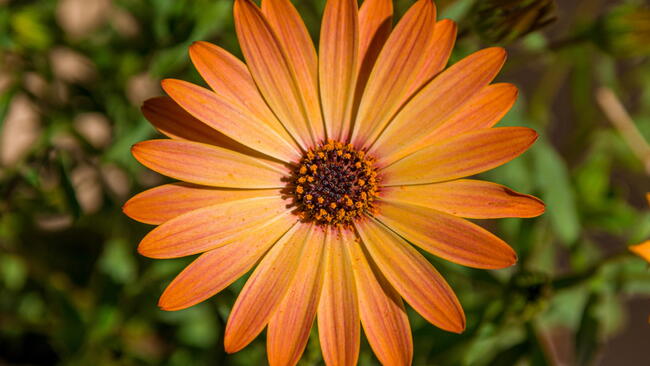
- ‘Prairie Sun’: All-America Selections winner; 4- to 6-inch bright orange flowers that fade to yellow at the tips; 28- to 33-inch stems. See AAS winning Rudbeckia varieties!
- ‘Sonora’: large golden flowers with big, chocolate-brown centers; 12- to 16-inch stems
- ‘Toto Gold’: dwarf type; classic yellow flowers with black centers; 12- to 16-inch stems; ideal for containers
There are also true, long-lasting perennials that will keep coming back and blooming year after year.
- ‘Goldsturm’ black-eyed Susans (R. fulgida ‘Goldsturm’), known for their longevity and a regular plant in late summer and fall gardens
- ‘Sweet’ black-eyed Susans (R. subtomentosa), bearing taller flowers and ideal for a more naturalized garden or meadow
- ’Gloriosa Daisy’ (R. hirta ‘Gloriosa’), 12 to 36 inches tall and tolerates partial shade; giant, bi-color double flowers.
Finally, some Rudbeckia varieties are annuals, such as the Clasping Sunflower (R. amplexicaulis), a low-growing plant for the front of a border garden.

More Like This


We would normally recommend that any cold hardy perennial be pulled from the container in the fall and planted in the ground before it freezes. Some gardeners put the entire container in the ground for the winter, but the container must be heeled into the ground to protect the roots which tend to be less cold hardy. Water well and cover with lots of mulch until spring.
Plant Black-eyed Susans when the soil temperature has reached 70 degrees F for best seed germination. In many parts of North America, the planting period is March to May. The flower will flower June to September. Germination takes 7 to 30 days. In general, Black-eyed Susans mix very well with most perennials, shrubs, and plants. Note that they can be territorial in that they tend to squash out other flowers growing near them so keep them in control and don't crowd them.
In Georgia, sow black-eyed susans by seed in loosely covered soil that is fertile (so add organic matter if needed). They are sun lovers so plant them in a place that receives full sun. After the first season, they can reseed themselves. These plants are susceptible to powdery mildew fungi, so begin an organic antifungal program if the lower leaves turn brown and twisted. Make sure you don't crowd them as they need some air circulation. Keep the soil moist and water at the ground level not on their leaves and petals. Check with your local garden center for sprays that are approved in your area.
Divide black-eyed susans in the early fall while the soil is still warm but the nights are getting cool. Make sure the transplant area is nicely prepped with compost and that it will drain water well.
Yes, you can cut the black-eyed susans, even down to the ground when the foliage reaches about a foot or two in height. They regrow quickly and it makes for a more compact plant that's at a more reasonable height.
- « Previous
- 1
- 2
- …
- 10
- Next »

Comments