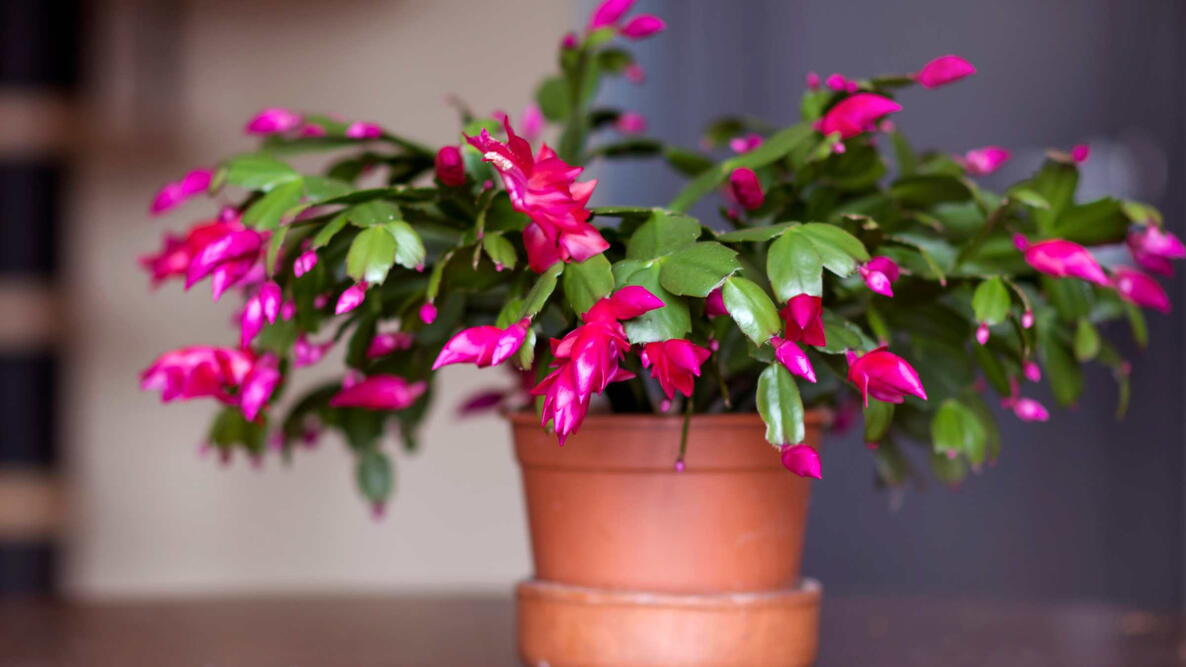
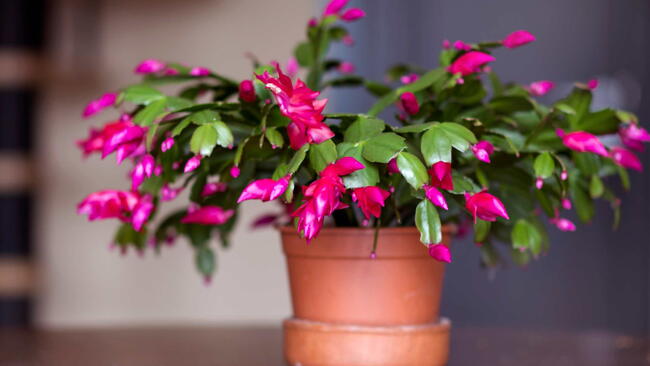
The Christmas cactus brings cheerful winter blooms just when we need them most. With its dazzling pink and lilac flowers, this tropical beauty thrives indoors during the chill of winter.
Whether you’re looking to keep yours blooming bright or share its charm by propagating new plants, this festive succulent is a gift that keeps on giving!
About Christmas Cacti
The Christmas cactus (Schlumbergera x buckleyi) is a popular houseplant that blooms indoors in the winter, so it’s popular at holiday time and makes a great gift, too. Unlike regular cacti, however, this is not a plant from a dry, hot desert location. Instead, this is a succulent native to tropical rainforests, where they grow on tree branches and soak up the high humidity, dappled sunlight, and warm temperatures.
The bottom line: Don’t treat a Christmas cactus like a run-of-the-mill cactus! It’s important to water these cacti regularly, but also to be cautious of keeping them too wet. (See detailed care instructions below.)
Holiday Cactus Types
There are three main types of “holiday” cacti out there: the Easter cactus (S. gaertneri), the Thanksgiving cactus (S. truncata), and the Christmas cactus (S. x buckleyi). For simplicity’s sake, we refer to all three species as “Christmas cactus” on this page since the care is the same. See our article on the different types of holiday cacti and how to tell them apart.

Growing
How to Care for Christmas Cacti
- Prune plants in late spring to encourage branching and more flowers. Simply cut off a few sections of each stem; the plant will branch from the wound.
- If you wish, place the cut pieces in a lightly moist potting soil—they root easily after a few weeks and make for excellent Christmas presents!

How to Get Your Christmas Cactus to Bloom
The blooms of Christmas cacti and its relatives are triggered by the cooler temperatures and longer fall nights. The three main types of holiday cacti generally bloom according to this schedule:
- Thanksgiving cacti are the earliest and longest bloomers, typically producing flowers from late fall through midwinter.
- Christmas cacti tend to bloom from early to midwinter.
- Easter cacti bloom from late winter to mid-spring.
If your cactus is NOT blooming, it may be receiving too much light or living in conditions where the temperatures are too high. Here are some tips to encourage yours to produce flowers!
- To trigger blooming, nights need to be at least 14 hours long and days between 8 and 10 hours for at least 6 weeks. If you have strong indoor lighting that’s on at night, you may need to cover your cactus or move it to an area that’s exposed to the natural light cycle.
- Flower buds form best when the plant is kept in temperatures between 50° and 60°F (10° and 15°C).
- You can kickstart the budding process by exposing the plant to temperatures of about 45°F (7°C) for several nights in a row.
- Make sure that you are consistent with watering while the plant is in flower. If the plant dries out too much, it may drop its buds.
- If the cactus sheds its buds one winter, don’t worry—it should bloom the following year!
It's especially important to water well while the plant is flowering.
Types
There are three main types of “holiday cacti” available:
- Thanksgiving cacti (Schlumbergera truncata) bloom from late fall to midwinter and are often mislabeled as Christmas cacti.
- Christmas cacti (S. x buckleyi) bloom from early to midwinter.
- Easter cacti (S. gaertneri) bloom from later winter to mid-spring.


More Like This

It is natural for there to be some variance in the shades of green from plant to plant and even on the same plant. In many cases -- including yours, I suspect -- you can tweak your plant's color by making slight changes in its sun exposure. Christmas cactus likes bright light, but can be bleached by too much direct sun. As a first step, I'd try lessening the sunlight it is exposed to and see if that gets it headed toward the darker green you are hoping for.

Shriveled Christmas cactus leaves commonly means overwatering. If the soil is wet, you might consider this as a possible cause. Overwatering causes the roots to rot, so that the plant can not take in enough water. To prevent, avoid excessive watering and make sure that your pot has drainage holes. Do not let the plant sit in water, such as a saucer filled with the water overflow. If you suspect that your plant has been overwatered, allow the soil to dry out before resuming normal watering.
Underwatering, of which dry soil is an indication, can also bring on these symptoms. Be sure to follow the watering guidelines in the article above to make sure that the plant is getting the proper amount of water.
Sometimes if one waters too lightly, the surface of the soil will harden, making it hard for water to penetrate. To remedy, soak the pot in a pan of water for about 30 or so minutes, then drain, to loosen up that layer. Then resume normal watering. If things still don't improve, repotting with fresh soil might be necessary.
Salt accumulation in the soil, from fertilizer or hard or soft water, can also cause shriveling leaves due to root damage. Check for salt crusts on the surface and edges of the soil surface. To remedy, water the plant thoroughly so that it drains through the drainage holes. Let it sit for about an hour and then repeat. This will help to flush out the salts.
Sometimes a plant that is rootbound might also result in wilting leaves. In this case, repot into a slightly larger pot.
Hope this helps!
Hi Mary,
There are a few reasons why your Christmas cactus leaves have turned red. Excessive light, typically when it receives too much direct sunlight, can turn the leaves of a Christmas cactus a reddish color. It does best when placed in a location that receives bright, indirect light.
Other reasons for red leaves are a lack of water, magnesium deficiency, or your plant is too root bound. Christmas cactus like to be root bound, but should be repotted every 3 or 4 years. A sign that it needs to be repotted is if roots grow out of the drainage holes at the bottom of your container.
- « Previous
- 1
- 2
- …
- 10
- Next »

Comments