Planting
Where to Plant Crocuses
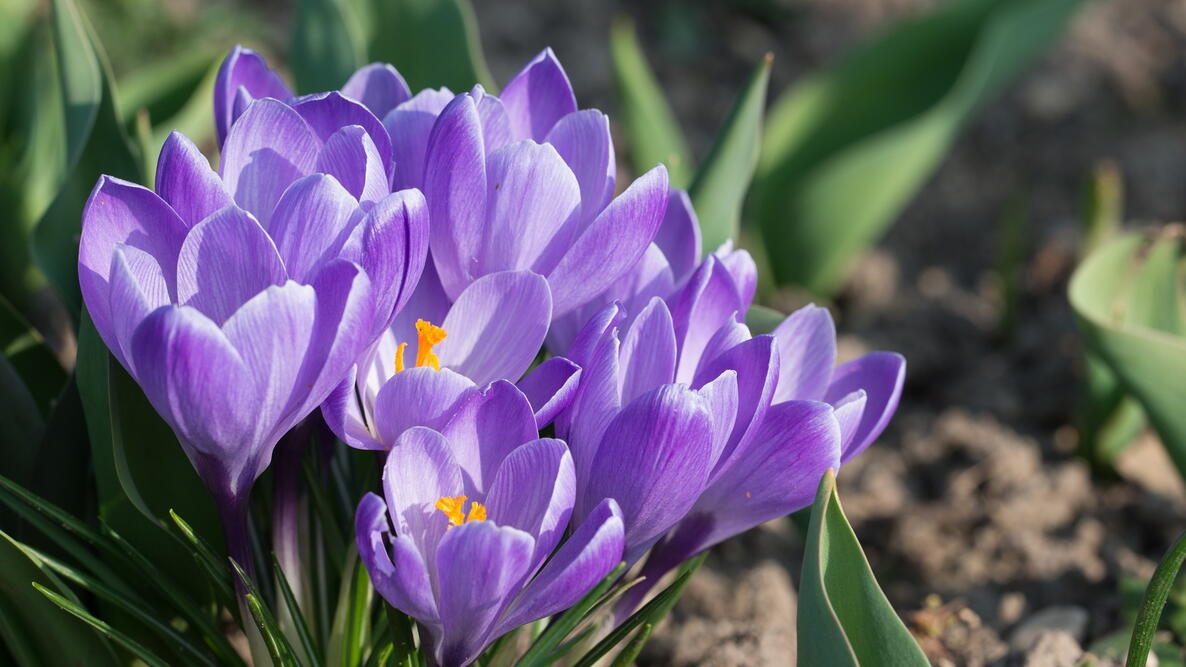
Crocuses do best in a spot that gets full sun (6+ hours of direct sunlight), but will grow in partial sun as well. Choose a planting site where there is well-draining soil; the corms will rot in soggy, compacted ground. Before planting, work in organic matter such as compost to a depth of at least 10 inches.
When to Plant Crocuses
- Crocuses need to experience an extended period of cold weather in order to bloom, so plant them in the fall to get spring blooms.
- Before the ground freezes in the fall, crocus corms can be planted most anywhere, except in the dense shade on the north side of buildings or under thickets.
- Ideally, plant crocus corms 6 to 8 weeks before a hard frost is expected in the fall and when the soil temperature is below 60°F (16°C). This is usually during September or October in the northern U.S. and Canada, and October or November in the southern United States.
How to Plant Crocuses
- Plant crocus corms 3 to 4 inches deep (with the pointy end up). After planting, water well.
- Plant bulbs in groups or clusters rather than spacing them in a single line along a walkway or border. Single flowers get lost in the landscape. Plant a few inches apart, and plant in groups of 10 or more.
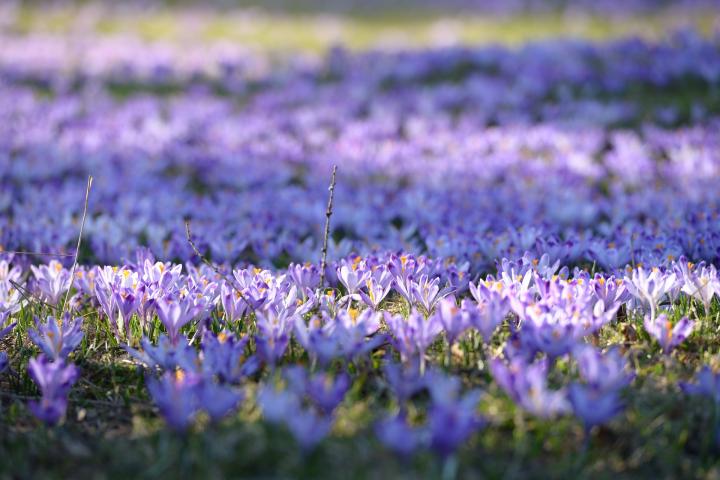
- Consider planting crocuses in lawns and meadows where they can form carpets, or mass them in the front of flower beds along the edge.
- Plant taller spring-flowering bulbs and shrubs behind the early bulbs for color contrast.
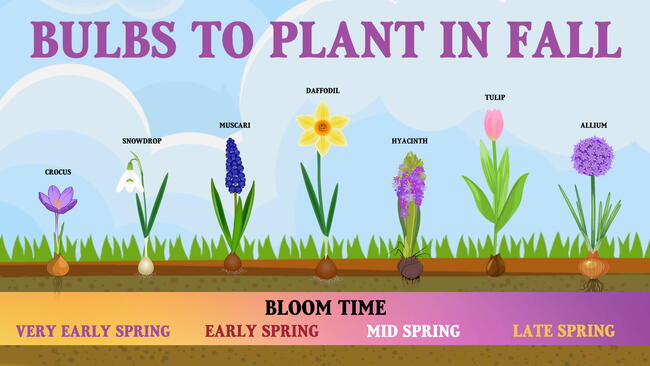
→ Learn more about planting fall bulbs.
Types
- ‘Bowles White’ produces white flowers with deep golden yellow throats in early spring. It grows 2 to 3 inches tall.
- ’Flower Record’ has single pale violet flowers in spring to early summer. It grows 4 to 5 inches tall.
- ’Pickwick’ is a striped crocus with alternating pale and dark lilac and dark purple bases. It’s 4 to 5 inches tall and blooms in spring to early summer.
- ’Tricolor Crocus’ is a beauty. Each narrow flower has three distinct bands of lilac, white, and golden yellow. It grows 3 inches tall and blooms in late winter and early spring.
- ’Purpureus Grandiflorus’ has an abundance violet flowers with purple bases. It grows 4 to 5 inches tall and blooms spring to early summer.


More Like This
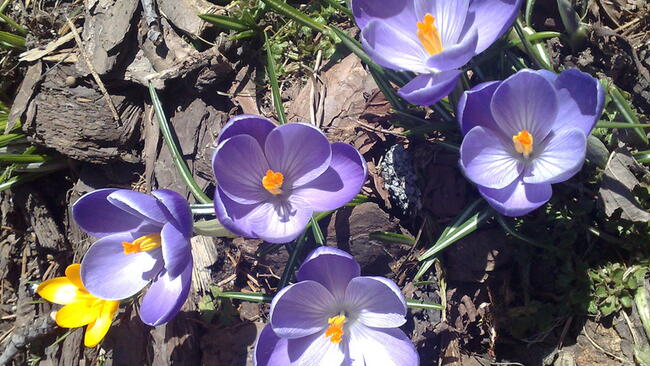


Do/did you fertilize the area they were/are planted in? High nitrogen fertilizer encourages leaf production at the expense of all else. These bulbs need 6 to 8 hours of sunlight. Did/do they get it? Is the area dry? Bulbs need moisture (although not pools of it); failure to thrive could be due to poor drainage. There may be other factors but these are relatively common ones.
Yes, you can plant crocuses in a grassy lawn for a more natural look. Crocuses are an early bloomer, and since the foliage only lasts a few weeks after the flowers fade, mowing shouldn't be an issue.
As for your second question: Yes, you can grow other flowers near crocuses without problems. However, you may need to refresh the soil in the pots in the fall to remove any dead material and prevent overcrowding.
The best time to divide or thin crocuses is after their foliage has died back naturally. At this point in time, they have finished storing energy for next year's bloom.
Tip: Dig up the crocuses before you remove any of their foliage, as it will be easier to see where—and how many—there are. Cut off the foliage before replanting.
- « Previous
- 1
- 2
- …
- 10
- Next »

Comments