Planting
When to Plant Cucumbers
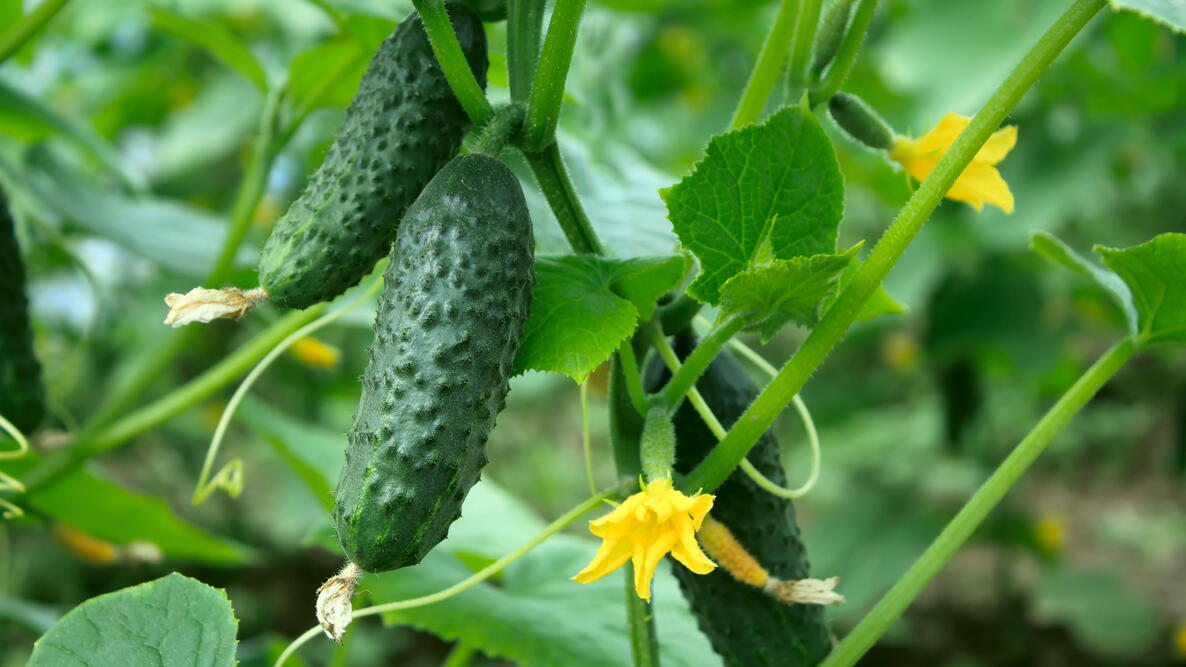
Cucumbers are heat-loving crops that don’t handle cold weather well, and generally don’t like to be transplanted. That’s why it’s best to directly sow seeds outdoors no earlier than 2 weeks after the last frost date of spring, or when soil temperatures are around 70ºF (21ºC). Covering the soil with black plastic mulch a few weeks before planting can speed planting times along if needed.
Although cucumbers grow relatively quickly, some gardeners may choose to plant cucumber seeds indoors for an earlier crop. If you decide to go this route, start the seeds about 3 weeks before you intend to transplant them and only transplant the seedlings outside when nighttime temperatures stay consistently above 50ºF and the seedlings have been properly hardened off.
If you want to enjoy even more cucumbers, you can make successive plantings of seeds every 2 weeks through mid-summer.
Where to Plant Cucumbers
Cucumbers like warmth and lots of light, so select a planting site that gets at least 6 to 8 hours of direct sunlight per day.
These plants also require fertile soil and adding about 2-inches of aged manure and/or compost and a complete fertilizer to the area before planting helps cukes grow even better. Make sure the soil is moist but well-draining and has a pH of around 6.5 to 7.0 too.
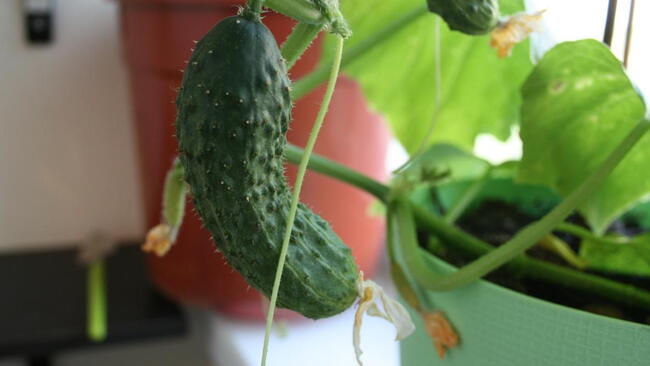
Depending on your space, you can grow cucumbers in in-ground gardens or raised beds, or in containers or grow bags that are at least 5-gallons in size. Container planting is best for bush-type cucumbers or vining varieties that are kept tidy with a trellis.
How to Plant Cucumbers
- To plant cucumber seeds directly outdoors, sow 2 seeds about 1 inch deep per planting hole and space holes 12 to 18-inches apart in rows that are about 4-feet from each other. Alternatively, you can also plant 2 to 3 cucumber seeds together in mounds or “hills” spaced 1 to 2-feet apart and thin the seedlings to one plant per hill when the plants are around 4-inches high.
- To start cucumber seeds indoors, sow 2 seeds 1-inch deep in 4-inch biodegrable pots, water well, and place the pots on a heating mat set at about 70ºF (21ºC) to speed up germination. Once the seedlings emerge, remove the weakest plants so you’re left with 1 plant per pot. When it’s time to transplant seedlings outdoors, harden the plants off carefully, plant biodegradable pots along with your cukes to minimize root disturbance, and water well.
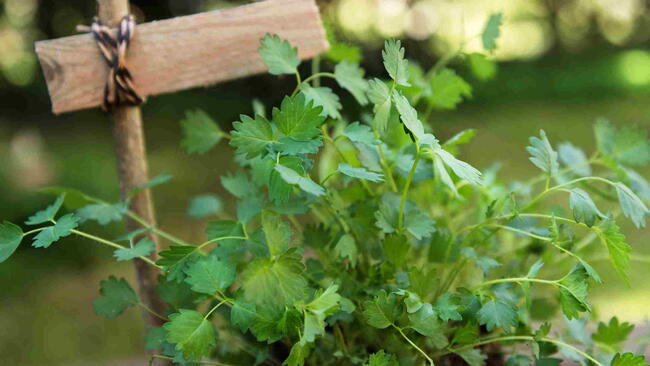
- After planting cucumbers, mulch the area with straw, chopped leaves, or another type of organic mulch to keep pests and weeds at bay. If you’re growing vining-type cucumbers, install a trellis when you plant them. I like to grow cucumbers on a cattle panel trellis, but you can also create a simple trellis or support structure with wood or bamboo.
Growing
Watering
Cucumbers are thirsty plants and should be watered consistently with about 1-inch of water per week. Plants need even more water during high heat or if you’re growing them in containers. Remember, inconsistent watering leads to bitter-tasting fruit and may cause issues like blossom end rot.
When watering, allow the water to deeply saturate the soil and do your best to avoid getting the plants’ leaves wet. Damp cucumber leaves are much more likely to develop mildew issues!
Fertilizing
Blending compost or aged manure and a balanced fertilizer into the soil helps cucumbers produce bigger harvests. After that, just side-dress plants with a balanced or high potassium fertilizer, such as tomato feed, when they begin to produce flowers and fruit.
Pruning or Maintenance
Bush-type cucumbers don’t need pruning, but vining varieties do. For these plants, remove any leaves on the lower 6-inches of vine once the plants are suitably sized and pinch off any suckers you see too.
Adding mulch around cucumbers works to retain soil moisture and reduce weeds. However, it’s best to not apply mulches until the soil has warmed to around 75°F.
Seasonal Care
If you’ve struggled with pests in the past, planting cucumbers a little later in the season can help you avoid issues with cucumber beetles and other nuisance insects. You may also want to cover young plants with row covers to reduce pests. Just make sure to remove coverings when the plants produce flowers to allow pollinators to get to work.
Once cucumbers start fruiting, you’ll need to be ready and harvest plants often. Cucumbers that aren’t picked in time quickly turn yellow and bitter!
Types
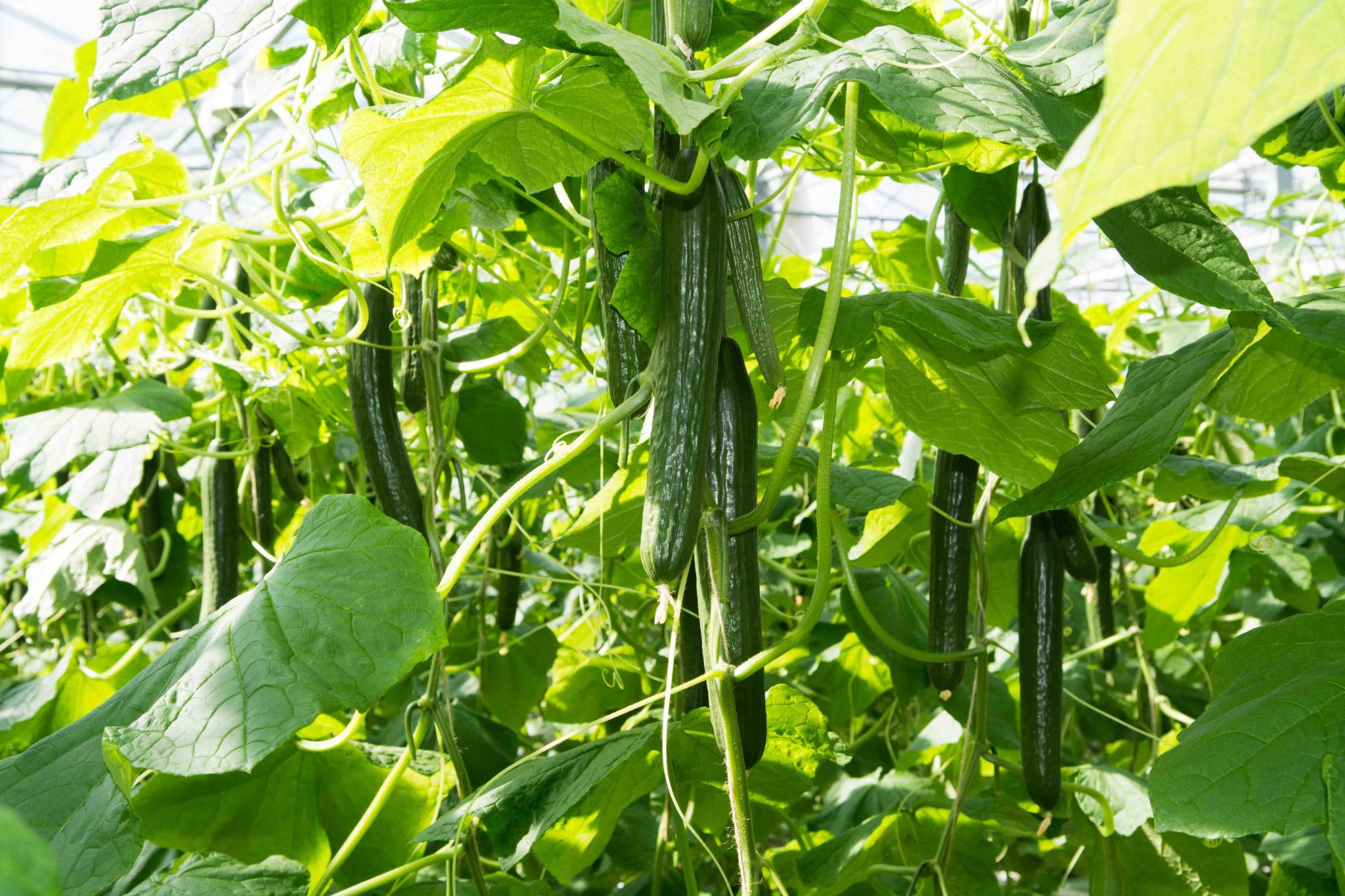
There are two main types of cucumbers: vining cucumbers, which grow on vigorous vines and require trellising, and bush cucumbers, which have a more upright habit and are better for pots. You can also choose between slicing cucumbers, which are ideal for salads, and pickling cucumbers that retain the best crunch when canned. Here are just a few of my favorites:
- ‘Boston Pickling’: this vining heirloom is prolific and bred especially for pickling.
- ‘Burpless Bush Hybrid’: a bush variety that’s slow to bitterness and good for small gardens, pots, or pickling.
- ‘Shintokiwa’: My favorite slicing variety, this Japanese heirloom yields long straight fruit with a fresh, crisp flavor.

More Like This
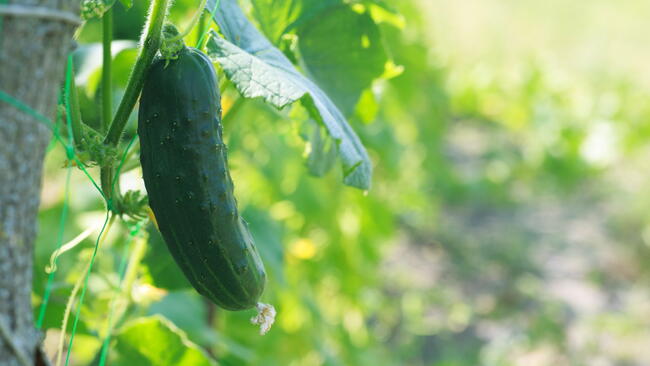
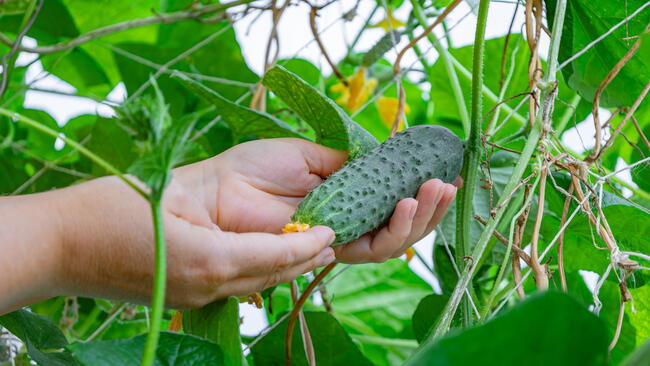

Many cucumbers have spines, but some varieties may be spinier than others. You can also get spineless types. As I understand it, the spines (also called trichomes in botanical terms), act as defense by the plant, protecting the developing cucumber from insects. The base of the spiny hairs contain compounds that taste bitter, to also deter hungry pests. As the cucumber matures, the spines become less or disappear. (Cucumbers at the supermarket often have had the spines removed.) Pickling cucumber varieties tend to be more prickly than slicing types. With some varieties, the spines are sparse and easily rubbed off before eating. However, with other types, it is best to peel the cucumber to remove the spiny skin before eating the interior. To check ripeness, carefully check the firmness of the cuke, the color, and size--follow recommendations on the seed packet or plant label, if you have it, for the variety that you are growing. Hope this helps!
We do advise that you use a trellis to grow your cucumbers and any type will do, even a tomato cage. Trellising will protect the fruit from damage from lying on the moist ground.
We just recently sliced into an grocery-store English cucumber and it too had seeds, albeit very small ones. A couple of thoughts here: We are inclined to go to the source, first: Have you inquired of your seed supplier what you should expect? And consulted the grower—not to be confused with the vendor—of the starts/seedlings? The "brand" of seedlings, if commercial (as opposed to local), would normally appear on the plant tag/stick.
Then there's this: The proximity to other plants may be part of the problem. English cukes DO have seeds; however, they are considered "undeveloped" because they are, in the truest form, not as large as those in a conventional cucumber. The English cuke is parthenocarpic: It develops fruit without pollination. So, insects that pollinate nearby plants could also visit your cukes and alter the results. There is, according to some, a belief that English cukes do best in a greenhouse for this reason, although at least one other source suggests that you are more likely to achieve the desired produce/harvest, if you plant the cukes 115 feet or more from other cukes—or, presumably, other flowering plants. So, maybe there is something to the greenhouse idea... If that's not feasible (understandably) perhaps row covers tightly secured over plants at a distance (not nec 155 feet) would yield a more satisfactory cuke.
We're not sure what you're asking, but a cucumber plant will keep producing fruit if you keep harvesting. If you stop picking the fruit when mature, the plant will slow down or shut down production.
- « Previous
- 1
- 2
- …
- 10
- Next »

Comments