Caption
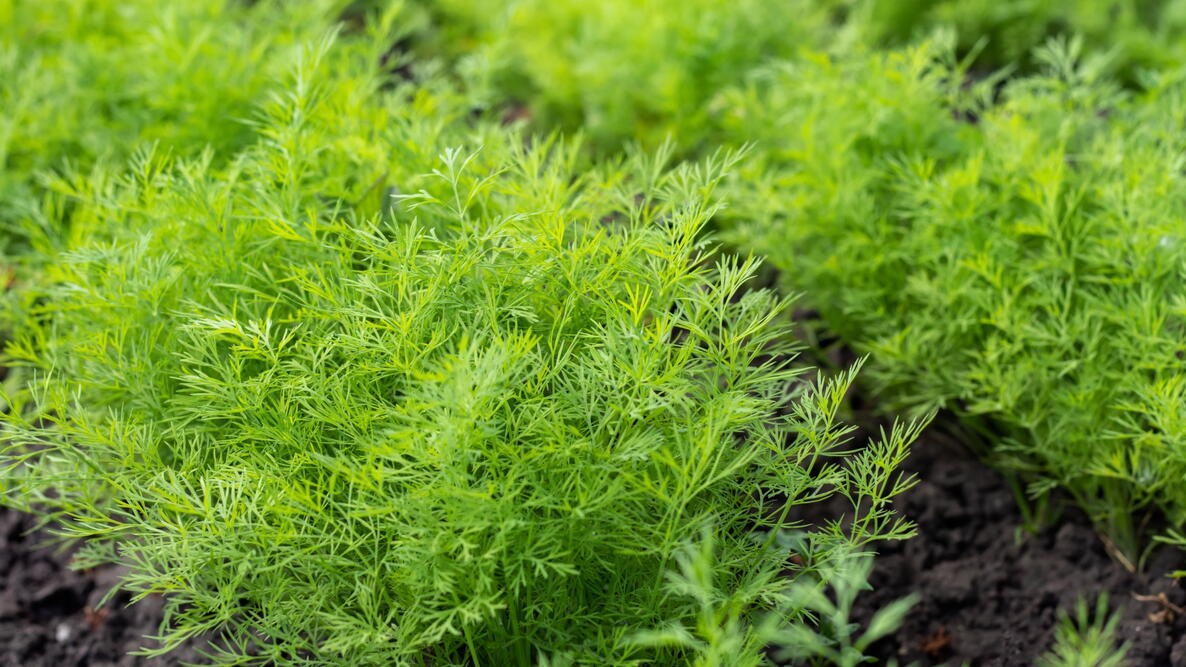
Learn how to plant, grow, and harvest dill with The Old Farmer’s Almanac’s plant guide.
Image Credit:
Skrypnykov Dmytro
Botanical Name
Anethum graveolens
Grown as
Toxicity
Sun Exposure
Water Needs
Height
Spread
Bloom Time
Flower Color
Resilience
Plant Type
Types
- ‘Fernleaf’ dill is a compact variety that works well in containers and is not prone to bolting.
- ‘Bouquet’ is a larger variety that produces a lot of seeds.
- ‘Mammoth’ is another tall variety and is considered one of the best for pickling and other culinary uses, such as in potato salads, cucumber soup, and fish dishes.

More Like This
I don't have a bug pest problem - I have an animal problem. Something keeps digging into the roots of my dill. I have it growing in a tall pot among a lot of other herbs on top of a tall herb table. Whatever it is that is eating it passes up a lot of other plants, climbing up into my herb table at night to rip it apart, leaving dirt everywhere and dill stems/leaves. I've tried to watch for it, leaving lights on the area and staying up, but I can't seem to catch it. We sometimes have a skunk come through, but I didn't think skunks climbed. Any ideas what might like to dig up and eat dill roots?
Hi, Rowan, Thanks for your interest in The Old Farmer's Almanac. Strange as it might be, it sounds like pocket gophers (Thomomys bottae) are getting into your pots. These little critters like the roots of several plants—dill, potatoes, even ornamental bulbs. We found a couple of possible solutions: commercial animal urine (apply as directed) and/or wire mesh (put over the pot at soil level, around the base of the plant—easier said than done, to be sure). You might also try a few moth balls scattered on the surface of the soil.
FWIW, some caterpillars eat dill (and parsley and carrot) greens, but they are not like to beneath the soil. We hope this helps!
I have to give a BIG thumbs down on the moth ball idea. Those things are exceedingly toxic and may render the dill toxic as well. They are also hazardous to even touch or breathe in the fumes. Seriously those things are toxic, so don't use it. (google it)
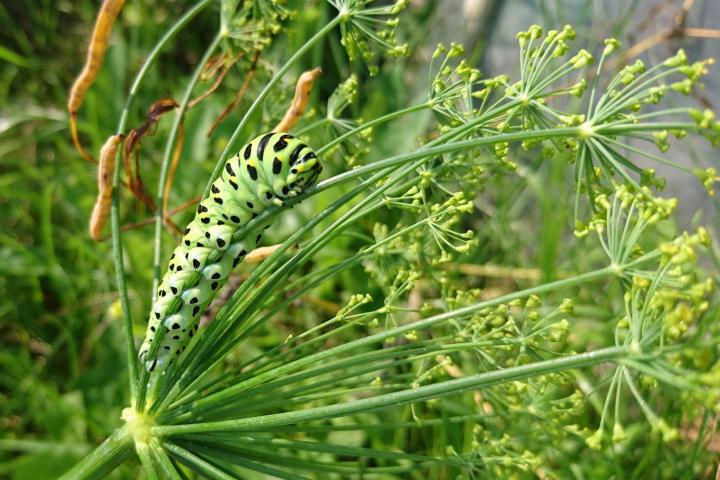
I grew dill and basil between my tomatoes as a pesticide free alternative to keep tomato horn worms away. I have done so for two years with great success. Plants that didn't have dill, I had to use Seven Dust. Now, I've got a yellow and black worm all over my dill. Should I kill it? Is it a good worm? Should I leave it alone? Please help.
these are black swallowtail caterpillars.they DO eat a lot, yes, but do not kill them. the butterflies they turn into are both beneficial and beautiful. I had these butterflies lay eggs all over my dill.I just let them grow up and soon(if birds don't get them)they will make their chrysalis and become butterflies
It was the last 4 words in your reply that reminded me of what an old peasant Portuguese woman once told me & this I'd like to share w/you:
"Always sow/plant 4 times (more) than what you need." I asked her why and this is what she said:
"Firstly you plant for yourself, what you think you will need. Then you plant the same amount for your Family & Friends, who have no land to plant. The third amount you have to plant counting with pests and climatic problems, like drought or excessive precipitation. The fourth amount you have to sow is for the thief."
"For the thief?" I exclaimed. "Yes" answered the old lady, "the thief does not till the earth, he is a thief. Growing/producing the food is your business and the thief, well, he has to eat, too..."
Thank you!! I've been searching for this as well, my little dill plant is full of them! So I just plant more dill? Would it be better potted with another plant/herb?
Love your advice. Too many times I have read KILL IT...whatever it is because it is eating a few plants. I agree with sharing of the crop when it is an insect or animal that is looking for a meal that is not going to destroy the entire garden.
Thanks for the info, buying more seeds.


Comments