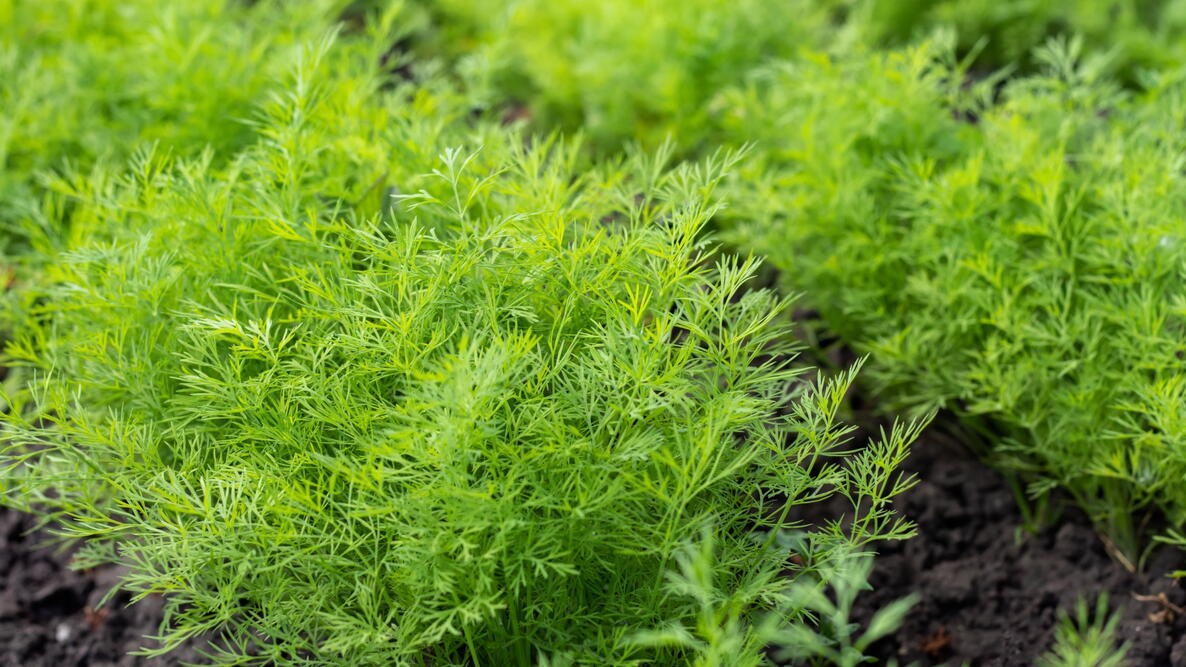
Caption
Learn how to plant, grow, and harvest dill with The Old Farmer’s Almanac’s plant guide.
With its delicate fronds, tangy flavor, and natural pest-repelling powers, dill is the herb that does it all. Whether you’re crafting crunchy pickles, tossing together a creamy potato salad, or looking to attract pollinators to your garden, this feathery favorite is a must-grow.
Best of all? It lives up to its nickname “dill weed”—because it practically grows like one! Let’s dig into how to plant, grow, and harvest dill with ease.
Native to Eurasia and the Mediterranean, dill is most at home in warmer climates. It’s an annual herb, so to create a permanent patch of dill, allow some of the plants to flower and go to seed each year—you’ll have plenty of early dill to start the next growing season.
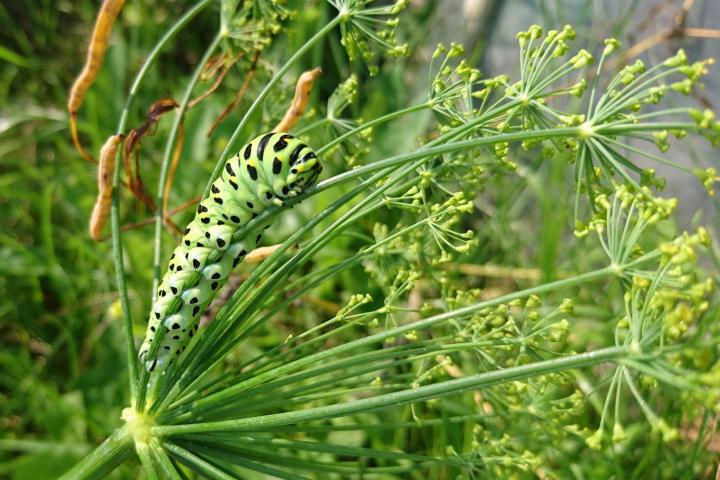
Dill attracts beneficial insects such as wasps and other predatory insects to your garden and is a host plant for the caterpillar of the black swallowtail butterfly.
Growing
- Water the plants freely during the growing season, ensuring that they don’t dry out excessively.
- In order to ensure a season-long fresh supply of dill, continue sowing seeds every few weeks. For an extended harvest of the leaves, do not allow flowers to grow on the plants.
- If dill is allowed to go to seed and the soil isn’t disturbed too much, more dill plants will likely appear next spring.

Types
- ‘Fernleaf’ dill is a compact variety that works well in containers and is not prone to bolting.
- ‘Bouquet’ is a larger variety that produces a lot of seeds.
- ‘Mammoth’ is another tall variety and is considered one of the best for pickling and other culinary uses, such as in potato salads, cucumber soup, and fish dishes.

More Like This

We are inclined to think the problem is in the soil. Dill will grow in poor soil; but if you have not already, you could try well-drained/draining composted soil, and full sun. There seems to be enthusiasts of both camps (poor soil, composted soil). It does not do well when over watered or in rainy season. One other thought, going back to the soil: What is the pH of your soil? Dill likes a neutral pH of between 5.5 and 6.5. An extreme acid or alkaline soil could be the issue here, if all else is as it should be.
We hope this helps!
The aphids are sticky so you need a vinegar rinse to release them. Add a cup of white vinegar to a bowl of cold water and wash the dill in the water. Then rinse a few times in vinegar-free water. If it's still too heavily invested, talk to the place where you got them. Also, for what it's worth, eating an aphid is harmless protein, but we understand that you wouldn't want to eat bugs!
The ideal time to sow dill seeds directly into the ground is late April through May. But given the fact that several crops can be harvested during the summer and fall by planting seeds every 2-3 weeks through midsummer, you might want to start a batch now.
- « Previous
- 1
- 2
- …
- 10
- Next »

Comments