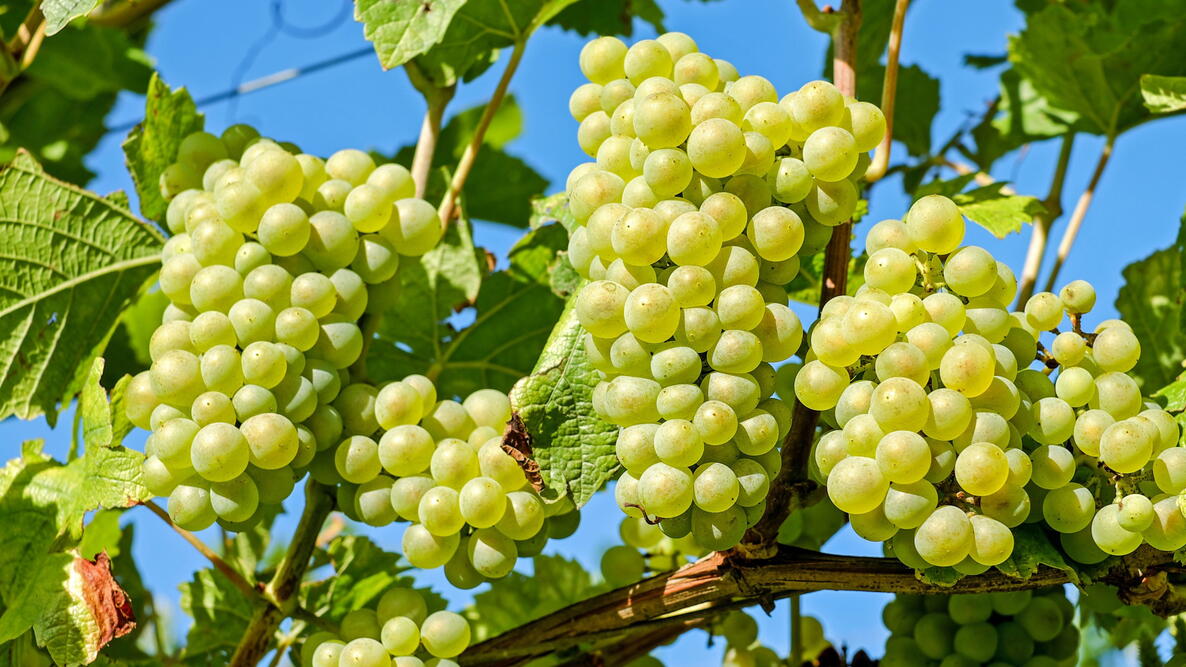
Pests and Problems
- Aphids
- Japanese Beetles
- Powdery Mildew
- Black Rot

Types
Note: Seedless varieties will produce smaller grapes.
- ‘Edelweiss’: Hardy in zones 4–7 (–20°F), early white variety. Table and wine.
- ‘Reliance’: Hardy in zones 4–8, seedless, pink table grape.
- ‘Seibel’: Hybrid, wine grape. Cold hardy.
- ‘Swenson Red’: Hardy in zones 4–8, red table grape.
- ‘Magnolia’: White Muscadine wine grape. Sweet. Best in zones 7–9.
- ‘Valiant’: Eating grape hardy to Zone 2.

More Like This



See the notes above under "Care" and consider this advice we recently provided to someone else:
You need to prune. (You know that you will not have fruit this year, right?) Per above,
- …canes will only produce fruit once. Prune annually when vines are dormant, in March or April. This is before the buds start to swell, but when winter damage is apparent. (Better late than never; do it now.)
- Be ruthless: Don’t be afraid to remove at least 90 percent of the previous season’s growth. This will ensure a higher quality product. Remember, the more you prune, the more grapes you will have.
In this case, you need to prune it to the shape you want. Since no pruning has been done for years, that means you need to prune back to older wood. One-year-old wood (shoots that grew last year) will contain fruitful buds but it is best to prune back to the trunk. Next year, in early spring/late winter, maintain the shoots with buds.
If the plant has buds further down the main trunk, then it is likely that some of these will open, forming lateral shoots. For first year growth, choose the healthiest and most vertical of these new shoots and train it to be the new main trunk (tied loosely to a stake). Keep all leaves along the trunk but remove any unwanted lateral shoots for the first year. Remove any fruit that might form.
If growth on the new trunk looks weak over the summer, cut the vine back to two buds in fall; this will set the plant back a year, but will encourage more vigorous growth the next year.
If you have an established grape vine, you don't normally need to water after the first growing year. Usually, summers bring an inch of rainfall every 10 days or so. But if it gets really dry, you can give your new plant a good, thorough soaking. The best way to do this is to let your garden hose trickle slowly. This gives the water a chance to soak in instead of running off. It’s important to note that even if you’re in the midst of a brown-lawn drought, you don’t want to water too much. Once every 10 days or two weeks is plenty. Worse than dry, thirsty roots is waterlogged, drowning roots.
You need to prune. (You know that you will not have fruit this year, right?) Per above,
- ...canes will only produce fruit once. Prune annually when vines are dormant, in March or April. This is before the buds start to swell, but when winter damage is apparent. (Better late than never; do it now.)
- Be ruthless: Don’t be afraid to remove at least 90 percent of the previous season’s growth. This will ensure a higher quality product. Remember, the more you prune, the more grapes you will have.
In this case, you need to prune it to the shape you want. Since no pruning has been done for years, that means you need to prune back to older wood. One-year-old wood (shoots that grew last year) will contain fruitful buds but it is best to prune back to the trunk. Next year, in early spring/late winter, maintain the shoots with buds.
- « Previous
- 1
- 2
- …
- 10
- Next »

Comments