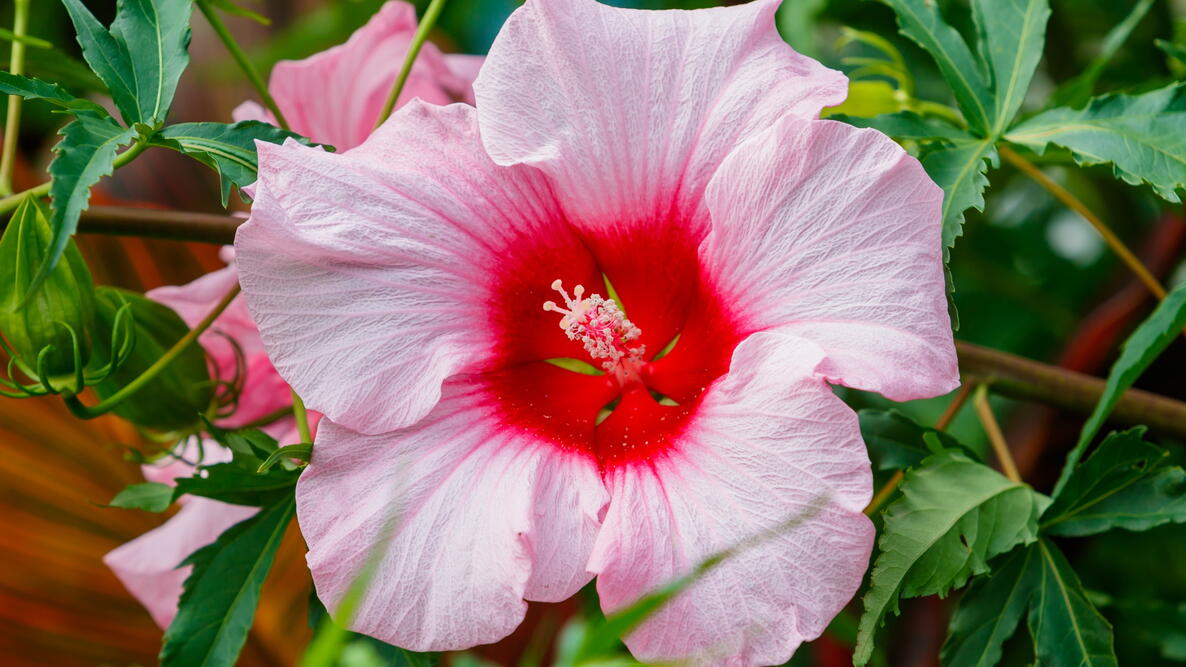
Caption
A Lady Baltimore Pink Hibiscus.
Types
Scarlet swamp hibiscus (Hibiscus coccineus): This plant, also known as Texas star, has five-petaled, brilliant-red flowers. It grows to a height of 7 feet each growing season, dies back to the ground every winter, and resprouts in spring.
Rose mallow (H. moscheutos): This is the classic dinner-plate hibiscus due to the large size of its flowers. These large, fast-growing plants bloom from August to October, and each plant may flaunt several 10- to 12-inch-wide flowers at once. A few of the many popular cultivars are:
- ‘Anne Arundel’ has pink flowers, 9 inches in diameter, on plants 5 feet tall.
- ‘Kopper King’ has light pink to white flowers with a burgundy center, 12 inches in diameter, with coppery red deeply cut leaves.
- ‘Lady Baltimore’ is a popular old variety with pink flowers and red centers on 5-foot-tall plants.
- ‘Lord Baltimore’ is another old variety with red flowers on 5-foot-tall plants.

More Like This
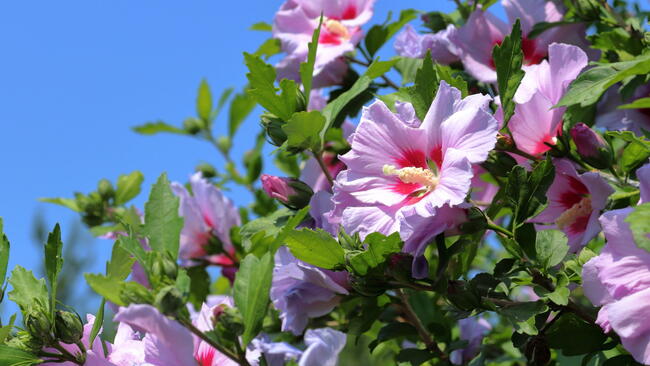


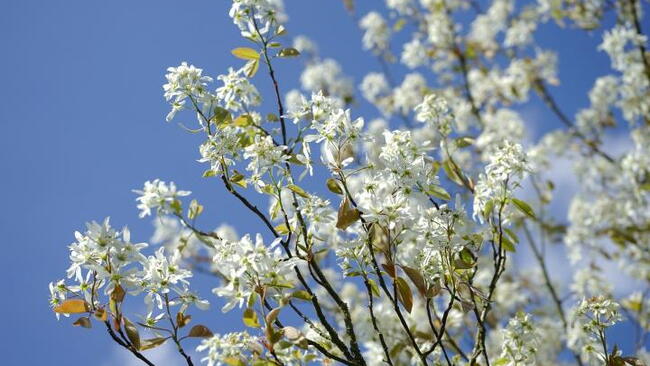
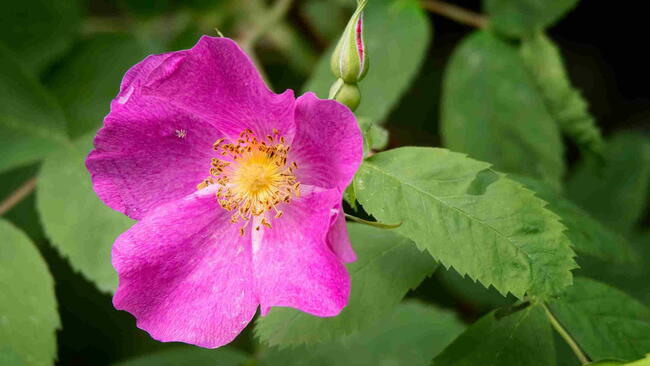


Move your hibiscus plants into winter storage before the first fall frost. Check the plants for insects, especially whitefly, before you bring inside. It needs to stay in a spot with some light and temperatures warmer than 50 degrees F. Don’t worry if the flowers and leaves fall off! This is normal as your plant is going into dormancy. Water the plant, but only when the soil is dry. In the early spring, you can prune back any leggy growth, repot, and start fertilizing every couple weeks. Slowly get the hibiscus used to the outdoors once all danger of frost has passed.
Hi Nancy,
You can absolutely plant hibiscus in the fall. We recommend purchasing one of the hardy varieties that we mention in the article above!
According to the ASPCA, hibiscus flowers are not poisonous to dogs. However, too much of a good thing can also be bad! We'd recommend preventing your pups from eating too many of the flowers in one sitting.
It sounds like you could be dealing with either spider mites, whiteflies, or mealybugs, which are all common insect pests. Unfortunately, there's not a lot you can do to prevent them from coming back each year on outdoor plants, since even if you totally get rid of them on your plants, they may just travel over from your neighbor's yard and start up another infestation. For this reason, your best bet is to focus on keeping damage to a minimum instead of on outright prevention.
The things you are already doing are good tactics. Keep a close eye on the plants around the time when you first start seeing the bugs and then prune off effected areas, and use neem oil as well. Alternatively, try using a different insecticidal soap if neem oil hasn't done the trick. This can be found at a local garden center or online.
- « Previous
- 1
- 2
- …
- 10
- Next »

Comments