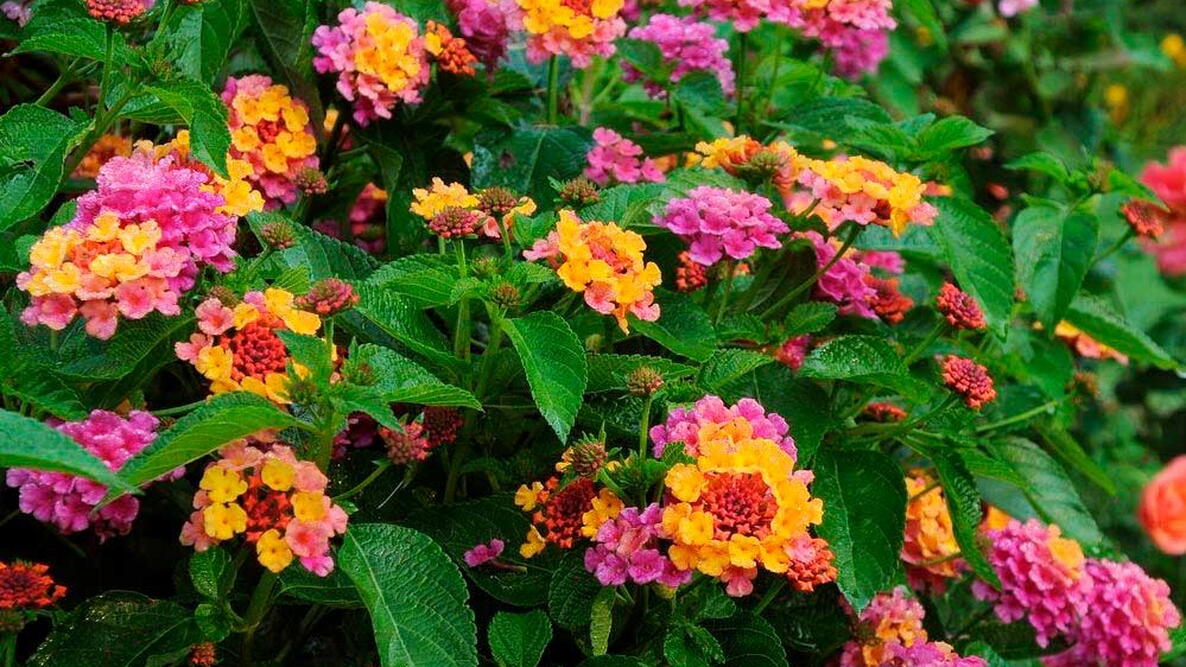
Lantanas are like party confetti for your garden—bright, bold, and buzzing with life! These heat-loving, butterfly-attracting shrubs bloom in eye-popping clusters of oranges, pinks, yellows, and reds. Tough as they are beautiful, lantanas laugh in the face of drought and don’t mind nosy deer, either. Whether in a pot on your porch or a sunny garden bed, lantanas bring a burst of color and pollinator joy all season long. Ready to grow these tropical showstoppers? Let’s dig in!
Lantana is a genus of flowering, evergreen, vine-like shrubs with about 150 species recognized. They are in the Verbena family, Verbenaceae. Native to the tropical regions of the Americas and Africa, they have become naturalized in parts of the American Southeast.
Treated as annuals in cooler regions, lantanas are perennial in USDA Zones 9 to 11, with a few varieties hardy to Zone 8. Lantanas thrive on neglect and like dry heat, making them ideal selections for pots, planters, and hanging baskets.
These shrubs have a colossal impact on color, with dark green, rough foliage, and bright flowers. The lightly fragrant flowers are in clusters called umbels at the edges of the plant. Blooms are commonly found in combinations of red, orange, yellow, pink, salmon, white, and even blues and purples. Many florets change color as they age, giving rise to multi-colored inflorescences.

The flowers have a mild scent, variously described as resembling citrus, sage, or passion fruit. The scent of its leaves, especially when bruised, is not as pleasant and has been likened to that of gasoline. Beware, too, as the plant’s foliage may cause mild skin irritation when touched.
Note: Lantanas have been designated invasive in Arizona, Florida, California, and Hawaii. Their perennial nature, berries attractive to birds, foliage poisonous to herbivores, and rapid growth allow them to quickly spread out of control. They are toxic to pets and people, so plant them where small children and curious dogs won’t be tempted to bother them.
Lantanas are attractive to pollinators and bring butterflies, including swallowtails, as well as hummingbirds to the yard. Their florets are the ideal shape for nectar-gathering insects.
Planting
When to Plant Lantanas
Lantanas grown as annuals, whether in containers or in the ground, can be planted out anytime after the last frosts. Although they like temperatures to stay warmer than about 55°F, a light frost likely won’t kill them and they can survive down to about 28°F.
Wait until the soil warms to about 60°F before planting in ground. If you don’t have a soil thermometer, plant them at the same time as you plant your tomatoes.

Where to Plant Lantanas
Lantanas thrive in warm temperatures and bright sunlight. Pick a location where they can enjoy at least 6 hours per day of sunshine. They are not picky about soil as long as it has good drainage and is neutral in pH, in the 6.0–8.0 range.
Lantana will bloom year-round in frost-free areas and can get as large as 6 feet high and several feet wide in tropical climates. Don’t worry too much about them outgrowing their home. Lantanas respond well to pruning and, in fact, should be pruned or sheared often.
They will tolerate salt spray well, making them a good choice for those looking for colorful plants whose homes are near the ocean.
How to Plant Lantanas
Lantanas purchased at the garden center vary in size from 4-packs to 3-gallon pots. Plant them in the ground as you would other bedding plants, and water them well afterward.
- Well-draining soil is important whether planting in a container or in the ground. Lantanas are adapted to drier conditions. Consistently wet soil may lead to root rot. Amend heavy soil with compost.
- If you live in USDA Zone 8 or cooler, your lantana will be an annual unless brought inside, so placement in your landscape is a short-term decision. Mix it up, plant a patch, or sprinkle them around the garden bed for pops of color.
- Water your lantana well after transplanting and for the next few weeks. Although drought tolerant once established, they need extra support while their roots are recovering from transplant shock and putting on growth.
- Purchasing plants is easy to do, but propagation can also be simply accomplished with hybrid cuttings. (Cultivars often do not come true from seed.) In early spring, snip a sprig and remove most of the lower leaves. If desired, dust the cutting’s bottom 2 inches with rooting powder, then set it in a small container of moistened seed-starting mix. Maintain the moisture by misting it every day. When roots develop—in a few weeks or so—transplant it to where you want it. Alternatively, take root cuttings in summer to overwinter indoors for spring planting.
Growing
Lantanas aren’t fussy. Give them a warm, sunny spot and watch them grow. These easy-care plants don’t want much other than your admiration.
Watering
Lantanas prefer hot and dry conditions. Consistently wet soil can lead to root rot and inhibit blooming. Once established, water only when the top several inches of soil is dry to the touch, then water deeply. They would rather get a few long drinks than many short ones.
Although established lantanas are drought tolerant, if your lantana isn’t blooming, it is often a lack of water. Check the soil with your finger at a depth of about 2 inches. If the soil is dry, give your lantana a drink.
Fertilizing
Fertilizer is not needed for ground-planted lantanas. Lantanas in containers can be fertilized once per month with a general-purpose balanced fertilizer when watering. Too much fertilizer will inhibit lantanas blooming, so don’t overdo it.
Pruning
Give it frequent snipping to encourage bushy growth and flowering. Lantana is a rapid grower, so grab your scissors and trim off the meristem–the growing tip–on branches every few weeks once it has reached the desired size. It will branch out below and be a more compact, full plant.
Overwintering
Lantanas don’t do well as houseplants, but can be tricked into going dormant and brought inside to overwinter. Follow these steps to overwinter your potted lantana.
- Find a location with minimal light (not total darkness).
- A cool location, ideally about 55°F. An unheated basement or garage might be just the spot.
- Do water it periodically. The death of many overwintering attempts is dehydration. While a plant may be dormant, a complete lack of water for several months is a death sentence. Keep the potting mix slightly dry but not desert dusty. There should still be a little moisture.
- Be on the lookout for spider mites and white flies.

Types
Wild lantanas can become invasive where winters are mild; hybrids are least likely to be invasive because they both produce few seeds and are sterile. Choose sterile varieties for maximum flower production and ecological protection.
Hybrid cultivars—which are usually variations of the common/dwarf (Lantana camara) or trailing/weeping (L. montevidensis) types—are bred for their blooms; the list below presents only a small fraction of those available.
- Lantana camara ‘Confetti’: 2 to 3 feet tall; 6 to 8 feet wide, spreading form; multicolor magenta, pink, and yellow flowers
- L. camara ‘Dallas Red’: 3 to 4 feet tall and wide; dark orange to bright red flowers
- L. camara ‘Irene’: up to 2 feet tall; 2 to 3 feet wide, mounding form; yellow to pink/magenta flowers
- L. camara ‘Patriot Cowboy’: 12 inches tall and wide; orange buds to bright yellow to orange flowers
- L. camara ‘Patriot Rainbow’: 12 inches tall; 15 inches wide; bright yellow to orange to pink/magenta flowers
- L. camara ‘Patriot Weeper Dove Wings’: 12 to 18 inches tall; 18 to 24 inches wide; white flowers with yellow centers
- L. camara ‘Silver Mound’: up to 18 inches tall; yellow to white flowers.
- L. montevidensis ‘New Gold’: 12 to 15 inches tall, 18 to 24 inches wide; yellow flowers
- ‘Bandito’ develops a full, mounding shape with bright orange, red, and pink blooms.
- Popcorn lantana (Lantana trifolia) is hardy in USDA Zones 10-11. Lavender flowers develop into pretty purple berries (but don’t eat them!).

More Like This


Comments