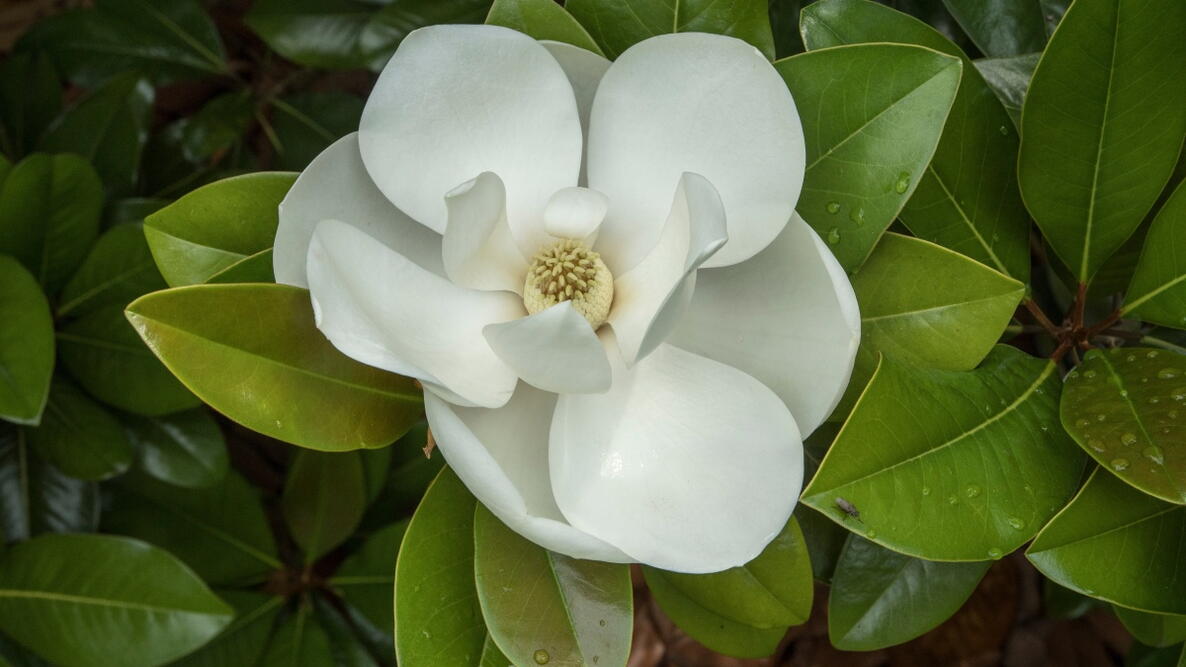
Planting
When to Plant Magnolias
Magnolias can be planted in spring or fall. If planting in autumn, get the tree in the ground 4 to 6 weeks before the first frost to allow time to grow new roots. Bare root stock received in spring should be planted as soon as received.
Where to Plant Magnolias
While specific cultivar needs may vary, most members of the Magnolia genus prefer full sun to light shade and, in hotter climates, need protection from the intense afternoon sun. Their branches can be brittle, so pick a site protected from the wind.
Magnolias grow large, thick, shallow root systems and should be kept away from building foundations or sidewalks. Check the tag and visualize the mature size of the tree or shrub. Some magnolias are enormous, while others are small enough to grow in containers.
When planting, select a site with the following:
- Full to partial sun. Choose a site with morning and midday sun but afternoon shade in hotter climates.
- Moist but well-draining sites are best. Very dry or wet sites are not suitable.
- Acidic soil, pH 5.5-6.5, is best.
How to Plant Magnolias
Planting magnolias is easy, and the same methods are used for planting other nursery stock.
- Remove all sod from an area twice as large as the hole you will dig.
- Dig a hole the same depth as the root ball and at least twice as wide. The hole should look like a shallow bowl, not a coffee can.
- Loosen the soil on the sides and bottom of the hole. A hard, compact edge or bottom is difficult for roots to penetrate (and for water to drain).
- Remove the magnolia from its container and prune any circling or girdling roots. Root-bound plants will benefit from scoring of the root ball to stimulate new growth in outward directions. Remember to remove the wire basket if your tree was balled and burlapped.
- Place and test fit the magnolia in the hole. Check for depth and ensure no roots are bent over or circling the hole. The top of the rootball should be level with the soil surface. Enlarge the hole if necessary. For grafted magnolias, ensure the graft union is above the soil level after planting.
- Backfill the hole with the soil you removed, ensuring the tree is kept vertical while filling. Stop when the hole is about halfway refilled and tamp the soil firmly around the roots to remove air pockets, then give it a good drink of water (but don’t flood the hole). Continue filling the soil around the roots and firming it with your hands. Water again when complete.
- Spread mulch around the tree, about 3 to 4 inches thick. Spread the mulch evenly in a circle extending 2–3 feet from the trunk. Don’t let the mulch touch the trunk—keep a few inches of separation. The final mulch job should look like a flattened donut, not a volcano.

Types
- M. grandiflora ‘Little Gem’ is a good choice for small yards. It reaches 15 feet in height and flowers within a few years.
- M. stellata ‘Centennial’ is a star magnolia with 5-inch slightly pink flowers. A vigorous and cold-hardy cultivar.
- M. x soulangeana ‘San Jose’ is a saucer magnolia with deep magenta flowers. Fragrant and vigorous, it makes an excellent container plant.
Wit and Wisdom
- Magnolias were around before bees evolved and were pollinated by beetles.
- Magnolia roots may extend up to three times as far from the tree as the branches. Take care when applying pesticides to lawns or weed killers nearby.
- Many magnolias dump their huge leaves in spring, and the fruit can also make quite a bit of litter. Grass often struggles under magnolias, so consider planting in a spot where their litter won’t cause a problem.
- Magnolias are the state flower of Louisiana and Mississippi.

Southern magnolia (Magnolia grandiflora) fruits. Credit: Tamu1500

More Like This


Comments