For daily wit & wisdom, get the Almanac newsletter.

Planting and Growing Phlox

white phlox flowers
Image Credit:
Pixabay
Botanical Name
Phlox
Plant Type
Sun Exposure
Bloom Time
Flower Color
Written By: Catherine Boeckmann Executive Digital Editor and Master Gardener
Almanac Guide to Herbs

Looking to add a pop of color that butterflies love but deer won’t touch? Meet phlox—your new favorite flowering perennial. Whether it’s the candy-colored carpet of creeping phlox in early spring or the fragrant, tall blooms of garden phlox in summer, this versatile bloomer brings beauty to beds, borders, and everything in between. Ready to grow a garden showstopper that doesn’t mind a little shade or sun? Let’s dig into how to plant, grow, and care for phlox!

Bees, butterflies, and pollinators also adore phlox. And fortunately, phlox is deer-resistant, as deer do NOT like smelly flowers!

Planting

When to Plant Phlox

Plant phlox in the spring after the threat of frost has passed, or plant in the fall at least a month before your first frost.

Where to Plant Phlox

Because there are so many different types of phlox, sunlight requirements vary. Tall garden phlox do best in full sun, while woodland species thrive in partial shade. 

In general, phlox prefer soil that is nutrient-rich and evenly moist. They do not like to sit in wet soil, however. Use a garden fork or tiller to prepare your garden bed prior to planting. Loosen the soil to about 12 to 15 inches deep, then mix in a 2- to 4-inch layer of compost to improve soil consistency and fertility.

How to Plant Phlox

  • It is easier to grow phlox from cuttings/transplants than from seeds, although established plants will readily spread by seed in the garden.
  • Space plants according to their mature size.
  • If you are transplanting a plant from a pot, dig a hole about twice the size of the pot’s diameter and place the plant so that the top of the root ball is even with the soil’s surface. Fill in around the root ball, and remember to water it thoroughly.
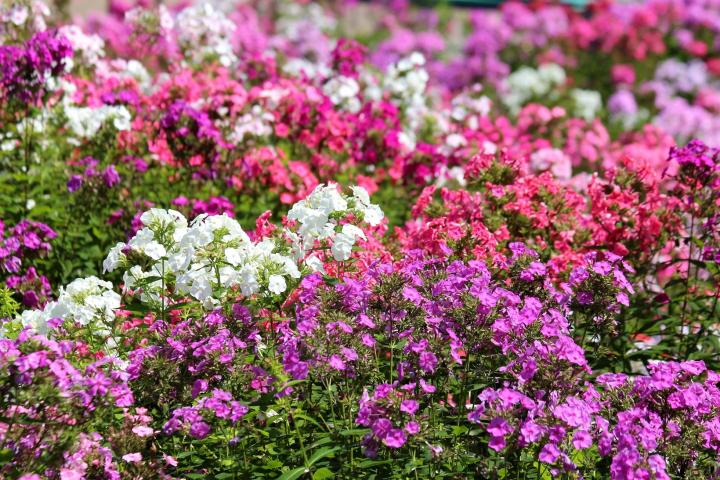
White, pink, and purple phlox flowers.

Growing

Watering

If you receive less than 1 inch of rain a week, remember to regularly water your plants throughout the summer.

Mulching

Each spring, put a thin layer of compost and a 2-inch layer of mulch around the plants to help keep the soil moist and control weeds.

Deadheading

Remember to remove the dead/faded flowers so that your plants can rebloom. Try out the Chelsea Chop!

Seasonal Care

If you have tall phlox, cut the stems back to about 1 to 2 inches above the soil after the first killing frost in the fall. (See local frost dates.) Divide tall garden phlox every 2 to 3 years to ensure healthy and disease-free plants.

Pests and Problems

Phlox Problems

Phlox is a colorful, pollinator-friendly perennial that is generally easy to grow. However, poor air circulation, overcrowding, and excess moisture can lead to disease problems, especially during humid weather.

Powdery mildew is one of the most common issues affecting phlox. Providing proper spacing, avoiding overhead watering, and cutting back stems after flowering can help reduce its spread. Choosing mildew-resistant varieties is also helpful.

Phlox Pests

Phlox may occasionally be affected by a few common garden pests.

Stem nematodes can damage stems and foliage, causing distorted growth.

Leaf miners tunnel through leaves, leaving visible trails and weakening plants.

Caterpillars may chew holes in foliage and flowers.

Phlox Diseases

Phlox can be affected by several fungal and soil-related diseases, especially in damp or crowded conditions.

Powdery mildew is common and appears as a white, powdery coating on leaves and stems; it is especially common during humid weather. Keep proper air circulation in mind when spacing out plants and avoid getting excess water on the foliage. Cutting back stems after flowering can also help to reduce the spread of powdery mildew, as can choosing mildew-resistant varieties.

Stem canker can cause dark lesions on stems, leading to wilting and dieback.

Rust causes orange or brown pustules on foliage and may weaken plants over time.

Southern blight is a soil-borne disease that can cause rapid wilting and collapse near the base of the plant.

Leaf spot diseases create dark spots or blotches on foliage, reducing the plant’s overall appearance and vigor.

Wit and Wisdom

  • April’s Full Moon has traditionally been called the “Full Pink Moon” because it heralded the appearance of the “moss pink,” or wild ground phlox—one of the first spring flowers.
  • Medium and tall phlox are good companions for summer perennials such as lilies, bee balm, rudbeckia, Shasta daisies, yarrow, and clematis.


About The Author
Catherine Boeckmann

Catherine Boeckmann

Executive Digital Editor and Master Gardener

Catherine Boeckmann is the Executive Digital Editor of Almanac.com, the website companion of The Old Farmer's Almanac. She covers gardening, plants, pest control, soil composition, seasonal and moon c...