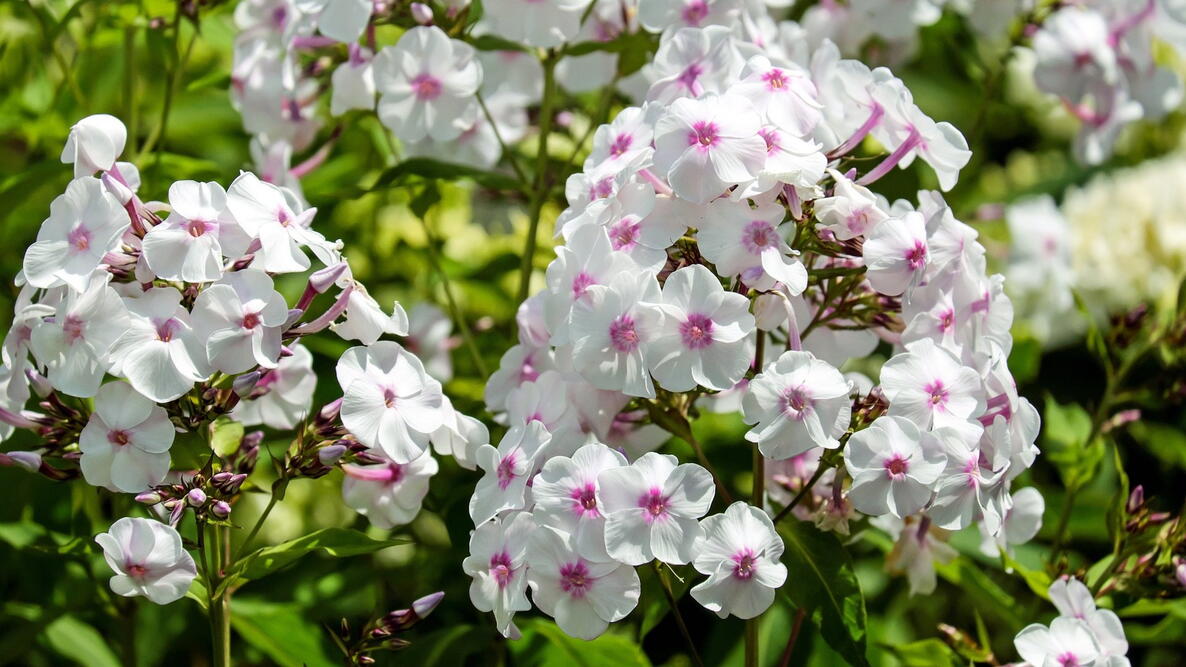
Planting
When to Plant Phlox
Plant phlox in the spring after the threat of frost has passed, or plant in the fall at least a month before your first frost.
Where to Plant Phlox
Because there are so many different types of phlox, sunlight requirements vary. Tall garden phlox do best in full sun, while woodland species thrive in partial shade.
In general, phlox prefer soil that is nutrient-rich and evenly moist. They do not like to sit in wet soil, however. Use a garden fork or tiller to prepare your garden bed prior to planting. Loosen the soil to about 12 to 15 inches deep, then mix in a 2- to 4-inch layer of compost to improve soil consistency and fertility.
How to Plant Phlox
- It is easier to grow phlox from cuttings/transplants than from seeds, although established plants will readily spread by seed in the garden.
- Space plants according to their mature size.
- If you are transplanting a plant from a pot, dig a hole about twice the size of the pot’s diameter and place the plant so that the top of the root ball is even with the soil’s surface. Fill in around the root ball, and remember to water it thoroughly.
Types
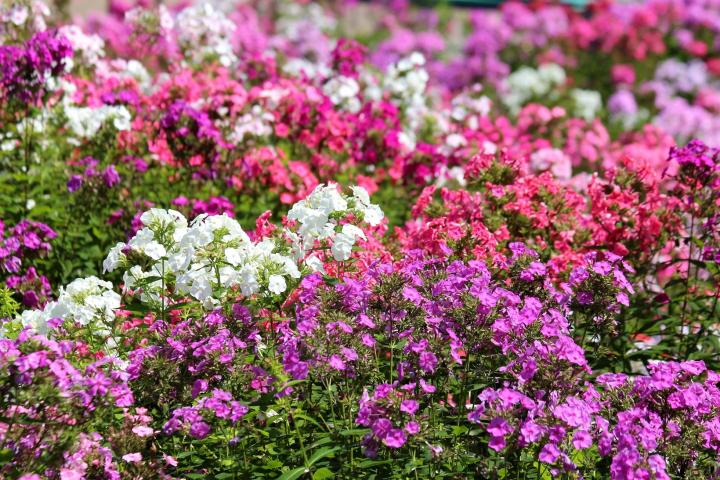
These perennials sport copious star-shaped, colorful flowers from spring through summer, depending on the variety. Because there are so many types (many of which are native to North America), you can find a phlox for almost any garden. Truly, their versatility can’t be overstated.
- Low-growing creeping phlox works great as ground cover in sunny yards.
- Ankle-high woodland phlox is perfect for dappled, shady beds.
- Medium-height garden phlox is often the “backbone” of the perennial garden, providing a layer of color midway through the garden and filling in gaps.
- Tall garden phlox is excellent as a colorful backdrop, with large, often-fragrant flower clusters.




Comments

Cutting back is generally recommended earlier in spring, but do it now if this is your best time. Also see above.
See the info at the very top of the page to the right of the picture of phlox and read the recommendations.
1. Can You Grow Phlox in Pots? Yes, you can grow phlox in a large pot, keeping it outside in spring and summer and in an unheated garage or shed in the winter. You'll just want to make sure that the potting soil doesn't dry out entirely at any time; while in winter storage, keep it lightly moist but not as much as you would in spring/summer, while the plants are actively growing.
2. How Do You Deadhead Phlox? By using a technique called deadheading, phlox can be encouraged to keep producing flowers. Deadheading simply involves snipping off the top cluster of flowers that have finished blooming, while leaving any lower flower buds alone. These lower buds will appear just above the leaves. When making the cut, leave about half an inch of stem above the highest buds.
Phlox transplants quite well, so if you can take a chunk of the existing plant that has some roots on it, you shouldn't have any trouble getting it to grow on top of the wall!
- « Previous
- 1
- 2
- …
- 10
- Next »

if you mean that the stems collapsed it could be that they are getting too much water from you or from Mother Nature. If you don't think so, it may be that the soil is retaining water; it is not running off or being absorbed into the ground. ANd/or it may be that mulch is retaining moisture and is up against the stems.