
More Like This
Comments

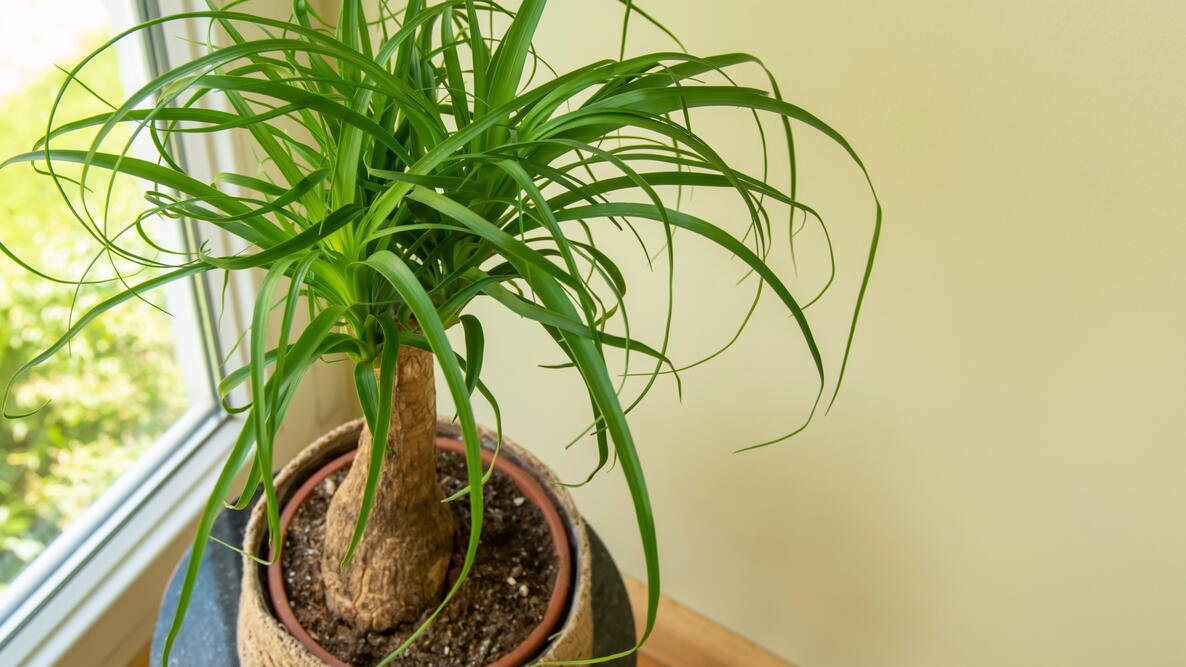
It sounds like you're doing everything correctly; three and a half feet is actually pretty tall for a ponytail palm that's spent its life indoors! Indoor specimens taller than 4 feet are fairly uncommon. The plant really needs ideal conditions (bright sunlight, warm temperatures, and no restrictions on its roots and trunk) to reach taller heights, which is usually the case for ponytail palms grown in greenhouses or outdoors.
Ponytail palms are very responsive to the size of their pots, so keeping it pot-bound will slow down its overall growth. You might try planting it in a deeper and wider pot than it is currently; that could encourage it to grow larger both above and below ground.
Succulents that put out aerial roots typically do so in search of water, so that—combined with the browning leaves—suggests that your plant is in need of more water. However, if your plant doesn't get much light this time of year, you do need to be careful not to overwater. What's your watering schedule currently like? During winter months, water the plant deeply but don't water again until the soil is almost entirely dry. Once you get the plant back in stronger light, you can increase waterings—still being sure not to water again until the top inch or so of soil is dry.
As for what to do with the aerial roots: You don't want the plant to be planted deeper than about halfway up its base, so if the soil was already at that level before you added more, it would be better to remove the extra soil and simply snip off the aerial roots with clean scissors. If you do this, don't water the plant until it looks like its wounds have healed; this will help to prevent fungal disease.
Dry, browning leaves can indicate a thirsty plant, but it's also perfectly natural for the older leaves to die off as the plant grows. Yours likely just needs a more regular watering schedule. Water it when the top inch or so of soil has dried out completely—this could be every two weeks, every three weeks, or once a month depending on the humidity of your home, the consistency of the soil, and how porous the pot is.
To keep track of your waterings, try attaching a post-it note to the plant's pot and writing down the date when you water.
- « Previous
- 1
- 2
- …
- 10
- Next »

It sounds like the pups are not actually pups, but rather new growth. They are coming out of the top of the wide, rounded base (the caudex) of the plant, correct? Pups would be emerging from where the base touches the soil.
If the skinny part of the plant (the "stem" or "trunk") is damaged by cold or rot, the plant may die back to the base, where new growth sprouts from.
If this sounds like what's happened to yours, then you can cut off the dead stem just above the base and the new growth won't be affected.