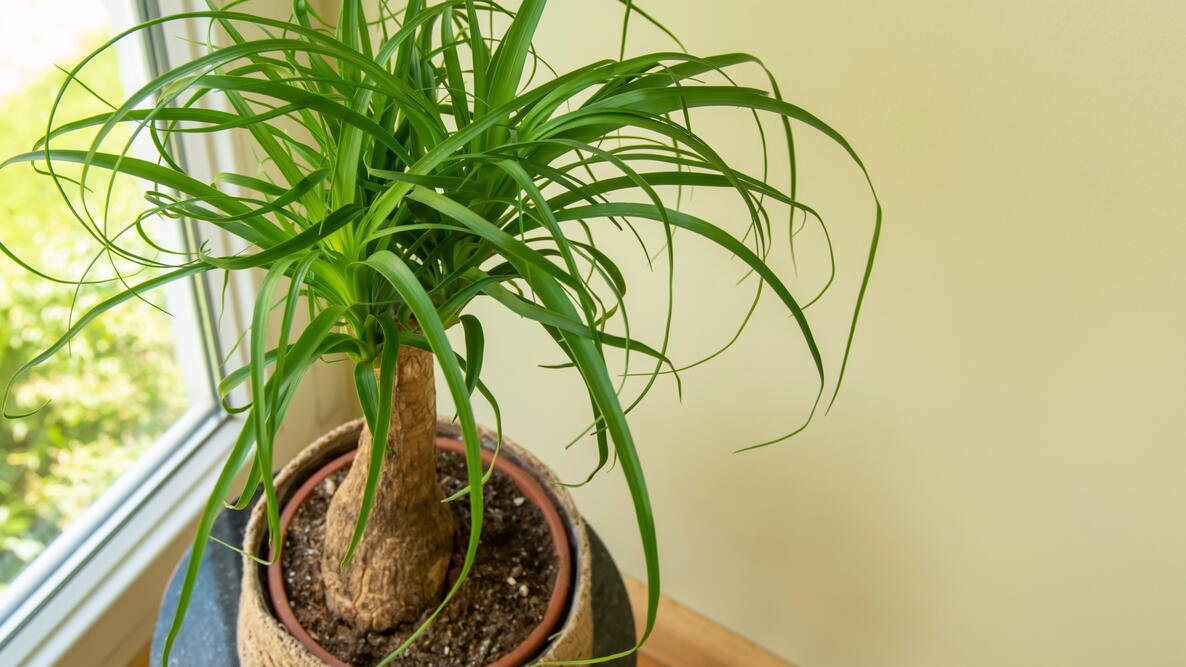
Image Credit:
Renata.Ka/Shutterstock
Botanical Name
Beaucarnea recurvata
Sun Exposure
Soil pH
Plant Type

More Like This
Comments
My pony tail palm has little white dots on the leaves. how do I fix that
Hi Sandra,
If it were mine that had white spots and I didn't know what they were, I'd start with a good long thorough shower. Making sure to get the areas where the leaves come out of the stem. If it comes back I'd put it outside of in the tub and spray it with Neem Oil. (I bought mine on Amazon).
I hope this helps.
Here in southern Florida pony tail palms can grow outside and can get quite large. Some people call them "Hooville palms" because they look like something that Dr. Seuss would draw.
How should a ponytail palm be pruned, it has several brown leaves and drooping stalks.
How to prune my ponytail plant
Is ponytail plant poison for my cat. I have to put it up high for him not eat it. Please tell me. Helen Simpson
No, it's not. I had researched this because my cat likes to play jungle kitty in the leaves and munches on them now and again 😹
one of the shoots on my plant broke off the top of the plant when I moved. Do you think it will grow back it's been 3 months and no sign of any growth
Yes it will given time. Slow but sure.
- « Previous
- 1
- 2
- …
- 10
- Next »
📣The Gardening Club Just Got Better! 3 Deliveries, 10% Store Discount, and more!

It sounds like your issues stem from overwatering your Ponytail Palm. A squishy trunk and brown spots on the leaves are both signs of too much water. Ponytail Palms are tough succulents designed to withstand dry and hot conditions and only require water every week or two and allowing for growing medium to dry out inbetween waterings. Their root systems are designed to absorb and store water and too much moisture can oversaturate the roots. If the problem persists, root rot can develop and can spread up, causing the trunk to become mushy.
Your issues can also be a result of poor drainage, using the wrong growing medium, or the incorrect container. You want to ensure that your container—which it is best to use an unglazed clay or terracotta pot as both are porous and allow the growing medium to breathe—has plenty of drainage holes. As far as growing medium, it is best to use a cactus or succulent mix combined with sand or perlite. Improper light can also be an issue.
From the sounds of things, your Ponytail Palm is not improving so it might be time to remove your plant from its container and check the roots for signs of rot. If the roots look healthy, you can simply repot it. If there are signs of root rot, you will want to cut away any dead, dying, or affected roots. Then rinse the remaining roots and allow them to dry out before repotting in fresh growing medium. Unfortunately, if the roots are all dead or affected, there is a good chance your Ponytail Palm is too far gone and should be discarded.