
Planting
Where to Plant Tulips
Tulips prefer full sun or afternoon sun. In Zones 7 and 8, choose a shady site or one with morning sun only, as tulips don’t like a lot of heat.
The soil must be well-draining, neutral to slightly acidic, fertile, and dry or sandy. All tulips dislike areas with excessive moisture. Prepare the garden bed by using a garden fork or tiller to loosen the soil to a depth of 12 to 15 inches, then mix in a 2- to 4-inch layer of compost.
Shelter tall varieties from strong winds.
When to Plant Tulips
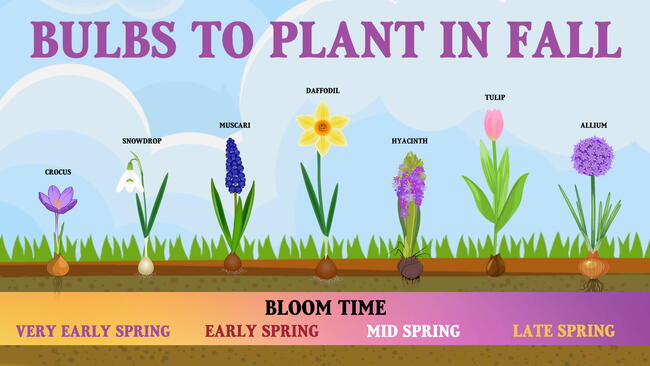
Plant tulip bulbs in fall, once the soil has cooled but before the ground freezes. Give them time to develop roots before winter. Your first fall frost is not the planting deadline—you can still plant afterward if the ground remains workable.
Timing depends on where you garden:
- Cold-winter regions: Plant during fall as soils cool. October is ideal in Iowa, for example; tulips can still be planted later if the ground hasn’t frozen.
- Mild-winter regions: Planting may extend into late fall or early winter. Local recommendations vary: Georgia Extension gives October through late December for spring-flowering bulbs, while LSU recommends late December or early January for pre-chilled tulips in its Louisiana guidance.<p>
Where winters don’t provide enough cold, tulip bulbs may need pre-chilling to bloom. Buy pre-chilled bulbs or follow your supplier’s refrigeration instructions for your varieties and climate. Recommended chilling periods vary, so no single refrigerator schedule suits every gardener. Keep bulbs away from ripening fruit, and plant promptly after chilling.
For more on choosing and planting spring-flowering bulbs, see our fall bulb planting guide.
Buying bulbs early gives you the best selection, but you don’t need to plant them in warm soil immediately. Until planting time, store them in a cool, dry place. If you’re running late, plant while the ground is still workable rather than saving the bulbs until spring.
Missed fall planting? See our advice on planting tulip bulbs in winter.
How to Plant Tulips
- Check the planting depth. Plant larger garden tulips 6 to 8 inches deep, measured from the bulb’s base to the soil surface. Smaller species tulips generally need a depth of 3 to 5 inches. Follow the instructions for your bulbs.
- Adjust for your soil. In heavy clay, you can plant bulbs 1 to 2 inches shallower than the usual recommended depth. Good drainage is still essential; shallower planting won’t solve a waterlogged bed. Avoid adding small amounts of sand to clay soil to improve drainage.
- Space the bulbs. Allow 4 to 6 inches between larger tulips and about 3 to 4 inches between smaller types. Plant in groups for a generous splash of spring color.
- Set each bulb pointed end up. Backfill with soil and water thoroughly to settle the soil around the bulbs and encourage root growth. Avoid leaving the soil soggy.
Growing
- Water when needed. If fall weather is dry, water as needed until the ground freezes. During spring growth and flowering, check the soil and water when it becomes dry. Rain may provide enough moisture, but an occasional shower isn’t always enough.
- Avoid soggy soil. Tulips need good drainage throughout the year. Once the foliage dies back and the bulbs become dormant, avoid keeping the bed wet with frequent summer irrigation.
- Fertilize only as needed. Bulbs contain the stored energy for their first spring’s flowers. If you grow tulips for just one season, fertilizer generally isn’t necessary. For established plantings, use soil-test recommendations to guide feeding and follow the fertilizer label.
- Remove faded flowers, but leave the leaves. If you want tulips to return next year, snip off spent blooms before they form seeds. Let the foliage turn yellow and die back naturally before removing it—those green leaves help the bulb store energy for next spring’s flowers.

Types
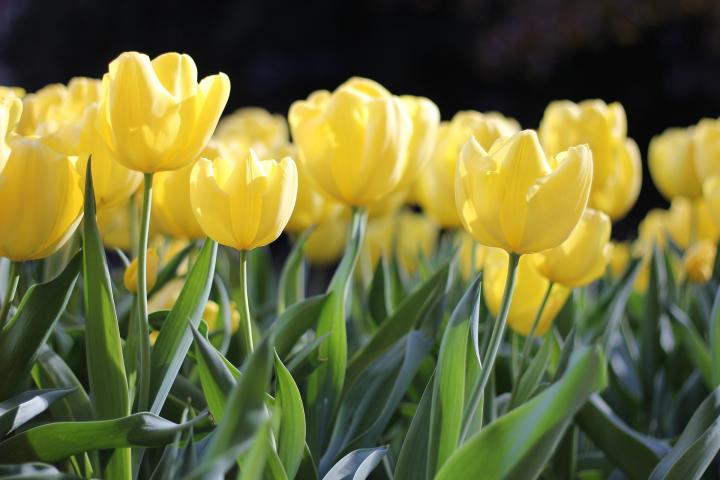
Tulip flowers may be single, double, ruffled, fringed, or lily-shaped, depending on the variety.
- ‘Cracker’: purple, pink, and lilac petals; midseason bloomer
- ‘Ile de France’: red blooms on stems to 20 inches tall; midseason bloomer
- ‘Marilyn’: large, ruffled, candy cane-colored flower; late-season bloomer
- ‘Spring Green’: creamy-white petals feathered with green; late-season bloomer
- ‘Renown’: hot pink, egg-shaped flower; late-season bloomer
Wild, or “species,” tulips are small in size, ranging in height from 3 to 8 inches. They are tougher than hybrids. Rock and herb gardens are ideal places to plant them. They look stunning when planted in large groupings.
- For early to midspring bloom time: Tulipa bakeri, T. batalinii, T. humilis, T. kaufmanniana, T. turkestanica
- For later blooming time: T. linifolia, T. neustreuvae, T. sprengeri, T. vvedenskyi
- For multicolor varieties: T. biflora, T. greigii ‘Quebec’, T. praestans ‘Fusilier’ and ‘Unicum’, T. tarda, T. turkestanica
- For a container: T. kaufmanniana ‘Goudstuk’
- For (mottled) foliage: T. greigii (mottled or striped), T. fosteriana ‘Juan’, T. kaufmanniana ‘Heart’s Delight’
- For fragrance: T. aucheriana, T. biflora, T. saxatilis, T. sylvestris, T. turkestanica
- For warmer regions: Lady tulip (T. clusiana), Candia tulip (T. saxatilis), and Florentine tulip (T. sylvestris) overwinter in the South or mild-winter areas of the West (Zones 8 to 10) without the need of a chilling period
There are so many beautiful varieties of tulips. Explore catalogs and experiment in your garden!

More Like This
Comments

Hi Danna,
The best way to store tulip bulbs in the refrigerator is to place them in a brown paper bag. The bulbs don't give off any gasses that I know of, but fruit in the fridge give off ethylene gas as they ripen. The ethylene will spoil the bulbs, so try to keep fruit out of the fridge while the bulbs are in there.
After the leaves and stems turn yellow you can dig them up and transplant them to a new spot.
- « Previous
- 1
- 2
- …
- 10
- Next »

You do not need to dig up your tulips. Let the tulips' foliage die down from green to yellow. Don't remove the green foliage. Once died back, strip off the foliage and keep the bulbs in the soil.