Tulip bulbs are typically planted in the fall, but what happens when you forget to plant them and it’s already December? You plant them anyway—in the ground or in pots! Here are some tips on how to plant bulbs in the winter.
What Do You Do With Forgotten Tulips?
A few Januaries ago, I came across a bag of tulip bulbs that had gotten misplaced in my gardening shed. Evidently, the dozen tulips hid when I had planted over 150 other bulbs in the previous October. I was looking forward to seeing this variety’s colors lining my garden path. At least, that was the plan.
After doing a little research, I came across a study about planting tulip bulbs on top of the ground and late in the season, done by Cornell University.
- Researchers found that you can grow gorgeous tulips in only mulch, 2 inches being the optimum depth. They experimented with mulch layers up to 6 inches deep and determined the 2-inch covering (renewed every autumn) produced the largest amount of flowers and the most vigorous plants.
- If you are looking at unplanted bulbs in December or January or even February—get them into the ground. Don’t wait for spring or next fall. Bulbs aren’t like seeds. They won’t survive out of the ground indefinitely.
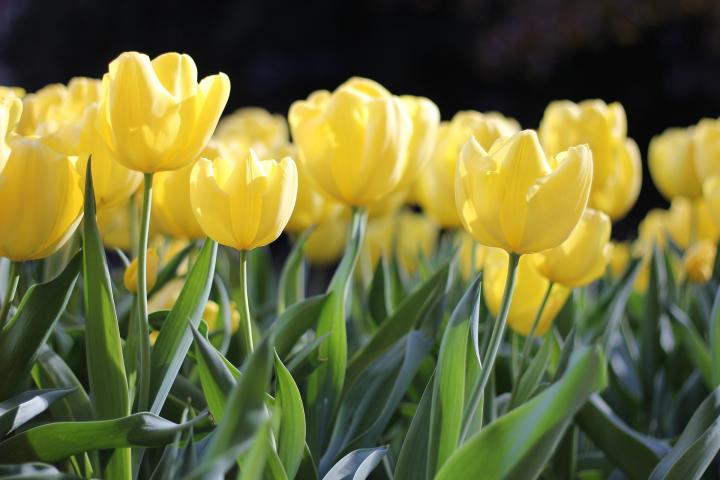
How to Plant Tulips in Winter
According to the Cornell study (done over a 6-year period), you should plant tulips during winter in this way:
- Clear away snow and loosen soil, if possible. If not, choose an area with soil full of organic matter.
- Scratch in bulb fertilizer. If the ground is totally frozen, scatter fertilizer sparingly and over a larger range than normal.
- Place bulbs on top of soil. Do not press them in, as this will damage the bulb base, where roots form.
- Cover with 2-4 inches of aged mulch or finished compost. Go for the thicker layer if planting during the height of winter, like I did.
- Renew mulch covering often to be sure there is at least a 2-inch layer.
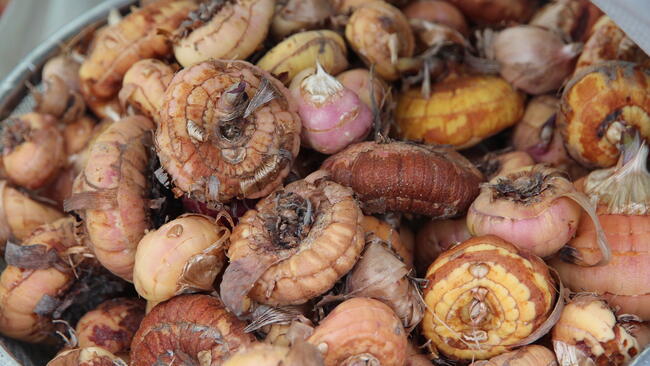
Before you plant those forgotten bulbs, make sure they’re still good. Gently squeeze them and if they are firm (not dry or spongy), they are likely fine. After all, nothing ventured, nothing gained!
Planting in Pots
If the ground is too frozen for digging, another option is to plant the bulbs in pots!
If you try this, keep the pots in a cool, unheated area with temperatures between 38°F and 50°F (3°C and 10°C)—an attached garage or a home refrigerator often does the job. Water them and keep the soil moist but never soggy. After 8 or more weeks, bring a few pots indoors. Or, once spring begins to warm things up, move the pots outdoors to bloom.
What If Bulbs Come Up Early in Winter?
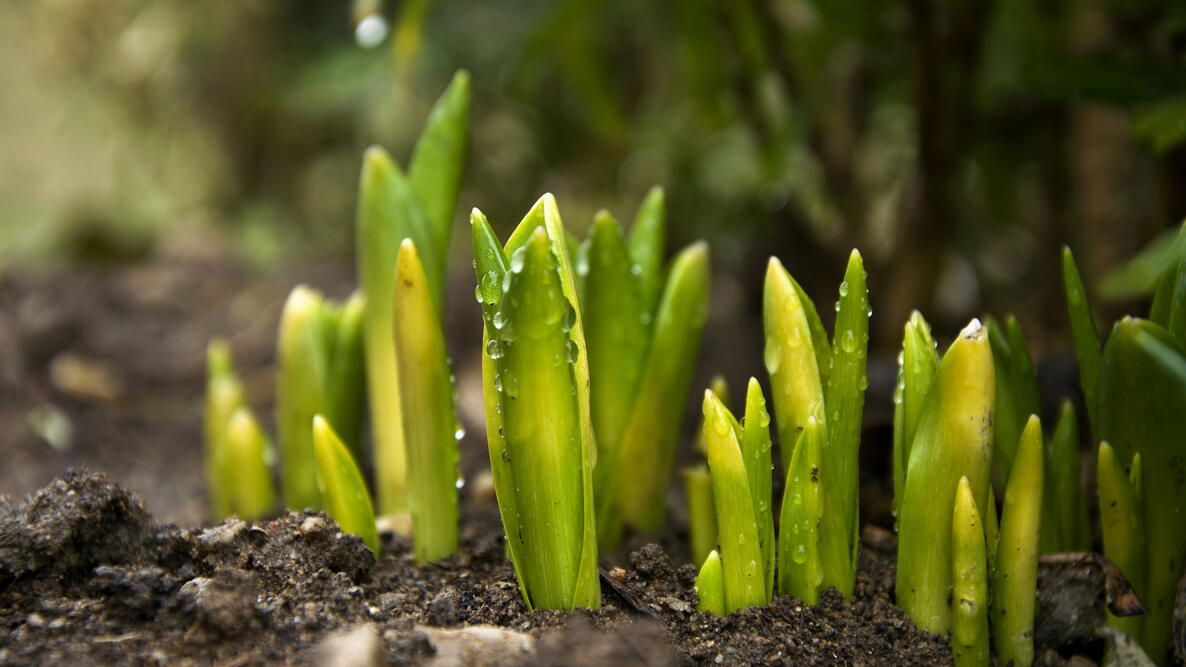
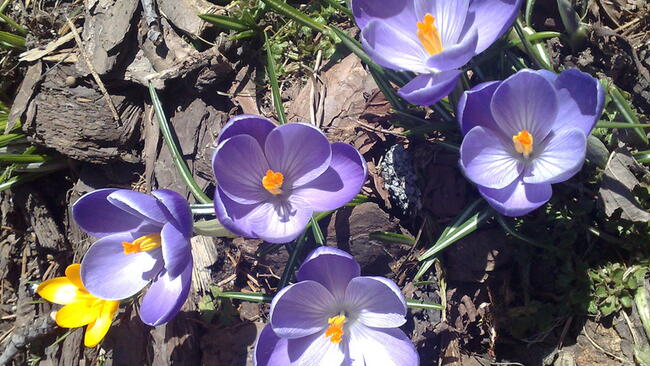
It’s not uncommon to have a mild winter and to find your tulips, daffodils, or other spring bulbs sprouting. Don’t worry about this. Let nature take its course. Spring bulbs shrub off cold weather and even snow. These bulbs are built to survive the cold and even snow. Small bulbs such as snowdrops and crocus actually bloom through the snow. It’s possible that a hard frost will affect the buds or leaf tips, but the bulbs should still flower.
Bottom line: Take your chances. No matter what, the bulbs are better off giving it a fighting chance in the ground or a chilled pot than wasting away in the garage or cupboard. Flower bulbs are survivors by nature’s design. Every year, stories abound of bulbs that bloom after being planted under the most improbable circumstances.
Want more advice on planting and growing tulips? See our Tulips Growing Guide, as well as Fall Bulbs: Planting for Spring Flowers.

More Like This



We, or at least I, an Almanac editor, feel your pain and know your hunger. I too have a peach tree —now— for the squirrels. I got mouthwatering fruit the first year, then they discovered it. A few years ago a master gardener suggested hanging sparkly Christmas ornaments on the limbs. The "shine" would deter the critters. Well, only during the day. In the morning I would find barely nibbled hard peaches on the ground. And only for a while. A few of the ornaments are still on the tree. I asked everyone I met or thought might have a good answer. Even the cooperative extension service (at least the one I contacted) could provide no advice. A grower at a farmer's market was mum. Of course, he had a field of trees; perhaps he built loss into his season. If you ever learn of a fool- (squirrel-)proof way of keeping them away, please share.
The only advice you might find helpful is to pick the peaches well before they are ripe, and ripen them indoors/in a protected area. They are not quite as good as tree-ripened, but you feel at least like you kept the squirrels from the entire harvest.
- « Previous
- 1
- 2
- …
- 10
- Next »

Comments