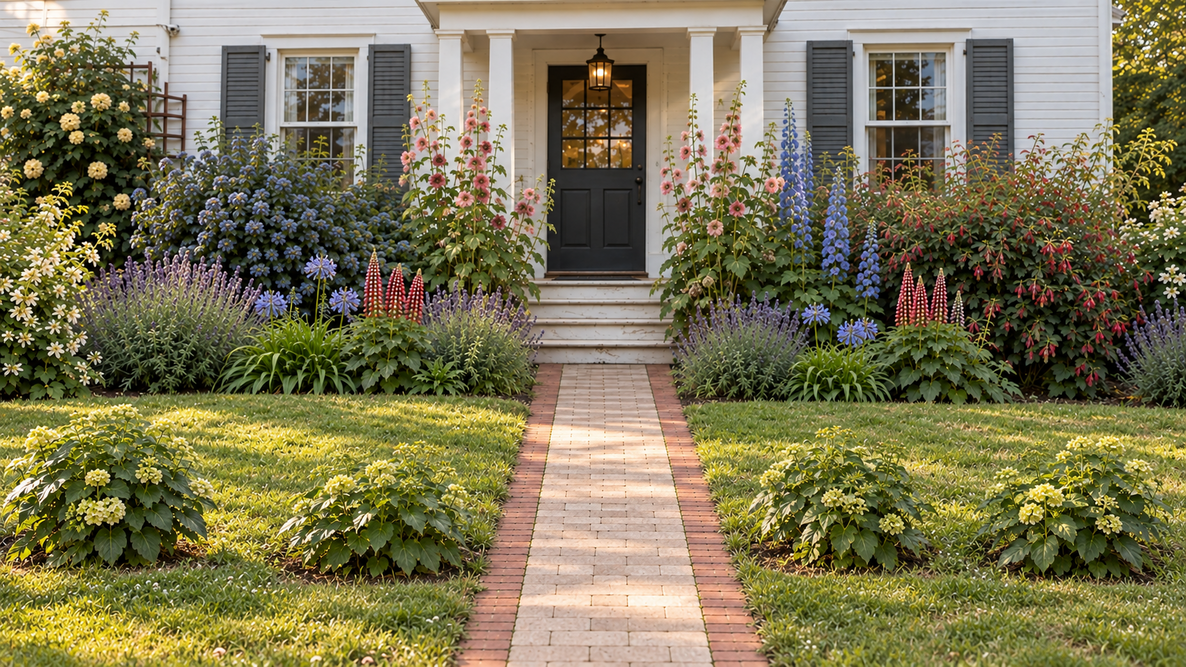
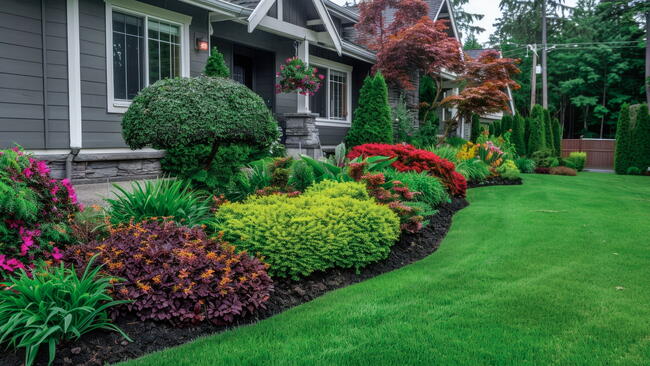
Create a welcoming front yard with this flower garden plan for curb appeal. The layout layers flowering shrubs, tall perennials, lavender, and spring bulbs around a central walkway, with four panicle hydrangeas near the sidewalk for structure at the front.
The garden is designed to change through the growing season—not bloom all at once. Spring bulbs and flowering shrubs give way to summer perennials, fuchsia, and later-blooming hydrangeas, creating a succession of color from spring into fall.
Quick Plan Overview
| Feature | Details |
|---|---|
| Garden Type | Front yard flower and foundation garden |
| Difficulty | Beginner-friendly |
| Sun Exposure | Full sun to light part sun |
| Season | Spring through fall |
| Soil | Fertile, well-draining garden soil |
| Maintenance | Moderate; seasonal pruning, occasional staking, and regular watering while plants establish |
| Special Features | Layered curb appeal, succession bloom, fragrance, and pollinator-friendly flowers |
| Garden Size | Approximately 18 × 12 feet |
Front Yard Flower Garden Layout

This design uses flowering shrubs as long-term structural anchors, with taller flowers toward the house and lower-growing perennials and bulbs toward the front. A climbing rose adds vertical interest at one corner, while the hydrangeas repeat across the front of the yard near the sidewalk.
Keep in mind that this plan shows plant placement, not a single moment in bloom. Camassia, deutzia, ceanothus, mock orange, and lupines provide much of the earlier color. Lavender, agastache, hardy fuchsia, and panicle hydrangeas extend interest later into the season. The goal is a succession of flowers rather than having every plant bloom at once.
Plant List
The quantities below match the garden plan. Bloom times are approximate and will vary with climate, weather, and variety. When adapting the plan, choose plants suited to your local growing conditions and winter hardiness.
Shrubs and Structural Plants
| Plant | Quantity | Main Interest |
|---|---|---|
| Panicle hydrangea | 4 | Mid- to late-summer flowers and lasting fall interest |
| Mock orange | 1 | Fragrant white flowers in late spring |
| Weigela | 1 | Late-spring flowers, with possible later rebloom |
| Ceanothus | 1 | Blue spring flowers; choose a type hardy in your climate |
| Climbing rose | 1 | Vertical structure and yellow flowers |
| Deutzia | 1 | White spring flowers |
| Hardy fuchsia | 1 | Dangling flowers from summer into fall |
Perennials and Bulbs
| Plant | Quantity | Main Interest |
|---|---|---|
| Lavender | 6 | Fragrant flowers and silvery foliage |
| Agastache | 3 | Long summer bloom and pollinator value |
| Lupine | 6 | Tall flower spires in late spring to early summer |
| Hollyhock | 7 | Tall summer flower spires and cottage-garden height |
| Delphinium | 5 | Tall late-spring to early-summer spires; may need staking |
| Camassia | 10 to 14 | Late-spring bulbs with blue-purple flowers |
Need growing instructions? See the Almanac Flower Growing Guides.
How to Create This Front Yard Flower Garden
- Choose the right site and plants. This design works best in full sun to light part sun. Before buying plants, check mature size, sun needs, and winter hardiness for your location—especially for ceanothus and hardy fuchsia.
- Prepare the soil. Clear weeds and loosen the planting area. Add compost or other organic matter if your soil needs improvement. Shrubs and perennials will remain in place for years, so good soil preparation pays off.
- Plant the structural layer first. Position the climbing rose, mock orange, ceanothus, weigela, deutzia, hardy fuchsia, and hydrangeas before adding smaller plants. Allow enough room for each shrub to reach its mature size.
- Add height and mid-layer flowers. Place hollyhocks, delphiniums, lupines, agastache, and lavender among and in front of the shrubs. Repeating plants on both sides of the walkway helps the garden feel connected without making it perfectly symmetrical.
- Add spring bulbs. Plant camassia toward the front of the border and between perennials, where its spring flowers can appear before later plants fill out.
- Water well while plants establish. Water deeply after planting and during dry periods through the first growing season. A light organic mulch can help conserve moisture and suppress weeds.
Seasonal Care
- Panicle hydrangea: These hydrangeas bloom on new growth. If pruning is needed, do it in late winter or early spring before new growth begins.
- Lavender: Lightly shape plants without cutting hard into old woody stems. Timing varies with climate, so avoid heavy late-season pruning in colder regions.
- Delphinium and hollyhock: Stake tall stems early if your site is exposed to wind.
- Spring-flowering shrubs: If mock orange, deutzia, or weigela needs pruning, prune after flowering so you do not remove next season’s flower buds.
Gardener Spotlight: Susie’s Experience
The backbone of my garden plan is the shrubby backdrop. I wasn’t interested in shaping shrubs or overpruning, but in beautiful flowering perennial plants that would delight the eye. (Most are spring-flowering, but if you choose a fall-flowering Fuchsia, and some of the later-flowering hydrangeas, you should be able to have something pleasant to look at throughout the season.)
They are mixed with low-maintenance perennial flowers, which I chose to add color and also feed the native pollinators through the season. Finally, a few bulbs are planted at the front of the border to soften the look for spring before the leaves have come out!


More Garden Plans to Explore
- Perennial Flower Garden Plan — A layered border designed for reliable color, texture, and structure.
- Pollinator Garden Plan — A flower-filled layout designed with pollinators in mind.
- Three-Season Garden Design — A plan built around overlapping bloom times from spring through fall.
The Front Yard Flower Garden Plan
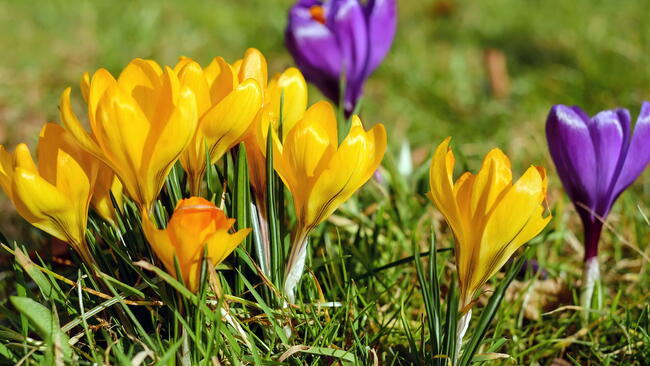
This plan combines flowering shrubs (your structural anchors) and mid-layer perennials. We recommend adding early bulbs to the front of the bed (e.g., crocus adds late winter color before shrubs leaf out).
Frequently Asked Questions
-
Will all of these plants bloom at the same time?
No. The garden is intentionally designed for succession. Spring bulbs and flowering shrubs start the display, followed by tall perennials and lavender, with hardy fuchsia and panicle hydrangeas helping carry color later into the season.
-
Do I need full sun for this plan?
Full sun will suit the greatest number of plants in this design. If your front yard receives only part sun, choose substitutions that match your light conditions rather than expecting every plant in the original plan to perform equally well.
-
Is this a low-maintenance front yard garden?
It is manageable once established, but it is not maintenance-free. Expect seasonal pruning, occasional staking of tall flowers, watering during dry spells, and some cutting back or tidying as plants finish blooming.
-
Can I substitute different plants?
Yes. Match replacements to the original plant’s mature height and width, sun requirements, hardiness, and bloom season. Keeping those characteristics similar will preserve the layered look and succession of color.
-
Will this garden attract pollinators?
Many of the flowers in this plan provide pollen or nectar for bees and other pollinators, including lavender, agastache, lupine, ceanothus, and weigela.


Vegetable Garden Plans
Flower Garden Plans
More Like This

Comments