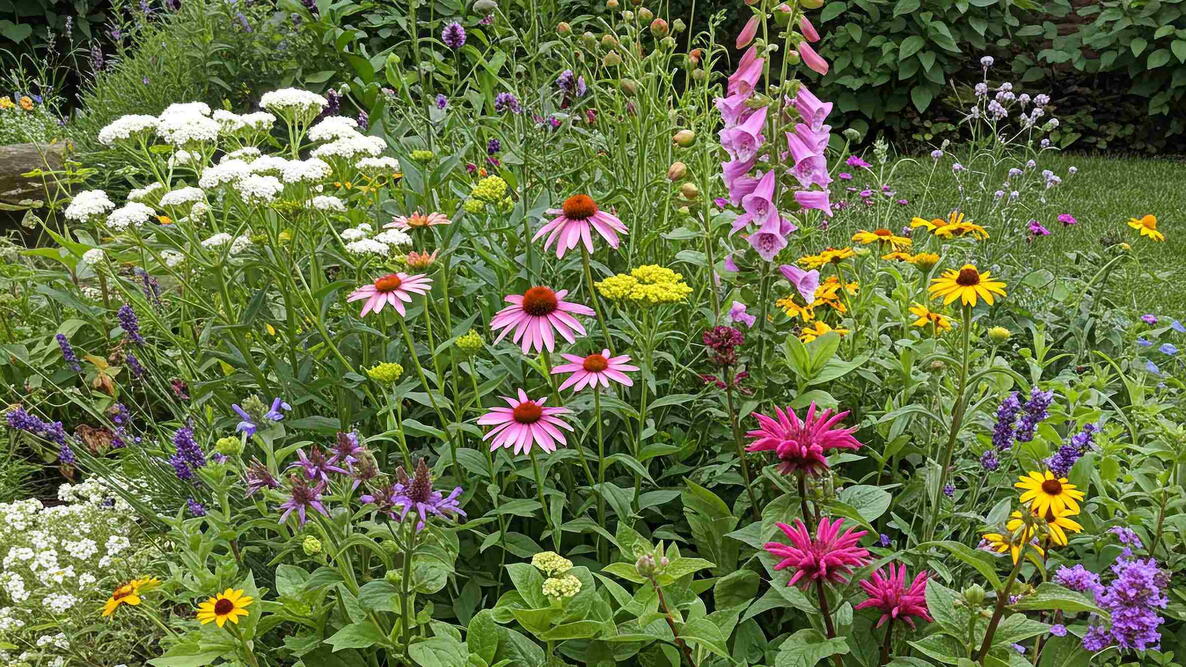
Want to attract more bees, butterflies, and other pollinators to your yard? This pollinator garden layout combines colorful flowers in a variety of shapes, heights, and bloom times. From spring crocuses to summer coneflowers and fall-blooming dahlias, the garden offers nectar, pollen, and seasonal beauty.
The illustrated plan features 12 flowering plants arranged around a central flowering lawn, creating a natural-looking garden that’s full of life. Use the layout and plant list as inspiration, adapting the design to your space, growing conditions, and local pollinators.
| Feature | Details |
|---|---|
| Garden Type | Pollinator flower border with a central flowering lawn |
| Difficulty Level | Beginner to intermediate |
| Hardiness Zones | Adaptable to Zones 4–8 with plant substitutions and seasonal care |
| Sun Exposure | Mostly full sun (6+ hours daily); partial shade for pulmonaria |
| Seasonality | Early spring through fall, depending on climate |
| Soil Type | Well-drained garden soil; moisture requirements vary by plant |
| Watering Needs | Water regularly during establishment; adjust to individual plant needs |
| Special Features | Flowers for bees, butterflies, and hoverflies; seasonal blooms; flowering lawn |
| Garden Size | Approximately 16 × 14 feet as illustrated; adaptable to other spaces |
Pollinator Paradise Garden Layout
This design arranges flowering plants around a central lawn of clover and daisies. Different flower shapes attract different pollinators: open blooms such as yarrow and coneflowers offer easy access to nectar and pollen, while tubular flowers such as foxglove and agastache appeal to long-tongued bees. Use the illustration as a guide, adjusting plant placement for mature size and growing conditions.

Plants in This Pollinator Garden
This garden combines 12 flowering plants to provide nectar and pollen from early spring through fall. Bloom times and mature heights are approximate and vary by variety and climate.
| Plant | Bloom Time & Height | Pollinator Benefits |
|---|---|---|
| Lavender | Summer; 18–24 in. | Fragrant flower spikes attract bees, including long-tongued species. |
| Sweet alyssum | Spring–fall; 6–12 in. | Tiny flowers attract hoverflies, small bees, and other beneficial insects. |
| Echinacea (coneflower) | Summer; 24–36 in. | Open, daisy-like flowers attract bees and butterflies. |
| Pulmonaria (lungwort) | Early spring; 12–18 in. | Provides early nectar for bees; grows best in partial shade. |
| Yarrow | Summer; 18–24 in. | Flat flower clusters provide easy access for small bees and beneficial insects. |
| Agastache | Summer–early fall; 18–30 in. | Nectar-rich tubular flowers attract bees and hummingbirds. |
| Crocus | Early spring; 4–6 in. | Supplies pollen and nectar for early-emerging bees. |
| Borage | Summer; 18–24 in. | Star-shaped blue flowers are popular with bees. |
| Poached egg plant | Spring–summer; 6–8 in. | Low-growing flowers attract hoverflies and other small pollinators. |
| Foxglove | Summer; 36–48 in. | Deep, tubular flowers attract bumblebees. |
| Dahlia | Late summer–fall; 24–48 in. | Choose single, open-centered varieties so pollinators can reach the pollen. |
| Monarda (bee balm) | Summer; 24–36 in. | Tubular flowers attract hummingbirds and bees. |
See growing guides to all plants listed above: Almanac Flower Growing Guides.
Note: Foxglove is poisonous if ingested. Keep it away from children and pets, or substitute another pollinator-friendly flower.
How to Create Your Pollinator Garden
Step 1: Choose a Site and Prepare the Soil
- Choose a location with at least 6 hours of sunlight daily for most plants. Pulmonaria (lungwort) is an exception: give it partial shade and more consistent moisture, or substitute another early bloomer.
- Prepare well-drained soil, adding compost where needed. Lavender prefers leaner, drier soil with excellent drainage.
Step 2: Arrange and Plant
- Arrange plants in their pots before planting, following the circular layout and allowing room for mature growth.
- Group flowers together to make them easier for pollinators to find. Include early-, mid-, and late-season bloomers.
- Plant crocus bulbs in fall for early spring flowers. Allow the central lawn of clover and daisies to bloom rather than mowing it frequently.
Step 3: Water and Maintain Your Garden
- Water regularly during establishment, then adjust watering to individual plant needs.
- Mulch around plants to retain moisture and suppress weeds, keeping mulch away from plant crowns.
- Avoid insecticides that can harm pollinators. Leave some seed heads and standing stems through winter to provide food and shelter for wildlife.
Gardener Spotlight: Alex’s Experience
“I planted this pollinator garden in my backyard last spring and was amazed at the activity. Early in the season, I spotted bumblebees on the crocuses and hoverflies on the alyssum. By summer, lavender, echinacea, and foxgloves were buzzing constantly. The garden not only looked gorgeous but also felt alive—every day I saw new pollinators exploring different flowers.”


More Garden Plans to Explore
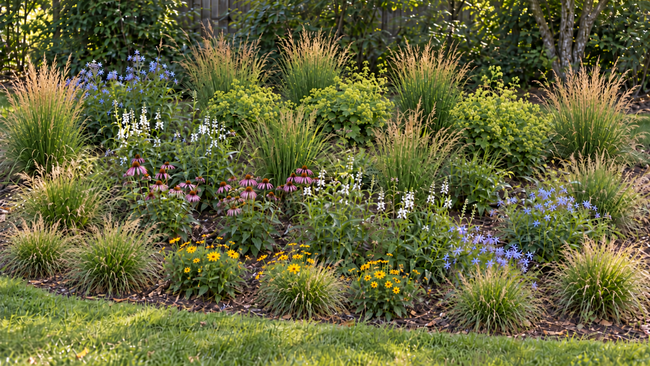
- Perennial Flower Garden Layout — A colorful border of flowering perennials and ornamental grasses.
- Raised-Bed Cut-Flower Garden Plan — Three raised beds filled with annual flowers for cutting.
- Shade Garden Layout — A foliage-focused alternative for shady or partly shaded yards.
For more pollinator-friendly gardening advice, see How to Create a Pollinator Garden. Want to customize your layout? Try the Garden Planner for Free.
Frequently Asked Questions
-
Do I need to plant only native species?
Not exclusively, but start with flowers native to your region. Native plants support local pollinators and often provide food for caterpillars as well as nectar and pollen. Non-invasive flowers such as lavender can also be valuable additions.
-
Can I use this plan in a small backyard or container garden?
Yes! Even a small flower bed or a few containers can support pollinators. If you have limited space, choose a smaller selection of plants rather than trying to fit all 12 into the garden. Group flowers together and allow room for mature growth.
-
How can I keep my pollinator garden blooming throughout the season?
Choose flowers with overlapping bloom times. Crocuses provide early spring flowers, coneflowers and bee balm bloom in summer, and dahlias can continue into fall. Adjust your plant choices to your local growing season to provide nectar and pollen for as long as possible.


Vegetable Garden Plans
Flower Garden Plans
More Like This

Comments