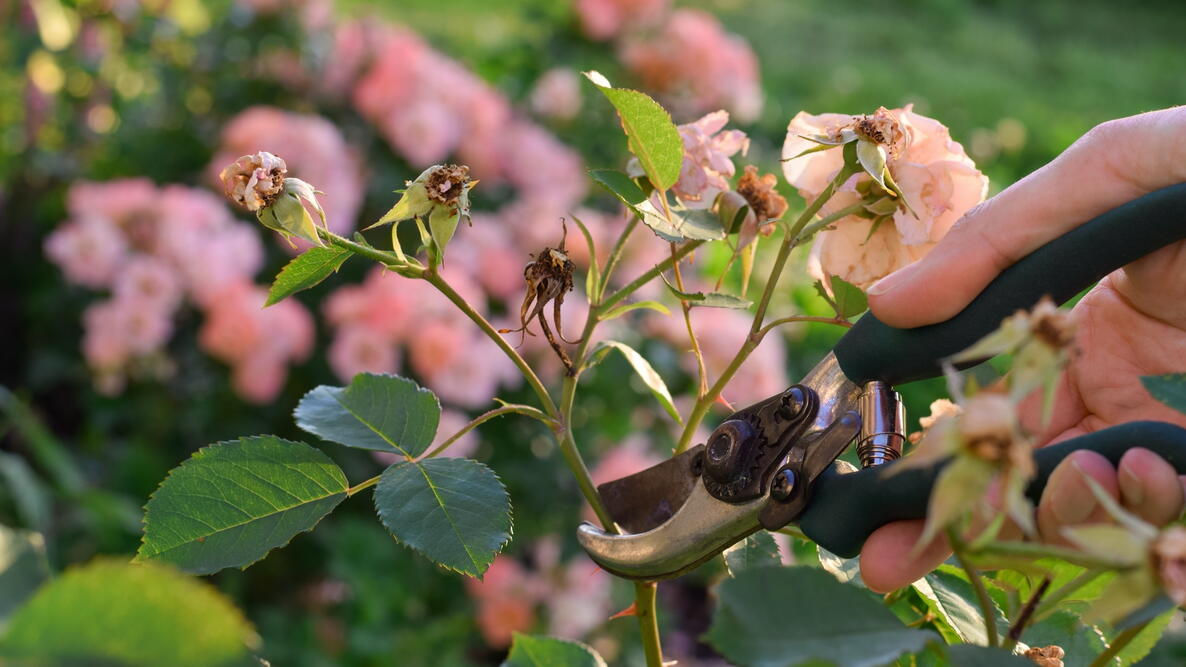
Not sure where to cut when your roses start to fade? Deadheading roses simply means removing faded flowers. It’s optional, but it can encourage more blooms on roses that flower repeatedly. Here’s how to deadhead roses, step by step.
Start when flowers begin to fade or wilt. For most established roses, find a healthy leaf with five leaflets and cut about ¼ inch above the small, outward-facing bud where the leaf joins the stem. We’ll show you exactly where to cut, plus what to do differently with newly planted roses and flower clusters.
How to Deadhead Roses
| What to Do | Quick Instructions |
|---|---|
| Get your tools ready | Use sharp, clean hand pruners and wear thick gardening gloves. |
| Find the right leaf | Follow the faded flower’s stem down to a healthy leaf with five leaflets. |
| Find the bud eye | Look for a tiny bump where the leaf joins the stem, preferably facing outward. |
| Make the cut | Cut about ¼ inch above the bud eye, angling downward away from it. |
| Repeat and clean up | Remove other faded blooms, leaving healthy flowers and unopened buds alone. |
What You’ll Need
- Hand pruners (garden clippers): These look like sturdy scissors and make clean cuts through rose stems. The best kind for roses are called bypass pruners, with blades that slide past each other. You may also see them called secateurs. Ordinary scissors may work for very thin flower stalks, but pruners are better for thicker stems.
- Thick gardening gloves: Leather gloves offer excellent protection from rose thorns, but any sturdy, thick gloves will help protect your hands from scratches.
- Rubbing alcohol and a cloth: To clean your pruner blades before you begin and between rosebushes.
Step 1: Get Your Tools Ready
Before cutting, wipe your pruner blades with rubbing alcohol to help prevent the spread of disease. Put on your gardening gloves to protect your hands from thorns.
Step 2: Find Where to Cut
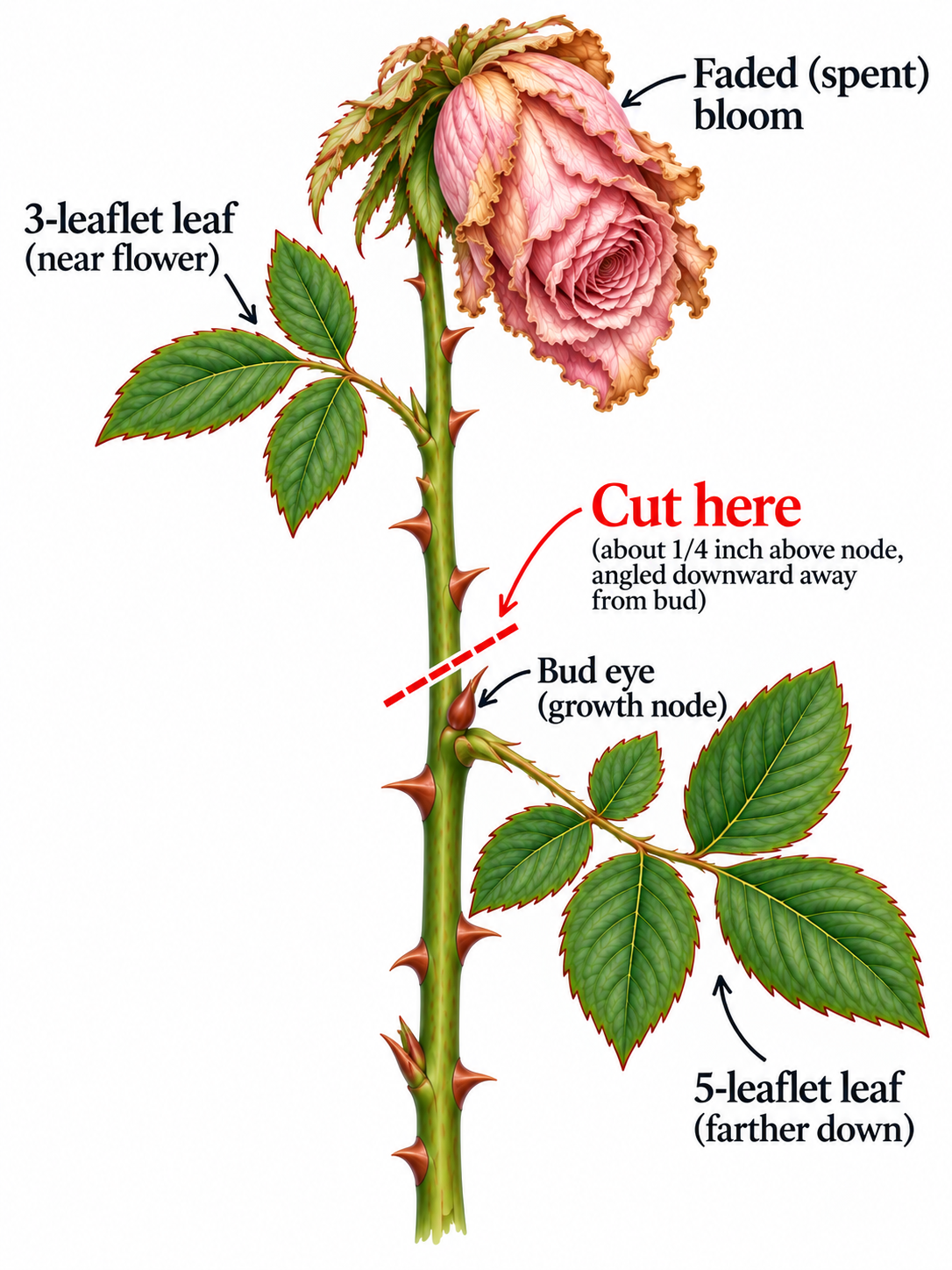
Start at the faded flower and follow its stem downward. Look for a healthy leaf with five leaflets.
- What’s a leaflet? Rose leaves are made up of several smaller leaflets. Near the flower, you’ll often find leaves with three leaflets. Farther down the stem, you’ll usually find leaves with five.
Once you’ve found a five-leaflet leaf, look where it joins the main stem. You should see a tiny bump called a bud eye. This is where new growth can begin.
Choose a bud eye facing outward, away from the center of the rosebush.
Step 3: Make the Cut
Once you’ve found the outward-facing bud eye, position your pruners about ¼ inch above it—roughly the width of a pencil. That small distance matters:
- Too close: You risk damaging the bud or causing it to dry out.
- Too far: The leftover stem forms a stub that can die back and become vulnerable to disease.
Make a clean cut at a slight angle, sloping downward away from the bud. The highest part of the cut should be on the bud side, with the lowest part on the opposite side. This helps rainwater drain away from the bud.
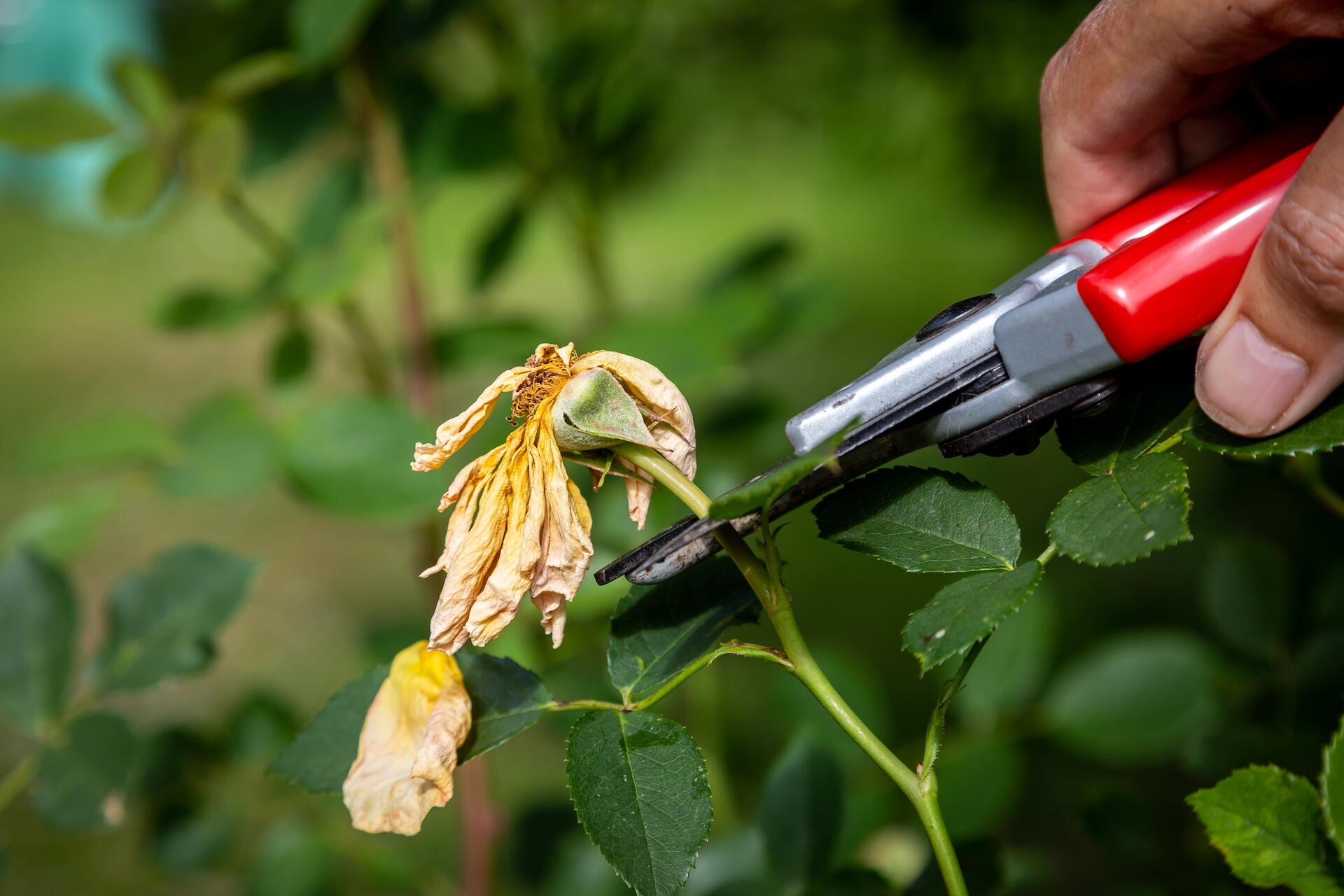
Deadheading a newly planted rose? During its first growing season, cut higher on the stem, just above the uppermost leaf with three leaflets. This leaves more foliage to help your young rose grow.
Repeat with other faded flowers, leaving healthy blooms and unopened buds alone. Collect spent flowers as you go. Healthy material can go in the compost pile, but discard diseased flowers.
How to Deadhead Roses That Bloom in Clusters
For roses that bloom in clusters, some flowers may fade while others are still opening. Watch David Austin Roses demonstrate how to handle them in two stages:
- While the cluster is still blooming: Snip off each faded flower just below its head, leaving healthy flowers and unopened buds alone.
- Once every flower in the cluster has faded: Follow the main flowering stem down to a strong leaf with five leaflets, then make a clean cut just above an outward-facing bud. On first-year roses, cut higher to preserve foliage.
Do You Need to Deadhead Roses?
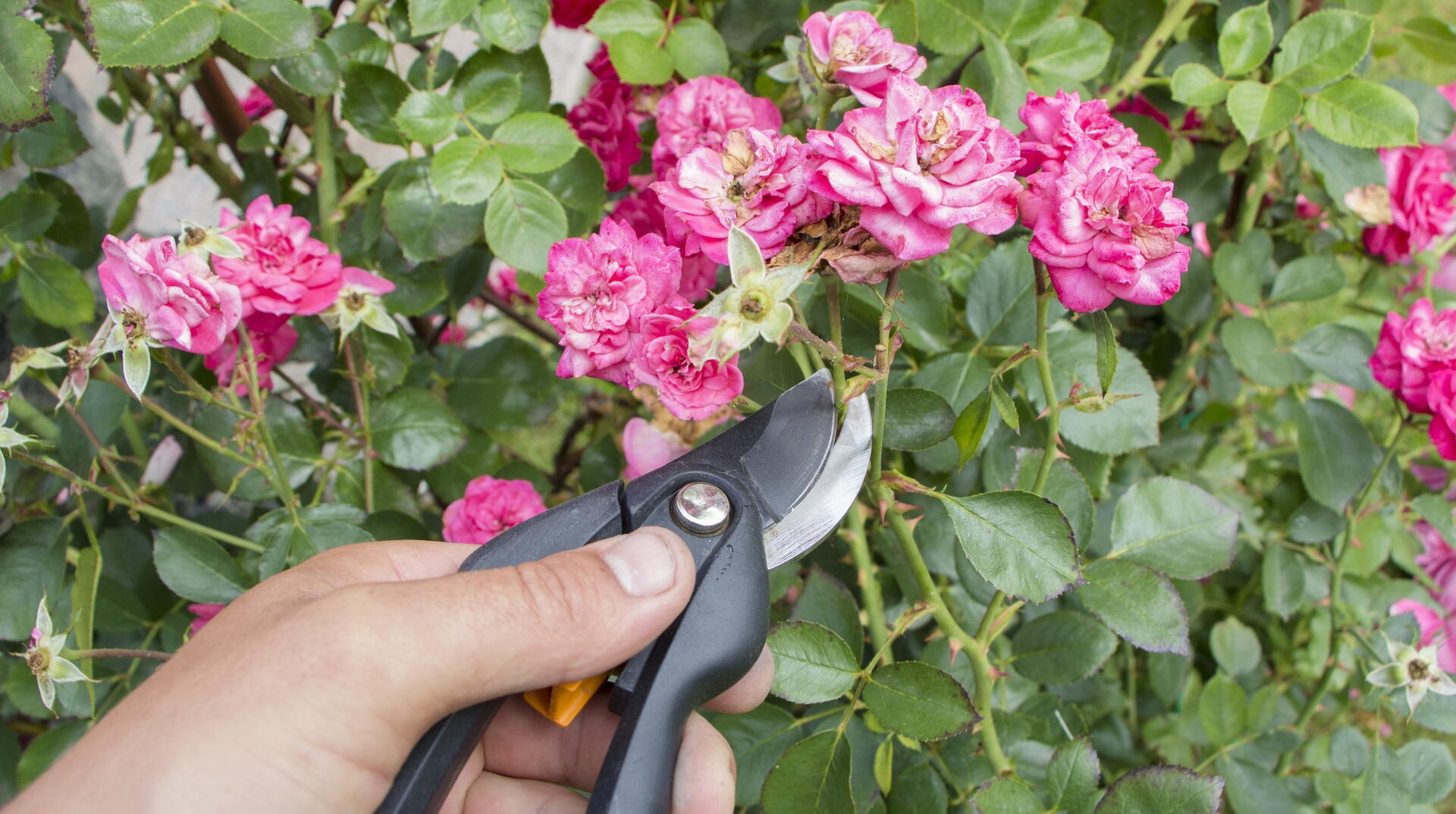
No, deadheading is optional. However, I recommend it for many repeat-blooming roses. Removing faded flowers can encourage more blooms, keep plants looking tidy, and help reduce the risk of gray mold (botrytis), especially during damp weather.
Roses that often benefit from deadheading include:
- Hybrid tea roses
- Grandiflora roses
- Floribunda roses
- Miniature roses
- Repeat-blooming climbing and shrub roses
- Repeat-blooming old garden roses
Do You Need to Deadhead Knock Out Roses?
No. Knock Out roses are self-cleaning, meaning they naturally shed faded blooms and continue flowering without deadheading. You can remove old flowers for a tidier appearance, but you don’t need to do so to keep them blooming.
What About Once-Blooming Roses?
Deadheading won’t make roses that bloom only once produce a second flush of flowers. These include many species roses and once-blooming Old European roses. You can remove faded blooms for appearance, but it isn’t necessary.
Want rose hips? Leave some spent flowers on the plant so the hips can develop for fall color, wildlife, or harvesting. You can even use them to make our rose hip jam!
When to Deadhead Roses—and When to Stop
Deadhead repeat-blooming roses throughout the growing season as flowers fade or wilt. A weekly check is usually enough, although you can remove spent blooms more often if you prefer.
In areas with cold winters, stop deadheading in late summer or early fall—often around August or September, depending on the climate and rose variety. Allowing rose hips to develop can help the plant slow its growth and prepare for winter.
Use our Frost Dates Calculator to check when your first fall frost typically arrives.
Frequently Asked Questions
-
Is Deadheading the Same as Pruning Roses?
Not exactly. Deadheading is a form of light pruning that removes spent flowers while leaving most stems and leaves in place. Pruning roses may involve more extensive cutting to shape the bush, remove unhealthy branches, or encourage strong new growth.
-
What Happens If You Don’t Deadhead Roses?
Your roses won’t be harmed simply because you skip deadheading. Some repeat-blooming varieties may produce fewer flowers while the plant puts energy into developing rose hips. Self-cleaning varieties, including Knock Out roses, continue flowering without it.
Sources
- Pruning Roses — Pruning Roses
- Oregon State University — Pruning Roses
- College of Agricultural, Consumer & Environmental Sciences Illinois Extension — Deadheading for More Blooms
- Clemson Home and Garden Information Center — Pruning Roses

More Like This


Comments