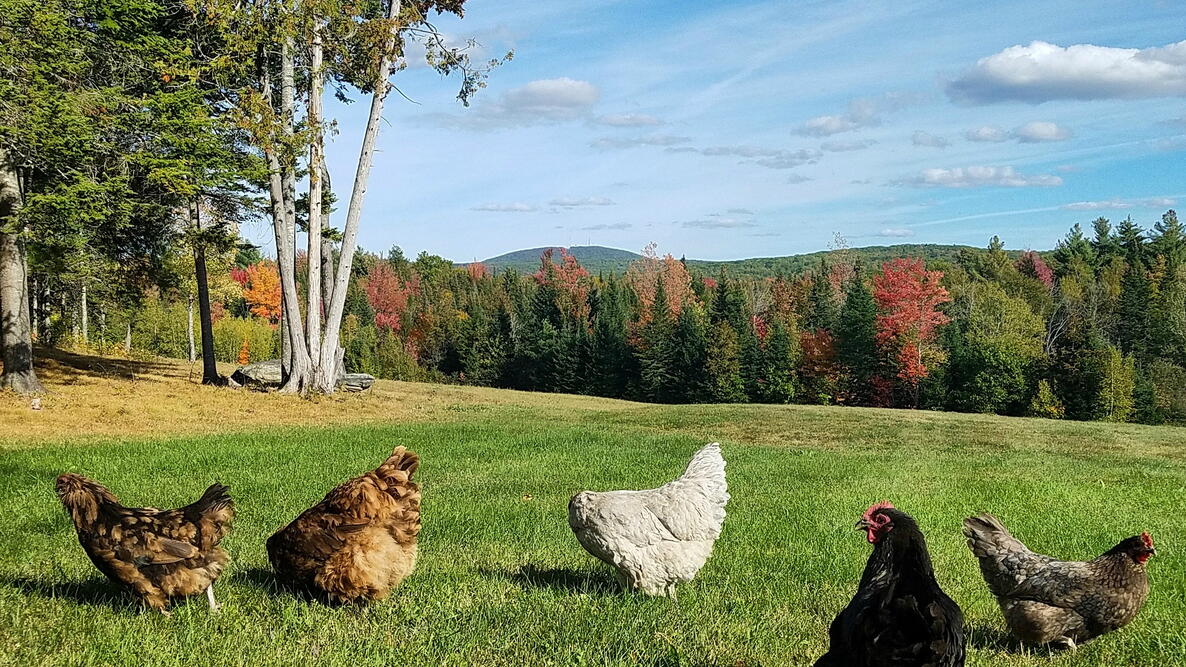
Choosing the right chicken breed is one of the most important decisions when starting a backyard flock. Some chickens are excellent egg layers, while others are known for their friendly personalities or colorful eggs. Climate also plays a role in selecting the best breed. This guide will help you choose chickens that fit your goals, whether you want high egg production, kid-friendly birds, or hardy breeds for your local weather.
Tips for Choosing Your First Chickens
- Start with 3–6 hens
- Choose docile breeds for beginners
- Pick climate-hardy birds
- Consider egg color variety
- Avoid too many roosters
How to Choose the Best Chicken Breed
When it comes to choosing your chicken breeds, there are more breeds out there than you can shake an eggbeater at! We’re talking about hundreds of different breeds—lots of choices!
One of the delights of this step is learning some of the types of chickens and their charming names: Silkie, Showgirl, Silver-Laced Wyandotte, Rosecomb, Redcap, and Russian Orloff, to name a few.
Plus, if you’re raising chickens, you don’t have to choose just one breed! Fortunately, chickens of all different breeds typically get along just fine, and your egg basket will be much more colorful if your flock comprises a variety of chickens.
Maybe you do want colorful eggs. Or, maybe, you want breeds known for their laying prowess. Perhaps docile, kid-friendly breeds are a consideration. Or maybe you live in a cold climate and want to be sure the breeds you choose will be well-suited to your area.
Choosing Chicken Breeds
The chickens you ultimately choose will depend on what criteria are important to you and your family.
First, let’s consider WHERE you live and your type of climate. Not all chickens like cold climates, and some struggle in heat.
Chicken Breeds for Hot Climates
If you live in an area that’s warm and humid for much of the year, then choosing heat-tolerant breeds will be important. Their smallish, sleek bodies and large combs help them stay cool in extreme heat.
- Phoenix
- Minorca
- Andalusians
- Leghorns
- Penedesencas
Chicken Breeds for Cold Climates
Conversely, if you live in a cold climate, then a larger-bodied chicken with a smaller comb will do better. Here are good choices:
- Brahma
- Chantecler
- Australorps
- Barred Rocks,
- Buff Orpingtons
- Cochins
- Wyandottes
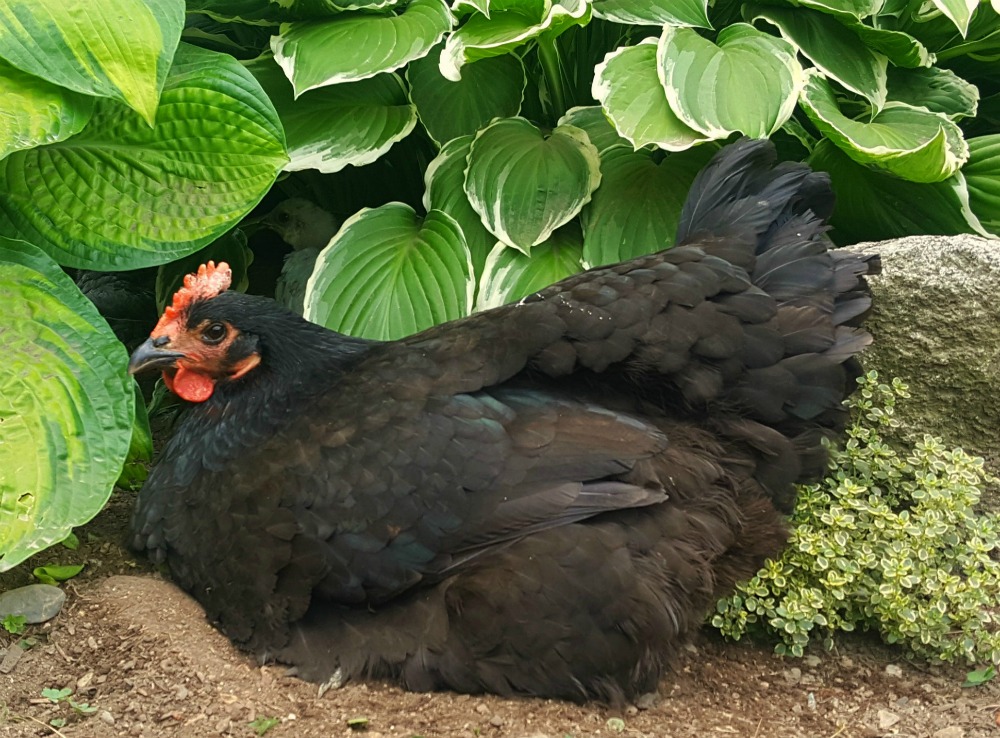
Besides weather and climate, it’s important to know if you need a breed that is a super-productive egg layer, especially if this is for a small business.
Medium-production layers are plenty for a family. Bantam chicken eggs are small; to complement their yolks, you’ll need more whites than most angel food cake recipes call for.
Best Egg-Laying Chicken Breeds
While no chicken lays an egg daily, a good layer will supply your family with five to six eggs a week during the spring and summer months. If maximum egg production is important to you, then you can’t go wrong with these breeds known for their egg-laying prowess.
- Australorp
- Barred Rock
- Delaware
- Leghorn
- Rhode Island Red
- Sussex
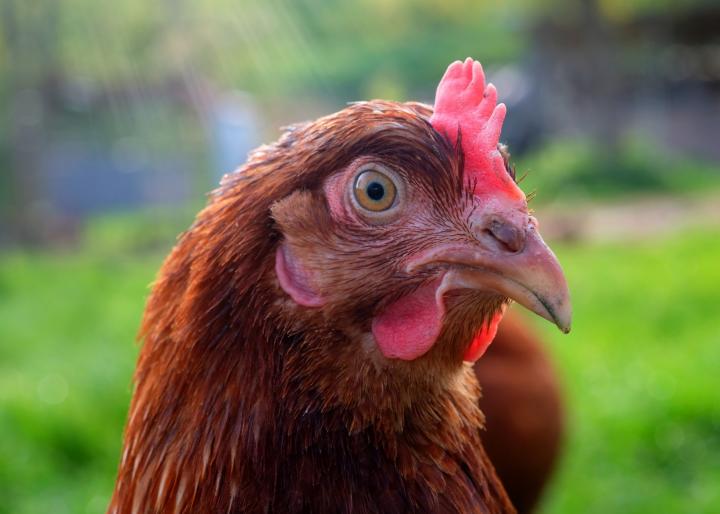
Friendly Chicken Breeds for Families
If you have small children or just desire a flock of friendly chickens who will love to sit on your lap and eat out of your hand, then consider these chicken breeds:
- Australorps
- Brahmas
- Buff Orpingtons
- Cochins
- Faverolles
- Silkies
You might also consider raising bantams. They’re about half the size of standard breed chickens, so they can be less intimidating for little kids, and they come in a wide variety of different breeds.

Chicken Breeds That Lay Colored Eggs
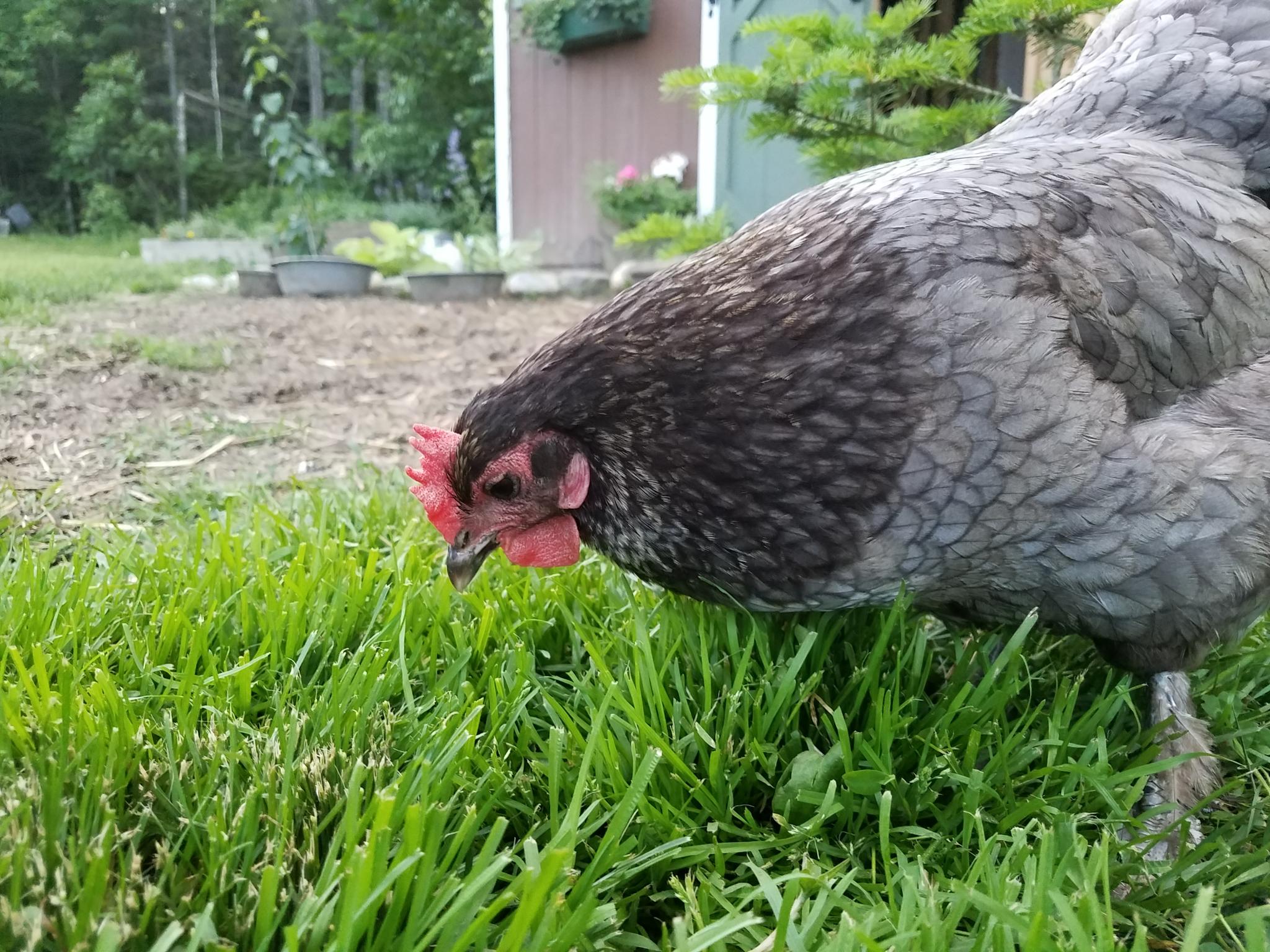
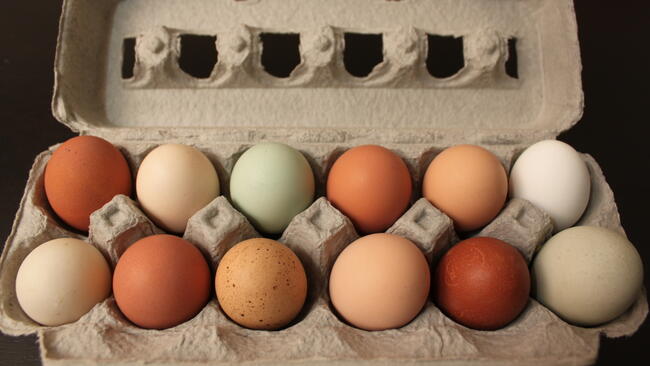
There’s nothing more exciting than a multi-colored egg basket! While egg color shouldn’t necessarily be your first consideration, choosing some breeds that lay different-colored eggs is always fun.
Most chicken breeds lay brown eggs, although most of the Mediterranean breeds lay white eggs.
Brown Eggs
Marans lay dark chocolate brown eggs.
Blue Eggs
Ameraucana, Araucana, and Cream Legbar lay beautiful blue eggs.
Green Eggs
An Isbar chicken produces a light green egg. Olive Eggers lay olive green eggs.
Easter Eggs
And Easter Eggers are the most fun of all. Each Easter Egger will lay a different color egg, anything from blue to green to pink or cream. You don’t know what color egg you’ll get from a hen until she starts laying.
| Breed | Egg Color | Notes |
|---|---|---|
| Rhode Island Red | Brown | Popular backyard breed, friendly and hardy |
| Barred Plymouth Rock | Brown | Calm, reliable layers, cold-hardy |
| Australorp | Brown | Excellent layer, gentle temperament |
| Leghorn | White | High egg production, active and alert |
| Sussex | Light Brown | Docile and easy to handle |
| Marans | Dark Brown | Rich chocolate-colored eggs, calm |
| Araucana | Blue | Rare, fun novelty eggs, flighty temperament |
| Ameraucana | Blue | Friendly, hardy, unique blue eggs |
| Easter Egger | Blue/Green | Variable colors, fun for mixed-egg baskets |
| Isbar | Light Green | Hardy, less common breed |
| Olive Egger | Olive Green | Crossbreed, fun colored eggs |
| Cream Legbar | Blue | Good layer, medium temperament |
Fancy and Ornamental Chicken Breeds
If you want pretty chickens, then choose some fancy chickens for a visually pleasing flock! While not known for being the best layers, these fancy breeds will entertain and delight with their unique appearance.
- Cochins (feathered feet)
- Faverolles (feathered feet)
- Marans (feathered feet)
- Ameraucanas (cheek muffs and “beards”)
- Polish (crazy hairdos)
- Frizzles (feathers pointing every which way
Favorite Backyard Chicken Breeds
As longtime experts in raising chickens, we’ll also share our favorite breeds:
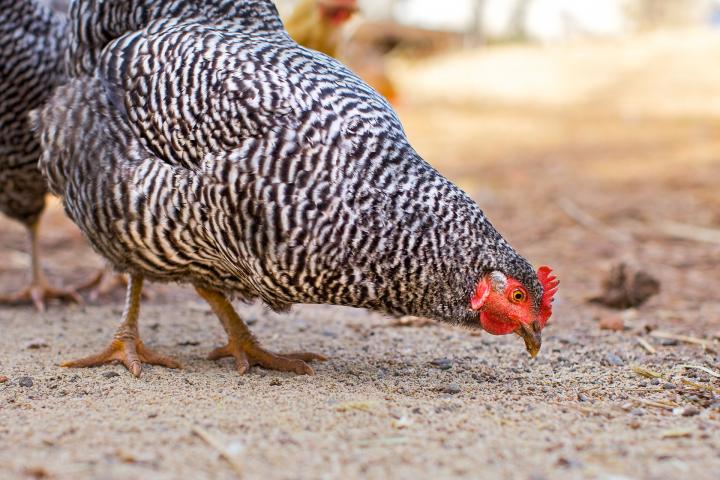
- I kept Rhode Island Reds and Barred Plymouth Rocks, both of which are usually available from a local hatchery. These are docile, not particularly noisy, high-laying, dual-purpose chicken breeds that take confinement well. They gave me 75 percent egg production—that is, a dozen chickens produced nine eggs a day while they were laying.
- Another favorite of mine is the Jersey Giant. It is black or white and large. (My black Jersey Giant rooster was 16 inches at the saddle!) The hens are medium- rather than high-laying chickens, but the eggs are larger than those of the Plymouth Rock or Rhode Island Red. This breed is calm and docile but needs more room because of its size.
- Araucanas tend to be flighty (not docile), but they thrive in almost any climate, take confinement well, and are quiet. If you want to make them more calm and docile, try hypnotizing them (and no, we’re not kidding!). Plus, the green-shelled eggs are a novelty. (One of my Rhode Island Red hens mated with an Araucana cock and gave me a hen that laid olive eggs!)
- My dream team would include Easter Eggers. They are similar in temperament to Araucanas and lay those blue or green eggs. It may take me a while to track them down, but—hey!—the dream team is worth it.
In the end…
No matter which breeds of chicken you choose to raise, you will be rewarded with baskets full of delicious, fresh eggs and hours of relaxing entertainment, watching your little flock roam the yard softly clucking, chasing bugs, and scratching for weeds.
Frequently Asked Questions
What are the best chicken breeds for beginners?
Rhode Island Reds, Australorps, Barred Plymouth Rocks, and Buff Orpingtons are excellent choices—they are calm, hardy, and reliable egg layers.
Which chicken breeds lay the most eggs?
Leghorns, Australorps, Rhode Island Reds, and Sussex are among the top layers, producing up to 5–6 eggs per week.
What chicken breeds lay blue or green eggs?
Araucanas, Ameraucanas, Easter Eggers, Cream Legbars, and Olive Eggers lay blue or green eggs.
Which chickens are most friendly and kid-safe?
Buff Orpingtons, Cochins, Silkies, Brahmas, and Faverolles are known for their gentle, friendly temperament.
What chickens do best in cold climates?
Brahmas, Chanteclers, Australorps, Barred Rocks, Buff Orpingtons, Cochins, and Wyandottes are cold-hardy breeds.
Can I mix different chicken breeds in one flock?
Yes! Most breeds coexist well. Mixing breeds can provide varied egg colors, different temperaments, and an attractive backyard flock.
What kind of chickens do you raise in your backyard? Tell us in the comments below!
More of Raising Chickens 101
See more of our beginner’s guide to raising chickens:


- « Previous
- 1
- 2
- …
- 10
- Next »

Comments