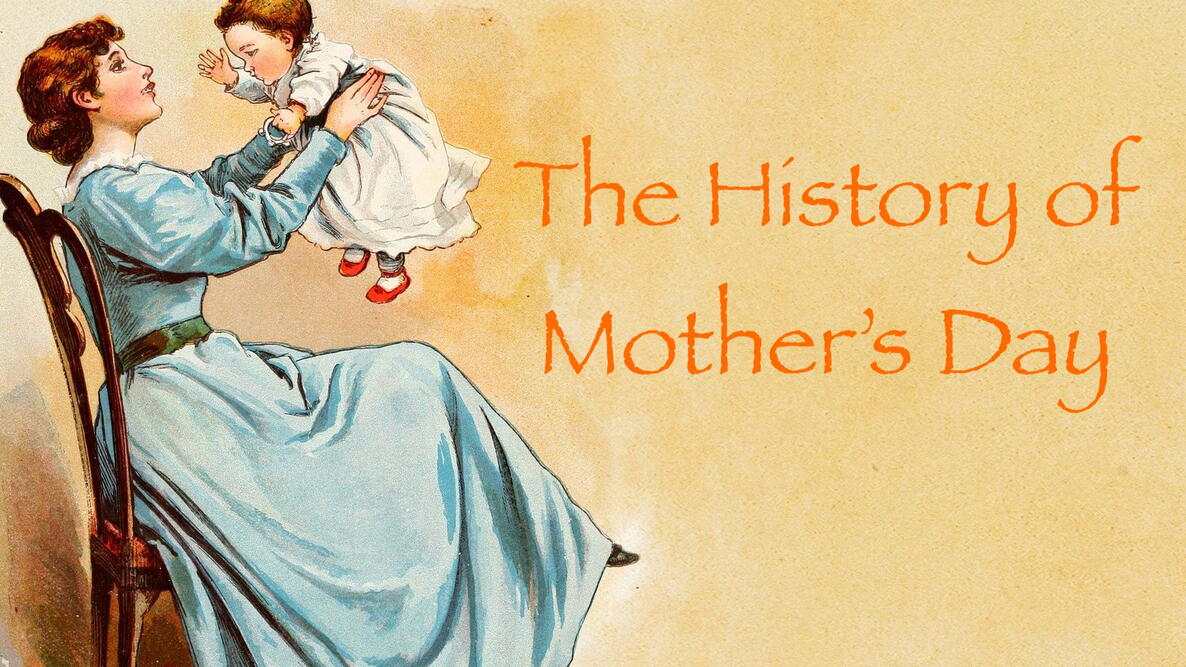
Mother’s Day began not as a celebration, but as a mission to improve people’s lives. Women activists fought disease, helped struggling families, and worked to bring peace to communities divided by the Civil War. Their goal was to make life better for mothers and children.
Then came Anna Jarvis, who fought to make Mother’s Day a national holiday. She succeeded, but as the celebration grew, she came to regret what she’d started. In an extraordinary turn of events, she tried to abolish it.
Who Started Mother’s Day?
Mother’s Day wasn’t the invention of just one woman. Several women helped shape the holiday we know today, from reformers fighting for healthier families and peace to a schoolteacher who wanted children to honor their mothers.
Ann Reeves Jarvis: A Mother’s Fight for Health and Peace
In the mid-1800s, Ann Reeves Jarvis was deeply concerned about poor sanitation and high infant mortality rates in Appalachian communities. Known as “Mother Jarvis,” the homemaker and Sunday school teacher decided to act.
She organized Mothers’ Day Work Clubs in West Virginia to improve unsanitary living conditions and educate mothers about caring for their families.
During the Civil War, Jarvis organized women to help others, regardless of whether their families supported the Union or Confederacy.
After the war, she proposed a Mothers’ Friendship Day to encourage peace between former Union and Confederate families.
For Ann Jarvis, bringing mothers together was a way to improve health, help families, and heal divided communities.
Julia Ward Howe: A Mother’s Day for Peace
Julia Ward Howe had another vision for Mother’s Day: ending war.
A poet and reformer, Howe is best known for writing the lyrics to “The Battle Hymn of the Republic.”
During the Civil War, she also volunteered for the U.S. Sanitary Commission, helping improve sanitary conditions in hospitals caring for sick and wounded soldiers.
Around 1870, Howe called for a “Mother’s Day for Peace.” She believed mothers understood the terrible cost of war and should come together to oppose the cruelty and waste of human life.
Her appeal became known as the “Mother’s Day Proclamation.”
Celebrations inspired by Howe were held in Boston and elsewhere for about 30 years, although they eventually faded in the years preceding World War I.
Mary Towles Sasseen: Bringing Mother’s Day into the Classroom
In 1887, Kentucky schoolteacher Mary Towles Sasseen introduced a Mother’s Day celebration in her classroom. She wanted children to have a special opportunity to honor their mothers.
Sasseen published a pamphlet and traveled to educational gatherings, encouraging other schools to adopt the celebration. She hoped it would become a national holiday.
She died in 1906, before that dream came true. In 1926, the Kentucky legislature recognized her as the “originator of the idea of the Celebration of Mother’s Day.”
These women had different visions for Mother’s Day. But it would take Ann Reeves Jarvis’s determined daughter, Anna, to make it a national holiday.
How Anna Jarvis Made Mother’s Day a National Holiday
When Ann Reeves Jarvis died in 1905, her daughter Anna wanted to honor her mother’s life and work.
Ann had once expressed the hope that someone would establish a day recognizing the service mothers give to humanity. Anna was determined to make that wish a reality.

But her vision was different from those of the earlier reformers.
Rather than focus on public service or peace, Anna wanted a day when people could honor their own mothers and recognize their sacrifices at home.
Beginning in 1907, she campaigned tirelessly. She sent letters and telegrams to public figures and civic organizations, spoke to groups, and distributed booklets promoting her idea—all at her own expense.
She wasn’t about to give up.
Why Is Mother’s Day Celebrated in May?
In May 1907, Anna held a memorial service honoring her mother’s lifelong activism at the Methodist church in Grafton, West Virginia, where Ann had taught.
The following year, on May 10, 1908, a Mother’s Day service was held at the same church to recognize all mothers.
Anna couldn’t attend, but she sent 500 white carnations for those gathered at the church. The flower would become one of the earliest symbols of Mother’s Day.
The idea of setting aside the second Sunday in May to honor mothers, living or deceased, began to spread.
West Virginia became the first state to officially adopt the holiday, and others followed.
Finally, in 1914, President Woodrow Wilson established the second Sunday in May as Mother’s Day, dedicated “to the best mother in the world, your mother.”
In its early years, the holiday was observed with simplicity and reverence. Churches held services honoring mothers, both living and deceased.
Anna Jarvis had succeeded.
But her happiness wouldn’t last.
Why Did Anna Jarvis Turn Against Mother’s Day?
As Mother’s Day grew in popularity, businesses saw an opportunity.
Greeting cards, flowers, and gifts became part of the celebration.
Anna Jarvis was furious.
She had wanted a personal day of gratitude, not a commercial holiday. She particularly disliked greeting cards, believing that a handwritten message was a more meaningful way to express love.
She also criticized florists for raising carnation prices around Mother’s Day.
And she didn’t stop there.
Anna objected to women’s organizations, charities, and public health reformers using Mother’s Day to raise money.
There was an irony in that position: Her own mother had devoted much of her life to improving public health and welfare.
But Anna believed Mother’s Day should remain a personal tribute to mothers, free from commercial interests.
She Tried to Abolish the Holiday She Created
The woman who had worked so hard to establish Mother’s Day now wanted to undo it.
She spent years protesting its commercialization and criticizing businesses that profited from the celebration.
By 1943, Anna had become so disillusioned that she began organizing a petition to rescind Mother’s Day altogether.
But the holiday had grown far beyond her control.
Her campaign came to an end when she was placed in Marshall Square Sanitarium in Pennsylvania. She died there in 1948, at age 84.
It’s a bittersweet ending. The woman who devoted much of her life to establishing Mother’s Day spent her final years fighting against what it had become.
And the holiday she tried to end only continued to grow.
What Mother’s Day Means Today
More than a century later, Mother’s Day continues to evolve.
The women who helped create it had different visions. Some saw motherhood as a force for social change and peace. Others simply wanted mothers to feel loved and appreciated.
Today, we honor mothers in all their roles—from caring for their families to making their communities better places.
And perhaps Anna Jarvis left us one final lesson.
Flowers and cards are lovely, but a few heartfelt words of appreciation may mean even more.
Sources
- National Park Service — Anna Maria Jarvis
- Library of Congress — Chronicling America
- Smithsonian American Women's History Museum — History of Mother's Day
- National Women's History Alliance — History of Mother's Day
- Kentucky Historical Society — Mother's Day

More Like This



- « Previous
- 1
- 2
- …
- 10
- Next »

Comments