Hooray for apple season! Everyone loves a crisp apple fresh off the tree, but when it comes to cooking, not all apples are created the same. Here are some of our top choices for baking and cooking—including the best apples for apple pies, applesauce, apple cider, and apple butter. Plus, find a handy apple variety chart listing apples from sweet to tart.
Choosing the Right Apple Variety
Ever eaten a mushy apple pie? Often, this results from the baker using a soft apple variety that doesn’t hold up in the oven. When you use the right kinds of apples in your recipes, your dishes can go from good to delicious!
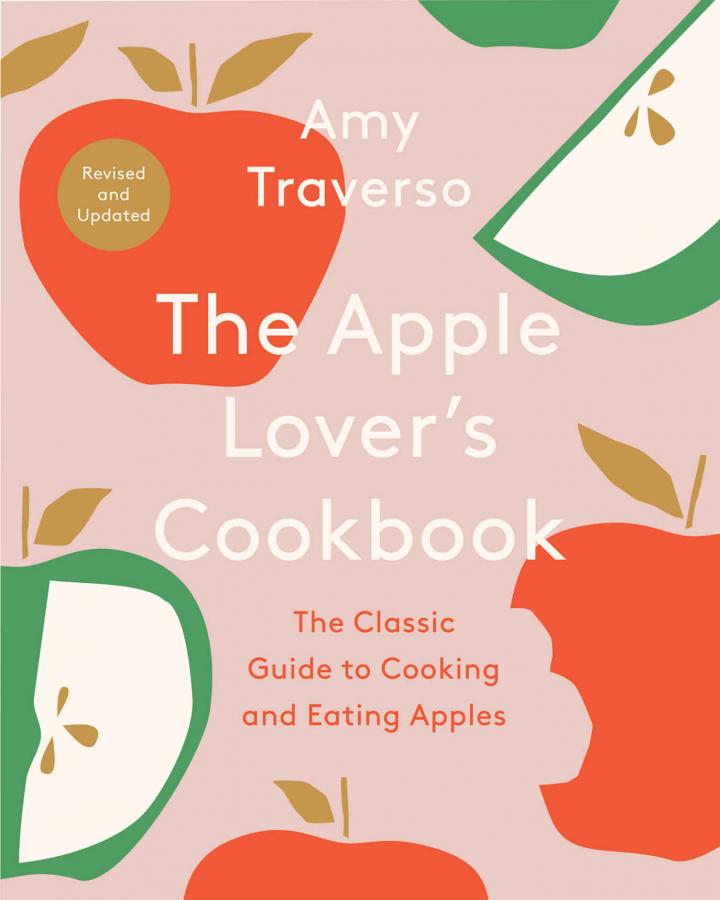
Amy Traverso, apple expert and author of the award-winning The Apple Lover’s Cookbook, breaks apples into categories.
- Firm or Soft
- Tart or Sweet
Firm apples are best for pies and crisps, as they hold their shape during cooking, while soft apples are best for applesauces, apple butter, drinks, and recipes where the apples need to be cooked down.
Apples also range from sweet to tart. It’s personal preference, but here is how we would rank some of the most common apple varieties …

The Best Apples for Cooking
Note: Some familiar apple varieties may be missing because they are best eaten fresh, not baked or cooked. If you have apple varieties in your region that aren’t listed here, please comment below and let us know what you prefer to use!
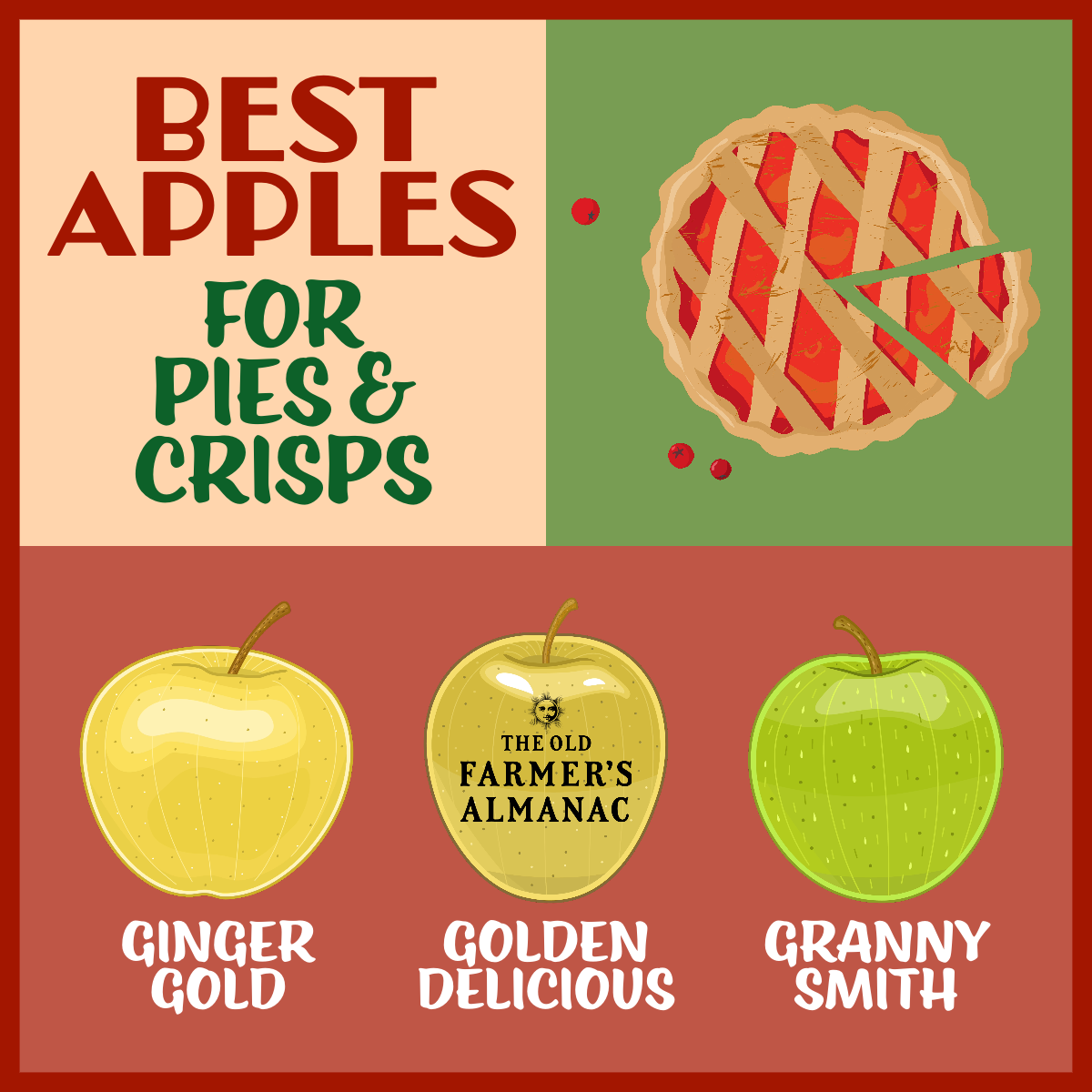
Best Apples for Pies and Crisps
For apple pies and crisps, use “firm” apples. Ideally, bake a pie with more than one apple—an equal amount of 1. “firm-tart” and 2. “firm-sweet” apples for depth of flavor. (See chart below.)
| Name | Best Uses | Flavor Characteristics, Appearance |
|---|---|---|
| Firm-Tart | ||
| Arkansas Black | Pie | A favorite of many Southern cooks, with deep red skin that turns purple-black in storage. Aromatic, crisp, with a cherry-spice finish. |
| Calville Blanc d’Hiver | Pie, Tarts | A French apple that dates back to the 16th century, it is the classic variety used in tarte tatin. |
| Granny Smith | Pie | Classic “green apple” is slightly sour and a favorite apple for pie. Available in supermarkets everywhere. |
| Newtown Pippin | Pie | Sweet-tart flesh, crisp, greenish-yellow skin |
| Northern Spy | Pie | Our favorite apple variety for pie-making |
| Rhode Island Greening | Pie | Very tart, distinctively flavored, grass-green skin, tending toward yellow/orange |
| Roxbury Russet | Pie | America’s oldest apple, it’s heavily russeted and tastes like honeyed lemonade. Flesh is dense and rather coarse. A great keeper. |
| Sierra Beauty Stayman Winesaps | Pie | Popular on the West Coast, Sierra Beauty is complex and tart-sweet with floral and spice flavors. |
| Firm-Sweet | ||
| Baldwin | Pie | A New England favorite, this fruit is prized for both cooking and cider. Very aromatic, with spice and apricot flavors. |
| Ginger Gold | Pie, Muffins, Cakes | Sweet and crisp. Great for pie and light baking. |
| Golden Delicious | Pie | Fairly mild variety but easily found. Tastes best when paired with bolder apples. |
| Gravenstein | Pie | A California favorite, the Gravenstein ripens early. Sweet-tart with a hint of raspberry. Very juice and tender, but bakes well. |
| Honeycrisp | Pie | Crisp, with balanced sweetness and acidity. Doesn’t brown quickly when sliced. |
| Jazz | Pie, Raw snacks | Exceptional taste and found in supermarkets year-round. |
| Jonagold | Pie | Yellow top, red bottom. Tangy-tart-sweet combo. Cross between the Jonathan and Golden Delicious and could fill a pie on its own. |
| Pink Lady | Pie, Baking, Snacking | Balance of sweet and sour undertones and widely available in supermarkets any time of the year. |
| York | Pie | A great all-purpose apple popular in the mid-Atlantic region. Honey and vanilla flavors dominate and the flesh is juicy and fine-grained. |
Best Apples for Applesauce
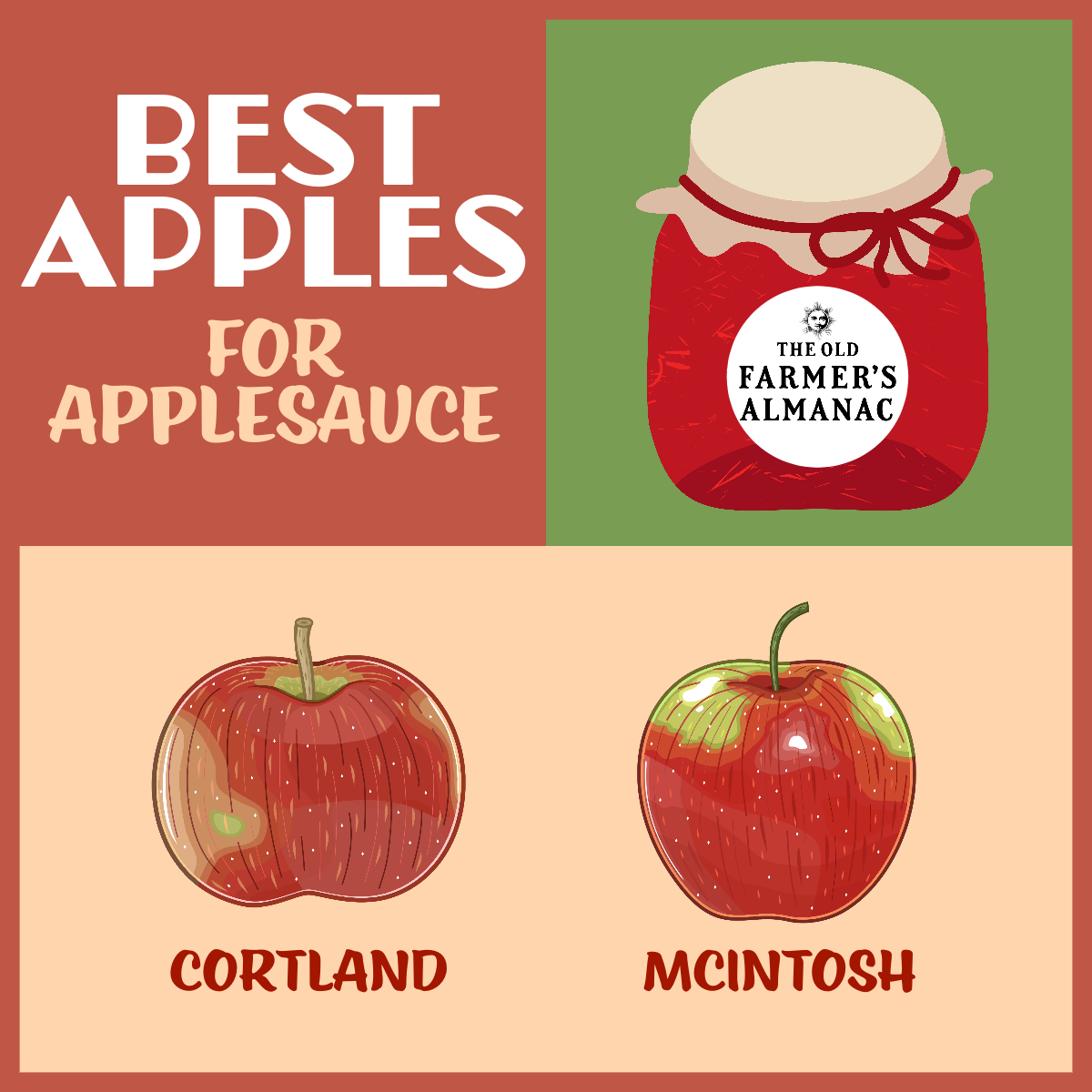
Below is a list of apples that are best for sauces and fresh preparation. Softer apples tend to work best for sauces as well as baking dishes that cook quickly, like muffins. Use firmer apples (such as above) for dishes that cook for 45 minutes or more.
| Name | Best Uses | Flavor Characteristics, Appearance |
|---|---|---|
| Cortland | Applesauce | Tender-sweet, these large purple-red apples with yellow streaks are moderately juicy and fairly sweet compared to McIntosh. |
| Macoun | Applesauce | Striated green and red color, these tender apples have snow-white flesh and a sweet-tart flavor with a hint of strawberry and spice. |
| Empire | Applesauce, Fruit Salad | Doesn’t brown quickly when sliced |
| Cox’s Orange Pippin | Applesauce | Lightly red-striped with an orange hue, this medium-sized apple has a spicy or nutty fragrance. |
| Davey | Applesauce | Red with some light yellow striping and small dots, this Mac-type apple is sweet-tart, very juicy, and crunchy. |
| Jonathan | Applesauce | Tart flesh, crisp, juicy, bright red on yellow skin |
| McIntosh | Applesauce | Juicy, sweet, pinkish-white flesh with two-toned red and green skin. Slightly tart, and the most aromatic of all apples. |
| Liberty | Applesauce | A popular apple for organic growers, it’s naturally resistant to disease and pests. Tender and sweet, great for sauces, with a wine-like flavor. |
Best Apples for Cider
| Name | Best Uses | Flavor Characteristics, Appearance |
|---|---|---|
| Baldwin | Cider | Crimson red with coppery green skin, Baldwin’s cream-white flesh is crisp and juicy with a spicy, sweet-tart flavor that’s great for cider. |
| Gravenstein | Cider | Heirloom apple with a thin skin and a juicy, sweet flavor |
| Esopus Spizenburg | Cider | Large, yellow-green apple with a sweet, slightly tart flavor. |
| McIntosh | Cider | Juicy, sweet, pinkish-white flesh with two-toned red and green skin. Slightly tart, and the most aromatic of all apples. |
| Cox’s Orange Pippin | Cider | Lightly red-striped with an orange huge, this medium-sized apple has a spicy or nutty fragrance that’s great for cider. |
| Snow Apple | Cider | Large, white apple with a sweet, mild flavor. |
| Goldrush | Cider | Yellow-orange skin, juicy, sweet-tart flavor with a hint of spice. |
| Stayman Winesap | Cider | Very juicy, sweet-sour flavor, winey, aromatic, sturdy, red skin |
Best Apples for Apple Butter
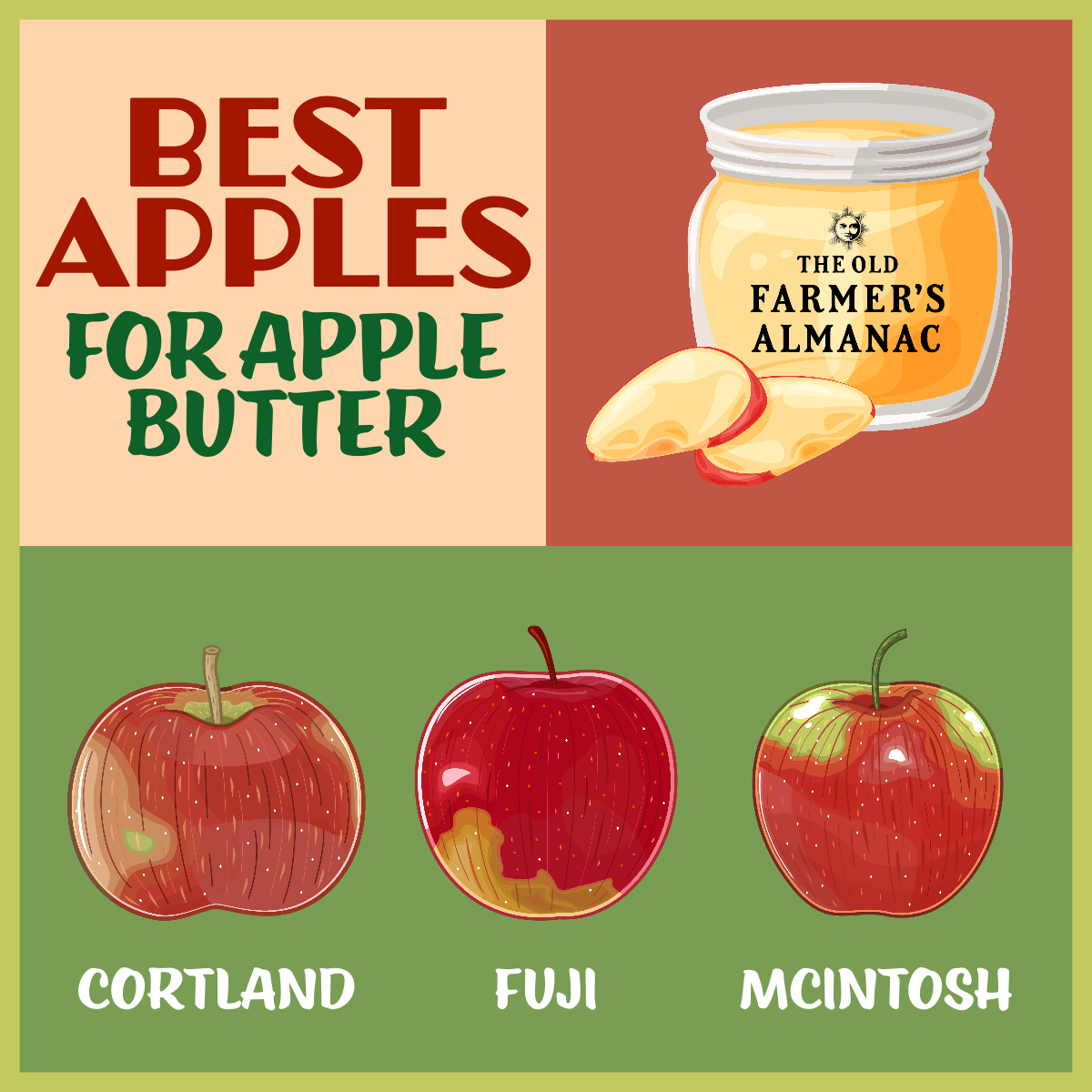
Soft apples work best for apple butter because they cook down faster. Use any mix of apples.
| Name | Best Uses | Flavor Characteristics, Appearance |
|---|---|---|
| Braeburn | Apple Butter | Sweet-tart, complex flavor, firm texture, red skin with yellow undertones |
| Cortland | Apple Butter | Mild, sweet flavor, firm texture, red skin |
| Fuji | Apple Butter | Sweet, juicy, crisp, white to pale yellow flesh, red blush |
| McIntosh | Apple Butter | Juicy, sweet, pinkish-white flesh, red skin |
| Liberty | Apple Butter | Sweet, slightly tart, firm texture, red skin |
The Apple Lover’s Cookbook
Are you an apple lover? Do you know an apple lover? We highly recommend The Apple Lover’s Cookbook by Amy Traverso, who quite literally wrote the book on cooking with apples. Winner of the IACP Cookbook Award (Best American Cookbook) and finalist for the Julia Child First Book Award, Traverso’s cookbook has been called “the perfect apple primer” by the Splendid Table. We call it a perfect and fantastic gift for any apple lover!
Why an apple book? Click the cover below to look inside—and find out! Plus, find a brief history of the apple (Adam and Eve?), how to match an apple to a recipe, and 100 amazing apple recipes! Look inside the book to see ALL the apple recipes!
Apple Cooking Measurements
When it comes to cooking with apples, it may be helpful to know the following:
- 1 pound of apples = 2 large, 3 medium, or 4 to 5 small apples
- 1 pound of apples = 3 cups peeled and sliced apples
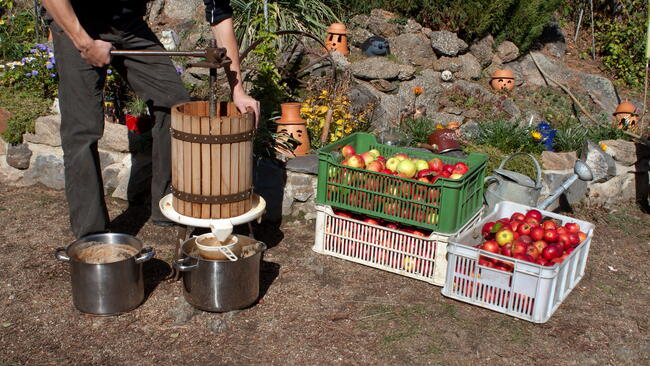
Have you ever made apple cider before? Learn all about apple cider pressing.
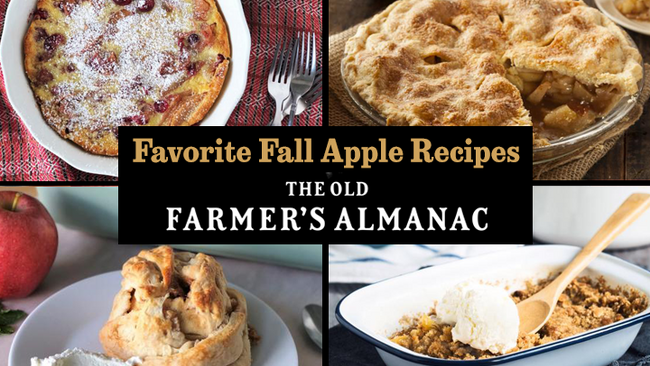
Favorite Apple Recipes
Perfect Apple Pie
If you want straight-up, good ol’ classic apple pie, then this is the one that Mom used to make!

Caramel Apple Pie
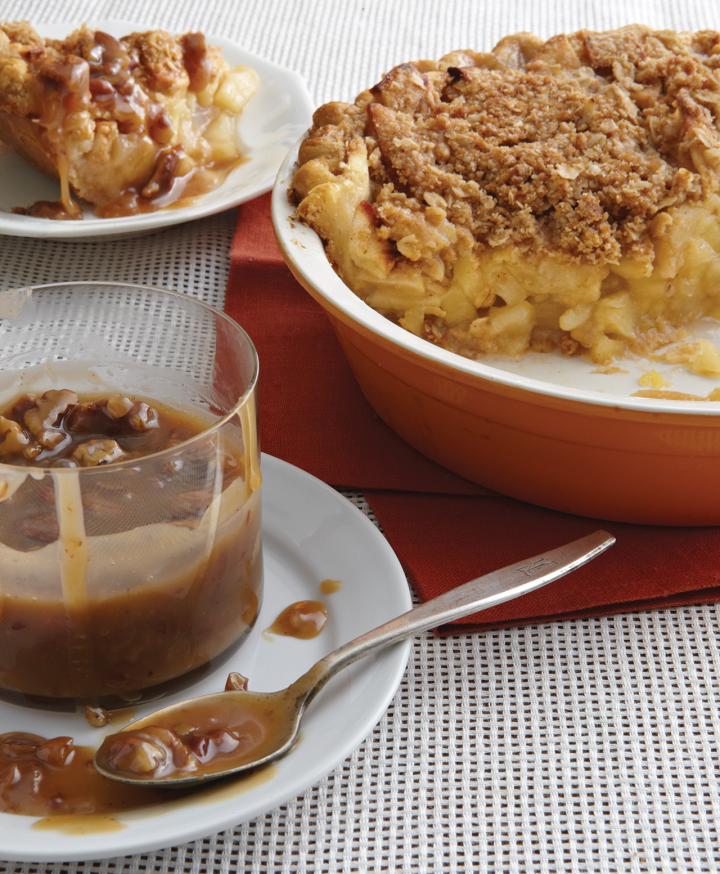
Of all our apple pies, this Caramel Apple Crumb Pie is the winner! The cinnamon-spiced oat topping is wonderful. And the caramel sauce adds that special taste of fall!
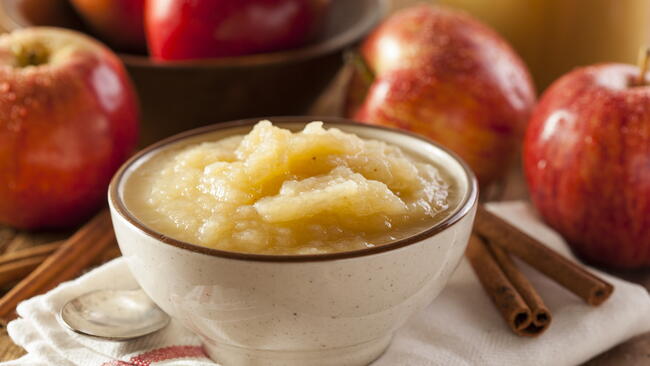
Cinnamon Applesauce
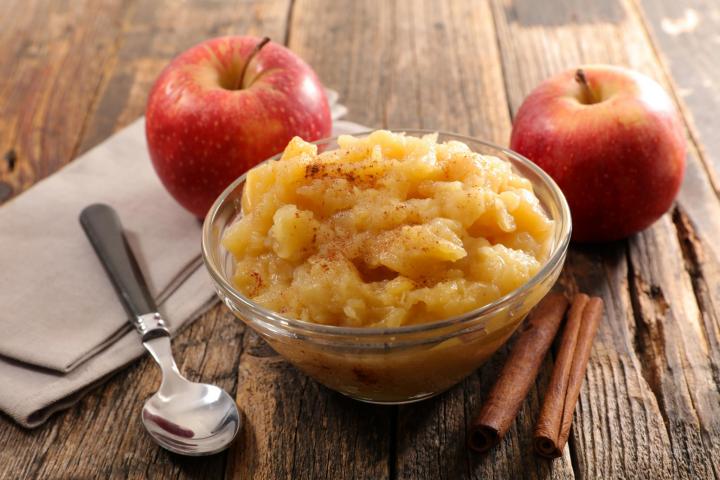
Our homemade Cinnamon Applesauce can be eaten straight from the jar or paired with grilled pork chops or potato pancakes.
How to Can Applesauce
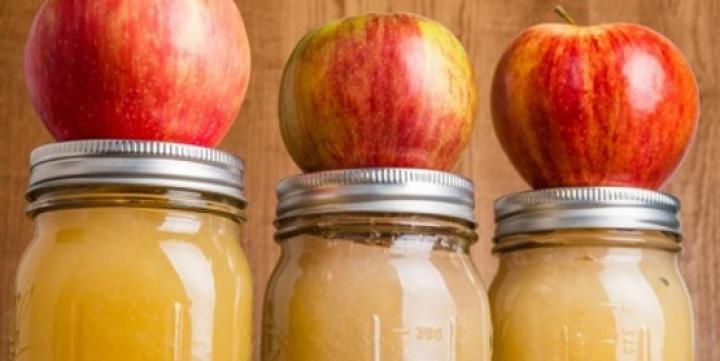
Making homemade applesauce is a favorite fall tradition of ours. Here’s how to make applesauce—and how to can it for year-round deliciousness.
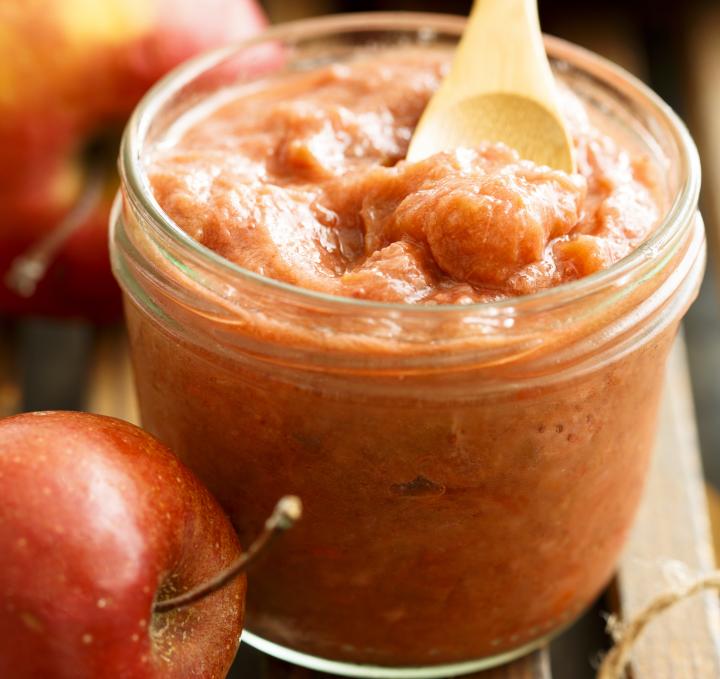
Apple Butter
Make your own apple butter with this simple recipe. Apple butter is a delicious alternative to peanut butter and a great way to use fresh apples.
→ See 10 of our best apple recipes!
More Related Content


We've added Gravenstein apples As you said, an excellent firm-sweet apple for pies and lighter baked desserts.
- « Previous
- 1
- 2
- …
- 10
- Next »

Comments