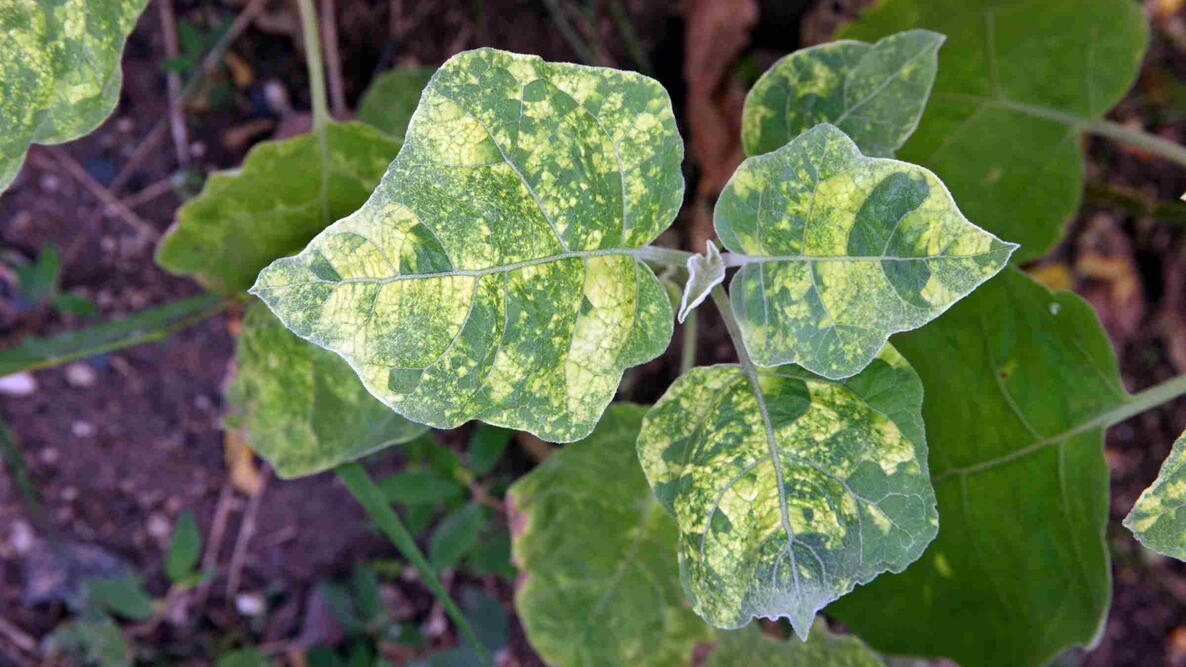
Caption
Eggplant feeling under the weather—yellow mosaic virus strikes, leaving patchy yellow leaves instead of lush green!
Identification
How to Identify Mosaic Viruses and Damage
Viral diseases are challenging to identify because their symptoms vary from plant to plant and can also change depending on the age of the plant and its growing conditions. However, common signs include:
Mottled leaves with yellow, white, and green patches, sometimes blistered.
- Stunted or slow growth.
- Deformed leaves: crinkled, wavy, or twisted.
- CMV: misshapen leaves and “shoestring syndrome.”
- TMV: twisted new growth and yellowed leaves.
Regular inspection is key—early detection can help limit spread.
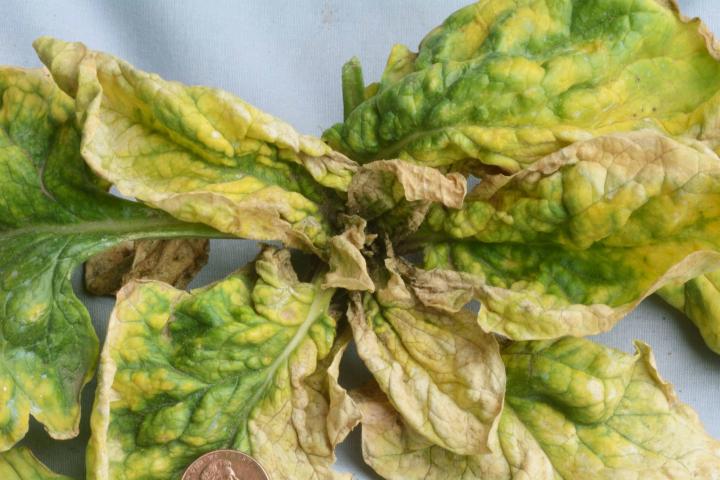
Photo Credit: University of California.

More Like This

Comments

Hi Alex,
Yes, the virus can spread to your peppers. Insects spread the virus as they move from plant to plant. If your cucumber plants have the virus you should remove and destroy them. Controlling the insect pests in your garden is the best preventive control of mosaic virus.
It's best to remove and destroy the plants. They will not produce well and any fruit will taste bitter.
Mosaic virus is on the of the most common afflictions of crops. It is transmitted by insects.
Change the soil. Start fresh.
Mosaic virus spreads most commonly from contaminated hands and tools. Place tools in boiling water for 5 minutes and then with wash with a strong detergent. (A dip in bleach is not an effective decontamination.) Wash your containers, too.
After handling contaminiated materials, always wash hands before handling healthy plants.
For better results, plant resistant varieties. And rotate your crops, even in containers.
- « Previous
- 1
- 2
- …
- 10
- Next »

Hi, Atonya,
It soulnd like powdery mildew, an air-borne disease. You can purchase organic suphur and make a tea with it, them spritz the plant/s; that should kill the mildew.
Several sources suggest that if your plant has established fruit (pumpkins)—that they are growing— they have a good chance to mature, even if all of the leaves turn black and wither.
In future, consider getting mildew-tolerant/resistant varieties. Quite a few, but not all, cultivars are listed here: http://msue.anr.msu.edu/news/planting_time_and_powdery_mildew_control_important_for_pumpkin_yield