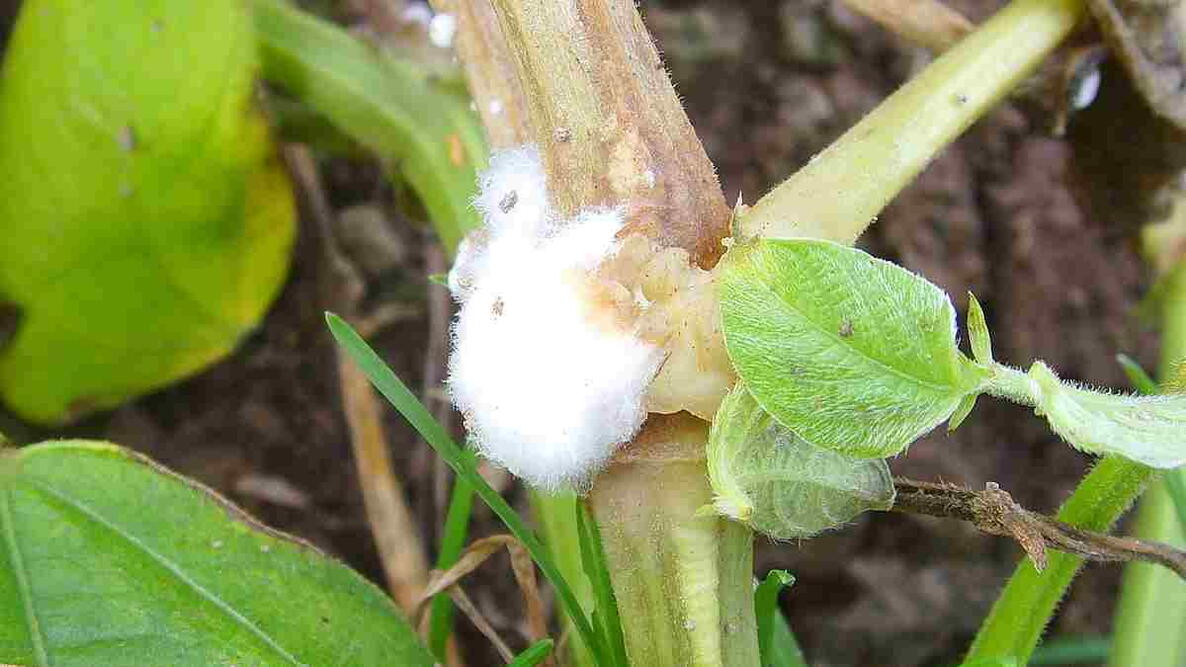
Have you spotted a soft, white fuzz creeping up your plants or vegetables—almost like cotton candy on the stems? That’s white mold, or Sclerotinia, a stubborn fungus that thrives in cool, damp gardens. It can infect beans, tomatoes, lettuce, peas, and dozens of other crops, often appearing right when plants are blooming. I’ve learned over the years that catching this disease early is key, because once it spreads, it’s hard to stop. Here’s how to identify, control, and prevent white mold before it takes over your garden beds.
What Is White Mold (Sclerotinia)?
White mold, or Sclerotinia sclerotiorum, is a fungal disease that affects more than 360 types of plants, including beans, peas, lettuce, tomatoes, cabbage, and many flowering ornamentals. When white mold hits tomato plants, it may be called timber rot.
This fungus thrives in cool, damp conditions, usually during spring or early summer. Spores spread through the air or by water splash, infecting flowers and stems when humidity is high and air circulation is poor.
White mold creeping up a cabbage stem—once it starts, this fungus can spread fast in damp garden beds. Credit: Cornell
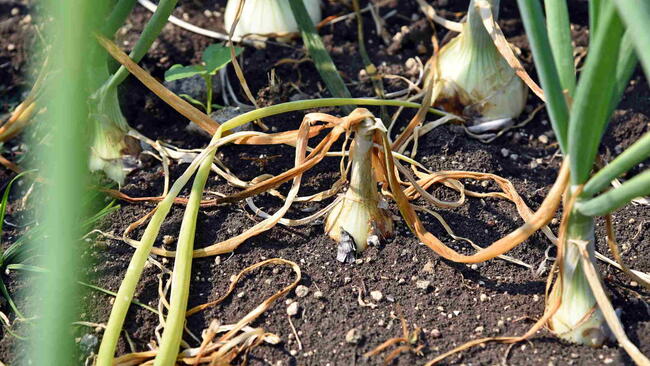
NOTE: White mold is not the same as white rot (Sclerotium cepivorum), which primarily attacks onions, garlic, and related crops. White mold spores persist in the soil. White rot spores survive mainly in onion and garlic bulbs or in infested soil.
White rot on an onion bulb. This disease only affects allium species, especially onion and garlic. Credit: Steven Koike
How White Mold Spreads
White mold spores can travel by wind, water, tools, or even your hands after handling infected plants. They thrive in humid, cool conditions, often during flowering or early growth stages. The spores land on plant tissue—especially flowers—and germinate in cool, moist environments. Once this fungus takes hold, it can overwinter in soil for several years. That’s why prevention is key: once it’s in the soil, it’s tough to eliminate.
Identification
How to Identify White Mold on Plants
White mold symptoms vary by plant, but the early warning signs are often subtle. Keep an eye out for:
Fluffy, cottony white fungal growth on stems, blossoms, or pods.
Water-soaked spots on stems or leaves
Wilting or yellowing leaves, starting at the base
Black, seed-like sclerotia that form later inside stems or pods
Leaves or pods may rot, and stems can become brittle
White mold on snap beans shows the fluffy, cotton-like mycelium of the fungus on stems and pods. This white growth is the first visible sign of the disease. Credit: Ohio State University
Tip: The white growth appears first, then black sclerotia form later. This differs from white rot, which usually affects the bases of bulbs like onions and garlic. If you notice one plant showing these symptoms, it’s best to act fast—white mold spreads easily to nearby plants.
See the black spots that look like mouse droppings on the white mold? As white mold matures, black, seed-like sclerotia form, allowing the fungus to survive in soil for years. Credit: Cornell University
Control and Prevention
How to Control and Treat White Mold
If you find infected plants, here’s what to do:
As soon as you notice any diseased plants, destroy them immediately—do not compost them.
If your soil is infected, remove as much of it as you can and replace it with clean soil or solarize it (cover the infected ground with clear plastic for several weeks in full sun) to prevent the spread of the disease.
Avoid overhead watering—water at the soil level instead.
Consider using an organic fungicide labeled for white mold (apply before flowering and repeat one week later).
Rotate crops so the same type of plant isn’t grown in the same spot each year.
How to Prevent White Mold in Your Garden
An ounce of prevention really is worth a pound of cure when it comes to fungal diseases. Here’s how to keep white mold away:
White mold thrives in cool, damp, and poorly ventilated conditions—especially when plants are crowded or watered from above. The spores can persist in soil for several years and infect plants when moisture levels are high.
Q: How do I get rid of white mold?
Remove infected plants, solarize the soil (cover it with clear plastic for several weeks in summer), and rotate crops yearly.
Q: How is it different than white rot?
White mold attacks many vegetables; white rot attacks onions/garlic. The two diseases look similar but affect different plant families.
Q: Can white mold spread to my houseplants?
Yes, if the soil stays damp. If you see white fuzz, scrape it off, let the soil dry out, and improve air circulation. Repot with fresh soil if needed.
Q: Can I eat infected vegetables?
No, discard them. The fungus can produce toxins.
White mold can be discouraging, but with good garden hygiene, smart watering, and crop rotation, it’s possible to keep it at bay. I always remind new gardeners: even the best of us lose a plant or two to fungus—it’s part of learning how to work with nature, not against it. Keep observing your garden, and before long you’ll spot trouble before it spreads!
Catherine Boeckmann is the Executive Digital Editor of Almanac.com, the digital home of The Old Farmer’s Almanac. She leads digital editorial strategy and publishing across a wide range of Almanac sub...
Comments