
Identification
How to Identify Whiteflies
Like aphids, whiteflies use their piercing mouthparts to suck up plant juices and, in turn, produce a sticky substance known as honeydew, which, left on its own, can cause fungal diseases—such as sooty mold—to form on leaves.
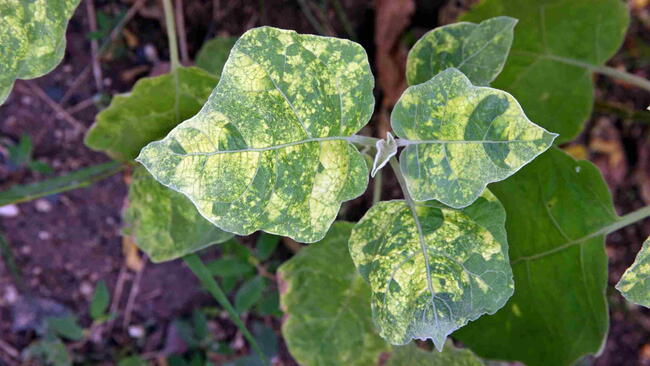
With heavy whitefly feeding, plants quickly become extremely weak and may be unable to carry out photosynthesis. Leaves wilt and turn pale or yellow, growth is stunted, and eventually, leaves may shrivel and drop off the plant.
Honeydew is a sign that the whiteflies have been feeding for several days. You might also see ants, which are attracted to the sweet honeydew.
Where to Find Whiteflies on Plants
Whiteflies tend to prefer to feed on new growth, so check around any newly unfurled leaves first.
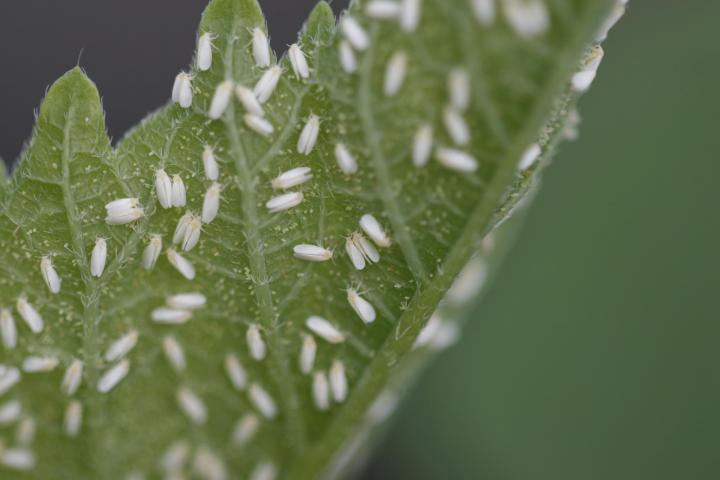
Check the undersides of leaves—especially around the veins—for white insects, even if they aren’t immediately visible, and feel leaf surfaces for sticky honeydew. If the whiteflies are feeding, they’ll suddenly all fly off the leaves in a swarm, so it’s very obvious.
You may also find eggs laid on the undersides of leaves. This is the beginning of a new generation! When the eggs hatch, the larvae look like teeny white ovals without legs; they don’t move but immediately start sucking the plant juice. This is why gardeners often miss whiteflies until it’s too late. Adult females can produce up to 400 eggs, which hatch about 1 week to 1 month after laying. They are usually laid in a circular pattern. Eggs are pale yellow when newly laid and brown when about to hatch.

More Like This

Comments

Hi, Alejandra: So sorry to hear about your challenges! Fortunately, many insect infestations run in cycles, so perhaps next year will not be so bad. In any event, please see the Reply to the question immediately below this for a formula to help deter whiteflies. Keep trying, and good luck!
I am sorry to hear your plants are flagging--that is an upsetting situation. I am not sure which recipe you used (we have a few on offer), but the National Gardening Association recommends a mixture of dishwashing liquid, such as Palmolive with lemon, and water--a sizeable squirt of soap to a gallon of water. The thing about any spray application is that timing is key. It needs to be done when the insect is at its most vulnerable stage—usually as larvae. The truth is, whitefly is nearly impossible to get rid of. It is a matter of preventative measures and population control, which this recipe should help with. The best method of control is beneficial insects. I realize this doesn't help you at this point, but maybe it will of use at a later date (though I hope you will not have to deal with whitefly again!) Consider replacing your plants with non-host species. Again, very sorry to hear about your struggle.
Hui Jennifer,
If the damage is so great that the leave couldn't possibly be photosynthesizing, then sure go ahead and remove them. If they are only mildly munched, just let them be. Good for you for choosing to bring in some beneficials!
- « Previous
- 1
- 2
- …
- 10
- Next »

Whitefly does not overwinter in the soil so putting anything down now will not be effective. The best strategy is to prevent a breakout by not planting species prone to attract them. Remove all plants that have served as a host and find alternatives. Come spring, be vigilant about removing any foliage that does become infected; hose down plants with water sprays (whitefly likes dusty conditions). Laying down a reflective mulch of silver polyethylene can help to reduce populations, as can yellow sticky traps and insecticidal soaps or oils. The main thing is to get ahead of those pesky flies--once they arrive, they are very tough to get rid of!