Frequently Asked Questions
-
Did the time change today?
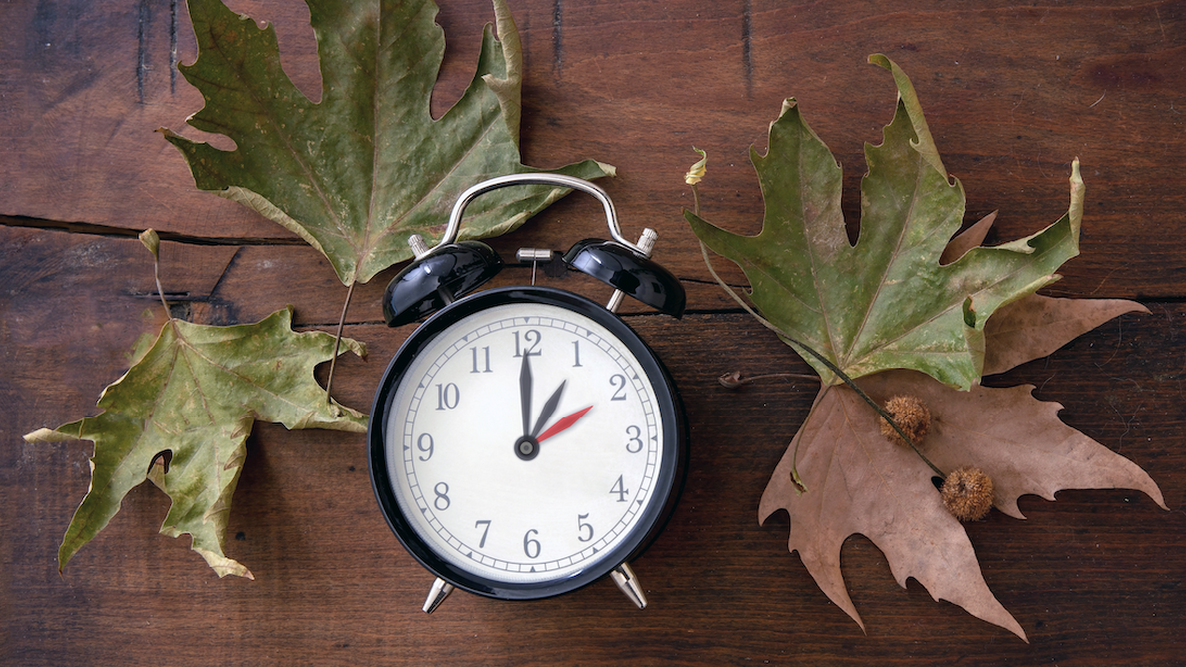
It depends on when you’re reading this! Daylight Saving Time ends on Sunday, November 1, 2026 at 2:00 A.M. local time in most of the U.S. So if today is November 1, and you live in a place that observes Daylight Saving Time, the clocks went back one hour.
-
Do I set my clocks forward or backward in fall?
Clocks are set back one hour in the fall when Daylight Saving Time ends on November 1, 2026. An easy way to remember is the saying “spring forward, fall back.”
-
What happens at 2:00 A.M. when DST ends?
At 2:00 A.M. local time, clocks move back to 1:00 A.M. That hour happens twice, so we get an extra hour that day.
-
Do we gain or lose an hour when the clocks go back?
We gain an hour when the clocks go back in fall. In spring, it’s the opposite: clocks move ahead, and we lose an hour.
-
Do I get an extra hour of sleep when DST ends?
Maybe! When we set the clocks back in fall, the night is one hour longer, so you could get an extra hour of sleep. But whether you do depends on your routine…and how much your family likes sleeping in.
-
Do phones change automatically for Daylight Saving Time?
Most smartphones and computers update the time by themselves if automatic date-and-time settings are turned on. But you might need to change the time by hand on things like wall clocks, ovens, or car clocks.
-
Are we on Standard Time after the clocks change in fall?
Yes. When Daylight Saving Time ends on November 1, 2026, the parts of North America that observe the fall time change go back to Standard Time.
Sources
- Harvard Health Publishing — Daylight Saving Time "fall back" doesn’t equal sleep gain
- U.S. Naval Observatory — Daylight Saving Time
- U.S. Department of Transportation — Daylight Saving Time
- National Institute of Standards and Technology (NIST) — Daylight Saving Time Rules

More Like This




Comments