
Did you know that the distance from your eyes to your outstretched thumb is roughly ten times the distance between your eyes? That handy proportion, together with a bit of math, can help you estimate the distance to an object of approximately known size.
No measuring tape required—just your thumb, your eyes, and a little practice.
How to Estimate Distance With Your Thumb
Imagine that you’re standing on the side of a hill, trying to decide how far it is to a barn across the valley. You feel reasonably sure that the side of the barn facing you is about 100 feet wide.
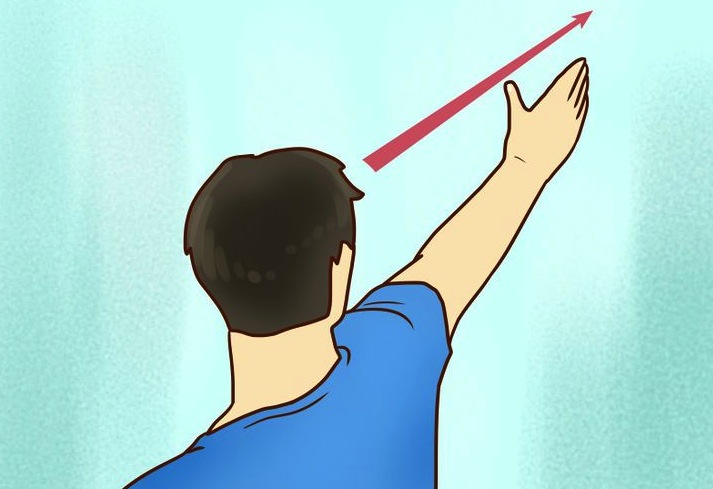
- Hold one arm straight out in front of you, elbow straight, with your thumb pointing up.
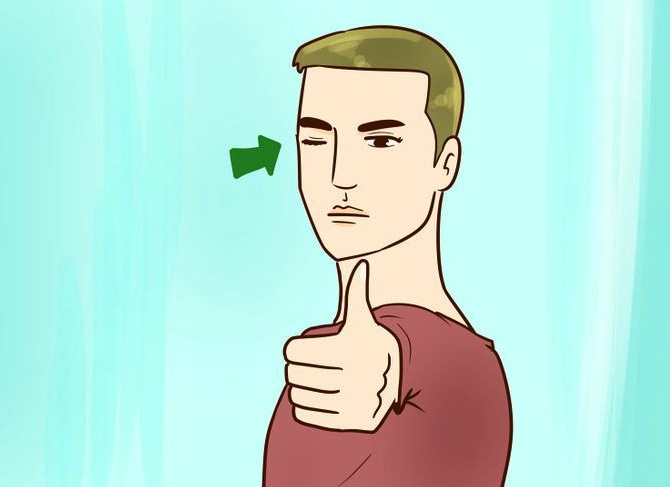
- Close one eye and align one edge of your thumb with one edge of the barn.
- Without moving your head or arm, switch eyes. Open the eye that was closed and close the other.
- Notice how far your thumb appears to jump sideways against the distant landscape. Be sure to sight along the same edge of your thumb each time.
- Estimate the jump using the barn’s width. How many barn-widths would fit between the two apparent positions of your thumb?
- Multiply that estimated sideways distance by 10 to find the approximate distance to the barn.
A Simple Example
Let’s say your thumb appears to jump five times the width of the barn. If the barn is about 100 feet wide, that sideways jump represents approximately 500 feet.
Multiply by the handy factor of 10: 500 feet × 10 = 5,000 feet
The barn is about 5,000 feet away, or a little less than one mile.
The important detail: Estimate how far your thumb appears to move across the distant landscape, rather than how far it moves at arm’s length.
Why Does the Thumb Trick Work?
Your thumb appears to jump because each eye sees it from a slightly different position. This change in perspective is called parallax.
The distance between your eyes and the distance to your outstretched thumb form a small triangle. Your sightlines extend toward the landscape to form a much larger triangle with the same proportions. That relationship lets you turn the apparent sideways jump into an estimate of distance.
The factor of 10 is a rule of thumb, not an exact constant. Your proportions—and your estimate of the object’s size—will affect the result.
When Is This Skill Useful?
With a little practice, you’ll find that you can perform a quick thumb-jump estimate in just a few seconds. It’s a handy trick when you’re hiking, exploring the countryside, or photographing a distant landscape.
At a minimum, it can help you decide whether a distance is in the ballpark—which, in many cases, is as close as you need to get.
Try practicing with an object whose distance you can check afterward. The more familiar you become with the trick, the easier it is to use.




This is where some "educated guessing" comes into play. If the barn or building has features that look normal-sized, such as a door or window, you can estimate the size of the entire barn from there. If the barn is simply a blank wall, well... You'll just have to give it your best guess!

Comments