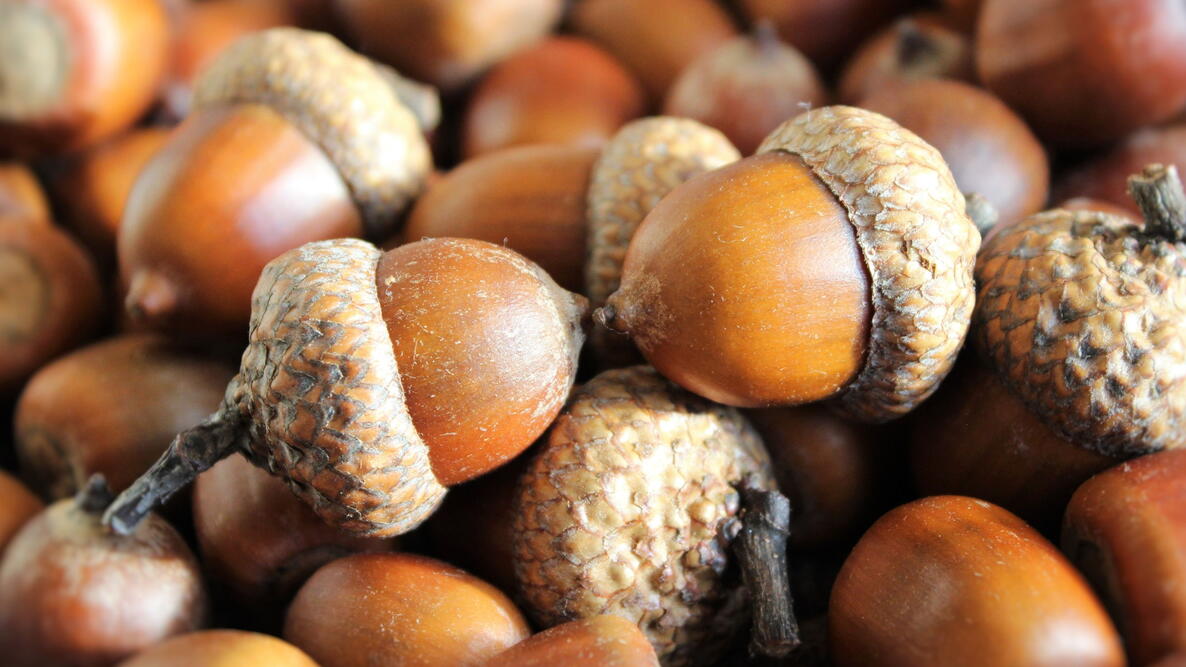
Squirrels might be onto something—and it’s not just hoarding nuts for winter! Acorns are nutty, surprisingly versatile, and abundant in fall. Once properly identified, leached, and cooked, they can be roasted, added to recipes, or ground into flour. Ready to go from tree to table? Here’s how to prepare and eat acorns safely.
Can You Eat Acorns?
Yes—but not straight from the tree. Raw acorns contain high levels of bitter tannins, so they must be shelled, leached, and cooked before you eat them.
Properly prepared acorns have been an important food around the world for generations, including among many Native American peoples.
Why acorns? They provide carbohydrates, fats, protein, and fiber, although their exact nutritional content varies by oak species and preparation method. They also have a rich, nutty flavor. Plus, foraging and preparing something yourself can be a rewarding fall adventure!
Most people use acorns to make nutty, nutrient-rich flour, but you can also enjoy leached and roasted acorns much like chestnuts. See more ideas below!
Important: Acorns are tree nuts. Anyone with a tree-nut allergy should consult a medical professional before eating them.
Which Acorns Are Best for Eating?
Acorns come from oak trees, and all oak species produce them. However, their size, flavor, and tannin content vary considerably.
Acorns from the white-oak group tend to contain fewer tannins and generally taste milder, so they may require less leaching. Acorns from the red-oak group usually contain more tannins and may take longer to prepare.
Before gathering acorns, learn which oak species grow in your area. Oak leaves, bark, buds, and acorns can all help with identification. If you are uncertain about the tree, ask an experienced local forager or Extension expert before eating anything you collect.
Where and When to Find Acorns
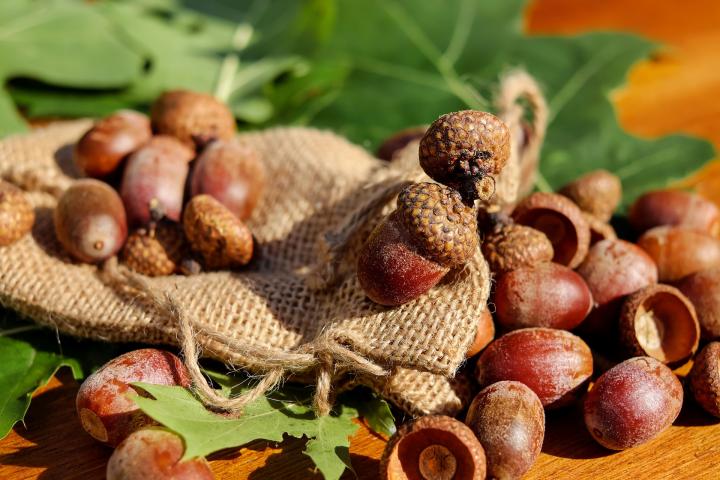
Acorns are typically gathered between September and November, when they mature and fall from oak trees.
Only gather acorns where foraging is allowed. Avoid collecting them beside heavily traveled roads, on sprayed lawns, or from ground that may be contaminated. Leave plenty behind for deer, squirrels, birds, and other wildlife that depend on acorns for food.
How to Collect and Sort Acorns
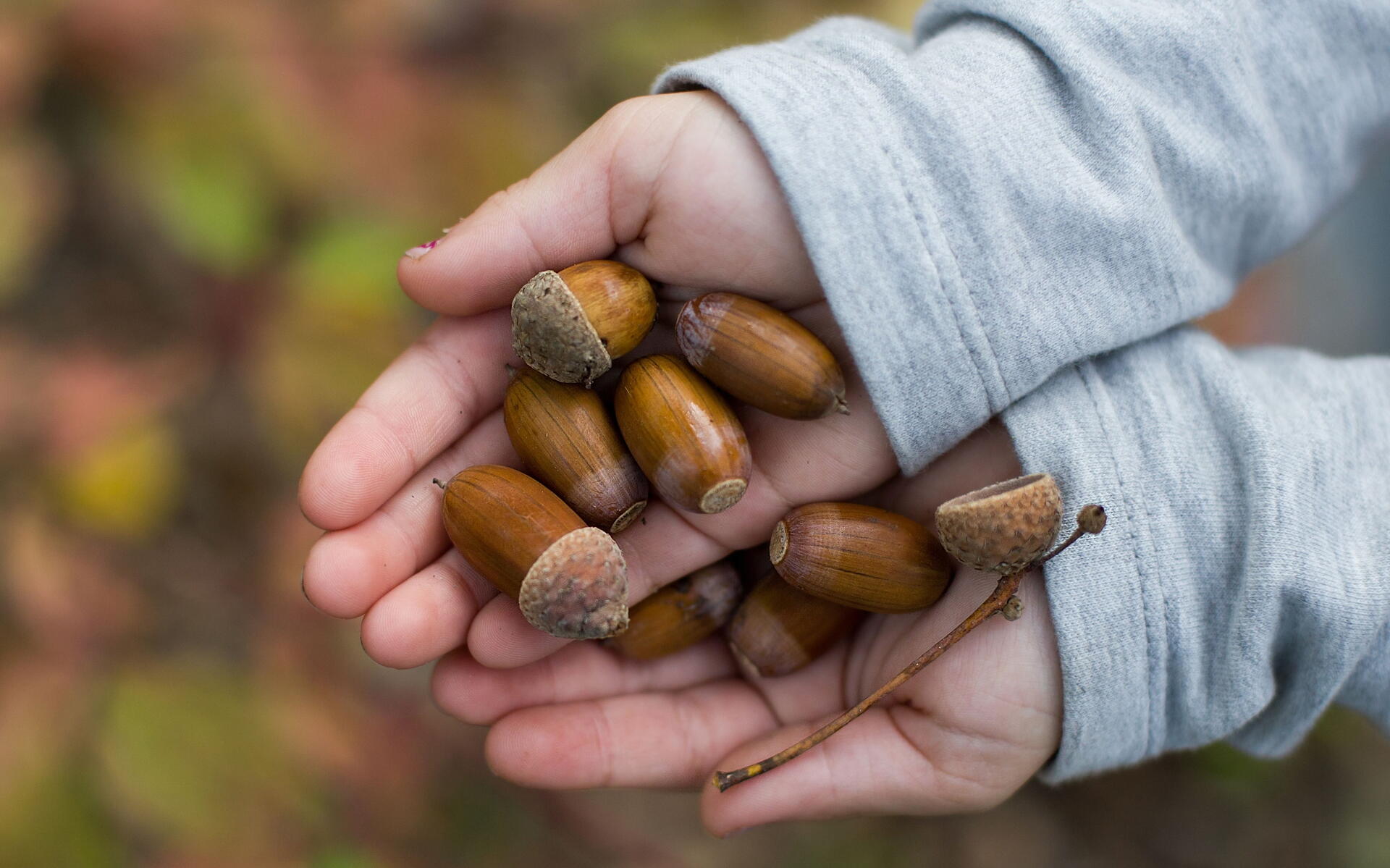
Look for mature brown acorns with intact shells. It is perfectly normal for ripe acorns to separate from their caps as they fall.
Avoid green, cracked, moldy, or badly damaged acorns. Small holes in the shell often indicate that an acorn weevil has been inside.
Once you bring your acorns home:
- Rinse them in cool water to remove dirt and debris.
- Place them in a bowl of water as an initial quality check. Many damaged acorns will float, but this test is not foolproof.
- Inspect every acorn individually and discard any with holes, cracks, mold, darkened nutmeat, or an unpleasant odor.
- Dry the shells before cracking them to make them easier to handle.
Process your acorns promptly rather than leaving them at room temperature for months. Their natural oils can become rancid, and insects may continue developing inside stored nuts.
How to Shell Acorns
Remove the caps if they are still attached. Crack the shells with a nutcracker, sturdy pliers, or a carefully handled hammer.
Remove the nutmeat and inspect it again. Discard any pieces that are moldy, discolored, shriveled, or damaged by insects.
Do not taste the raw nutmeat. The tannins must be removed before the acorns are eaten.
How to Leach Acorns
Leaching draws out the bitter tannins that make raw acorns unpleasant and potentially harmful to eat. You can use either hot or cold water.
The time required will vary depending on the oak species, the size of the pieces, and the amount of tannin in the acorns.
Hot-Water Leaching
Hot-water leaching is generally faster and works well when you plan to roast the acorns or use them in recipes where preserving the starch is not important.
- Bring two pots of water to a boil.
- Add the shelled acorns to the first pot.
- When the water turns dark brown, drain the acorns.
- Immediately transfer the hot acorns to the second pot of boiling water. Do not allow them to cool between pots.
- Refill the first pot and return it to a boil.
- Continue moving the acorns between pots of fresh boiling water until the water remains relatively clear and the acorns no longer taste bitter or astringent.
This may take an hour or longer. Changing the water frequently will speed the process.
Cold-Water Leaching
Cold-water leaching takes longer but helps preserve the acorns’ starch, making it the better method when you plan to make flour that will bind well in breads and other baked goods.
- Coarsely grind the shelled acorns into meal.
- Place the meal in a jar or other food-safe container and cover it generously with cold water.
- Refrigerate the mixture while it soaks.
- Change the water at least once or twice each day.
- Continue until the water stays mostly clear and a small piece of meal no longer tastes bitter or makes your mouth feel dry and puckered.
Depending on the type of acorn, cold leaching may take several days or longer.
If the acorns still taste bitter or astringent, keep leaching them. Do not rely solely on the color of the water to determine when they are ready.
How to Dry Leached Acorns
Acorns must be dried thoroughly before they are ground or stored. Damp acorns can quickly develop mold.
Spread the leached acorns or acorn meal in a thin layer on rimmed baking sheets or dehydrator trays. Dry them in one of the following ways:
- In a food dehydrator set to a low temperature
- In an oven on its lowest setting, with the door slightly open if necessary
- In a warm, well-ventilated indoor location
Stir or turn the acorns occasionally so they dry evenly. Continue until they are completely dry and brittle, with no soft or damp areas.
How to Make Acorn Flour
If you cold-leached coarsely ground acorn meal, spread it out and dry it completely before processing it further.
Grind a small quantity at a time in a high-powered blender, grain mill, or food processor. Sift the flour, then return any coarse pieces to the machine for another round of grinding.
Acorn flour does not contain gluten, so most bread, cake, and pasta recipes combine it with wheat flour or another flour that provides structure.
Because acorns contain natural oils that can become rancid, store completely dried acorn flour in an airtight container in the refrigerator or freezer.
How to Roast Acorns
Leached acorns can also be roasted and enjoyed as a snack or added to other foods.
- Preheat the oven to 350°F.
- Spread fully leached acorn pieces in a single layer on an ungreased, rimmed baking sheet.
- Roast until the pieces are dry, brown, and fragrant, stirring occasionally so they cook evenly.
- Begin checking them after about 20 minutes. Cooking time will vary depending on the size and moisture content of the pieces.
- Let the acorns cool before eating. Season with salt or your favorite spices.
Remember: Roasting alone does not remove enough tannin from raw acorns. Always leach them first.
Acorn Recipe Ideas
- Mix up cooked acorns with raisins or other dried fruit to make a trail mix.
- Substitute acorns for chestnuts in baking recipes.
- Use acorn flour in bread, cake, pancakes, and more!
- The flour also makes an excellent pasta dough when mixed with regular flour.
- How about adding acorn flour to a pancake recipe for that nutty taste and nutrition?
Acorn Pancakes Recipe
This recipe was adapted from Sharon Hendricks. Source: Texas A&M University AgriLife Extension
Ingredients:
- One egg
- 1 tsp. salad oil
- 1 tsp. honey or sugar
- ½ cup leached and ground acorns
- ½ cup cornmeal
- ½ cup whole wheat or white flour
- 2 tsp. double-action baking powder
- ½ tsp. salt
- ½ cup milk
Instructions:
Break egg into bowl and add all ingredients, beating to create a batter. If batter is too thick, thin with additional milk. Pour batter onto hot, greased griddle and cook slowly until brown. Flip to brown opposite side. Serve with butter and syrup or jam—and enjoy!
Have you ever made your own acorn flour? What is your favorite way to cook acorns? Let us know how it went in the comments below!
Frequently Asked Questions
-
Are acorns poisonous to humans?
Raw acorns contain high concentrations of tannins and should not be eaten. Proper shelling, leaching, drying, and cooking remove much of the tannin and make acorns suitable for eating.
-
Can you eat acorns straight from the tree?
No. Acorns should be correctly identified and then shelled, inspected, leached, and cooked before being eaten.
-
Do all acorns need to be leached?
Yes. Tannin levels vary among oak species, but all foraged acorns should be leached before eating. Mild-tasting acorns may simply require less time.
-
Which acorns are best for eating?
Acorns from white-oak species are often preferred because they generally contain fewer tannins and taste milder than those from red-oak species.
-
How long does it take to leach acorns?
Hot-water leaching may take an hour or longer. Cold-water leaching usually takes several days and may take longer for particularly bitter acorns.
-
How do you know when acorns are fully leached?
Taste a tiny piece. Properly leached acorns should taste mild and nutty—not bitter, harsh, or astringent. If they make your mouth feel dry or puckered, continue leaching.
-
How should acorn flour be stored?
Place thoroughly dried acorn flour in an airtight container and refrigerate or freeze it. Because acorns contain natural oils, the flour can become rancid if stored too long at room temperature.

More Like This



Comments
- « Previous
- 1
- 2
- …
- 10
- Next »

We're glad to hear that the recipe worked well for you!