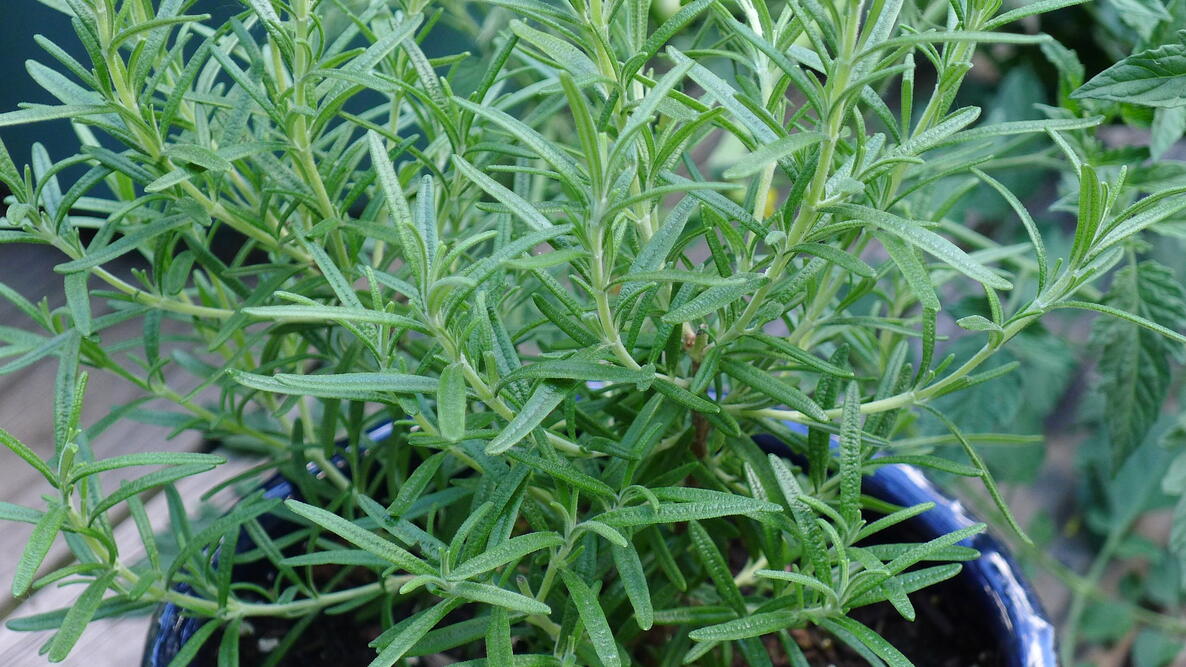
Caption
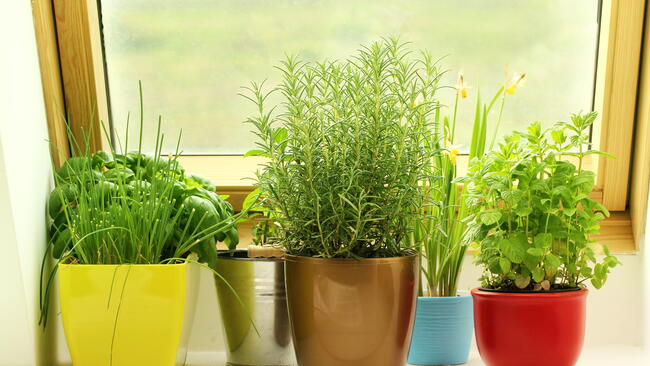
Growing rosemary indoors will allow you to keep this herb all winter, so find out how to overwinter rosemary!
Rosemary Winter Care Guide: Keep Your Herb Thriving Indoors
Find out how to overwinter rosemary and grow rosemary indoors to keep this wonderful herb growing all year!
Every fall, at least one person heading south for the winter will come to me with plants that they can’t bear to let die. I am a sucker for a beautiful plant, so if I have the room, I usually say yes. I have gotten some remarkable plants that way—jasmine, streptocarpella, orchids, geraniums, begonias, and rosemary.
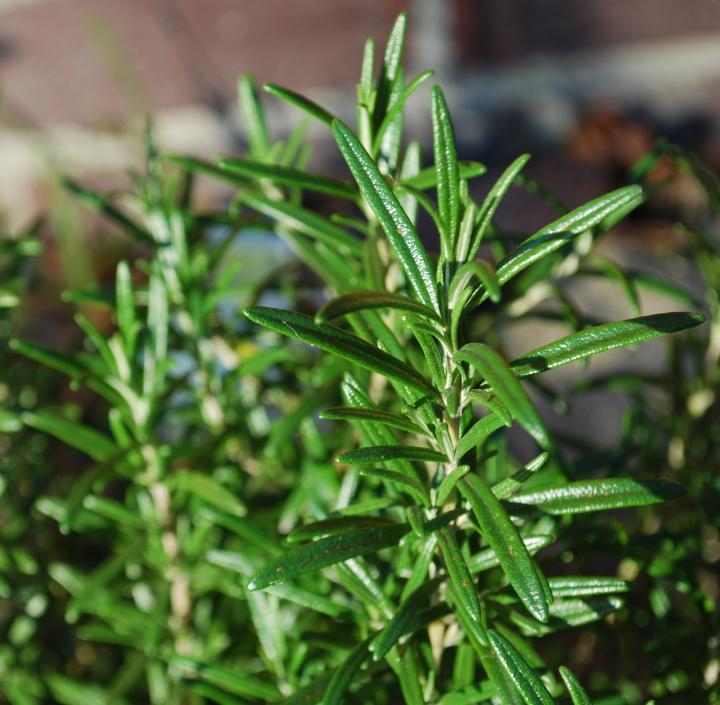
How to Overwinter Rosemary
The rosemary I have now is several years old. Last year, it spent the winter on a cold windowsill at the library. The heat was on the fritz there last winter, but this plant sailed through the 50ºF nights with no problem. Occasionally, I would wrestle it into the sink and spray water over the needles, but it usually just got watered when we noticed the lanky new growth drooping. I brought it home, and it spent the summer outdoors, enjoying the bright sunshine, heat, and rainfall. Now, it is back inside for the winter.
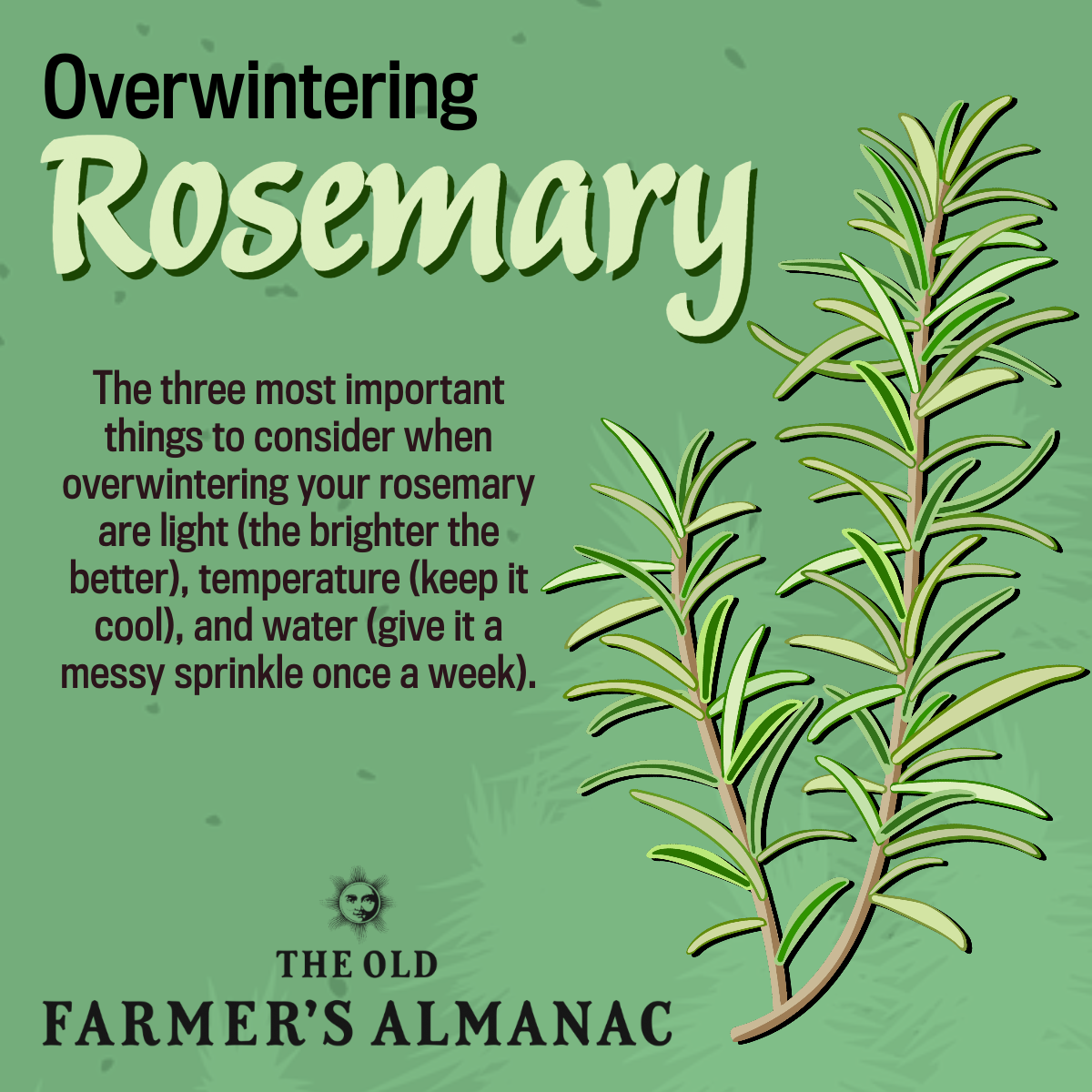
The three most important things to consider when overwintering your rosemary are light, temperature, and water.
Temperature
In the past, I have had success wintering rosemary in a south-facing window in an unheated upstairs bedroom. Now, we are lucky enough to have a greenhouse attached to the house. We keep it fairly cold; the heat only comes on out there if it drops below 40ºF, and sometimes plants too near the glass freeze at night. And yet, the rosemary is thriving.
Watering
It can get a messy sprinkle of water on its needles weekly, along with regular watering when the soil feels dry. Rosemary hates wet feet, so do not let yours sit in water. It needs well-draining potting mix, and a clay pot can help keep the roots from rotting. Many people make the mistake of letting their rosemary dry out too much, but a dry rosemary is a dead rosemary. Water when the soil feels dry.
Light
Now let’s talk about light. Rosemary needs the brightest light you have. I have had the best luck with south-facing windows, but many people resort to supplementing with grow lights. If you don’t have access to a nice south-facing window, a western or eastern one will do. North-facing windows won’t get enough sunlight, but if it’s all you have, it’s better than nothing!

Frequent clipping keeps it from getting too leggy, and when new growth starts this spring, it will make for a bushier plant.
Growing Rosemary Indoors
The best part about keeping rosemary in the house is that you can stroke it every time you walk by and release that lovely fragrance into the air. Smelling it supposedly enhances cognitive function—clearly, I’m not smelling enough of it! Rosemary can even reduce anxiety and stress and repel bugs.
Cooking with it is a treat also. Fresh rosemary goes well with potatoes, chicken, and vegetable soup, and we stuffed our Thanksgiving turkey with it. Plus, if your indoor rosemary doesn’t make it and dries up—free dried rosemary! Try delicious recipes like Corn Bread with Rosemary and Pine Nuts and Rosemary Chicken with Spinach.

Rosemary is said to symbolize “remembrance,” and Rosemarie, the woman who gave me this plant, is often in my thoughts.
Want more growing tips? Check out our Rosemary plant care page! Plus, get more tips for growing plants indoors and getting your garden ready for winter.
Frequently Asked Questions
Can rosemary survive the winter indoors?
Yes! Rosemary can thrive indoors during the winter if given the right conditions. It needs bright light, cool temperatures (40°–60°F is ideal), and careful watering to prevent root rot.
How much light does rosemary need indoors?
Rosemary requires at least 6 to 8 hours of bright, direct sunlight daily. A south-facing window is best. If that’s not available, consider supplementing with a grow light.
How often should I water rosemary in winter?
Water rosemary when the top inch of soil feels dry. Avoid letting the plant sit in water—rosemary hates “wet feet.” Consistent but moderate watering works best.
Should I prune rosemary in the winter?
Yes, light pruning helps keep rosemary bushy and healthy. Clip sprigs for cooking or to encourage new growth. Avoid heavy pruning until spring when growth resumes.
What kind of pot is best for indoor rosemary?
A clay or terracotta pot with drainage holes works best because it prevents excess moisture and helps keep roots healthy.
Can I still use rosemary for cooking while it’s overwintering indoors?
Absolutely! Snip fresh sprigs to use in soups, stews, roasted vegetables, and meat dishes. Frequent clipping also helps keep the plant compact.
Why is my rosemary dying indoors?
The most common reasons are lack of sunlight, overwatering, or letting the soil dry out completely. Check for good drainage, keep the plant in the sunniest window possible, and avoid temperature extremes.
Are you overwintering your rosemary this season? Let us know below!

More Like This





Rosemary is hardy to 15-20 degrees. If it regularly gets colder than that in Prescott Valley, you need to bring your plant inside or take some cuttings and start hew plants. If temps that cold are rare, you can wrap the plant with burlap or plastic (leave the top open so the plant doesn't cook) and mulch the soil around the plant to keep the roots from freezing. Since it is in a metal tub, you could pile hay around the outside of the tub to insulate the roots. Sitting in wet cold soil could also kill the plant but it will be hard to prevent that in a container left outside over the winter unless you build some kind of structure over it.
It depends on what the fuzz is. It could be powdery mildew which can be prevented by making sure the plant has good air circulation and plenty of sun. If the fuzz are mealy bugs then a spray with diluted non-detergent soap and water will help or if there are just a few bugs, dab rubbing alcohol on each one with a Q-tip to kill it. You will have to repeat either remedy several times to get the problem under control. Good luck!
Oh yes! Just strip off the leaves and use them in your cooking. Don't throw away the branches, they make good skewers.
- « Previous
- 1
- 2
- …
- 10
- Next »

Comments