Do your tomatoes look as if they are rotting from the bottom up? The culprit is probably blossom-end rot! This frustrating problem can appear to come out of nowhere. Here are top tips for preventing blossom-end roton your tomatoes and other garden plants.
What Is Blossom-End Rot?
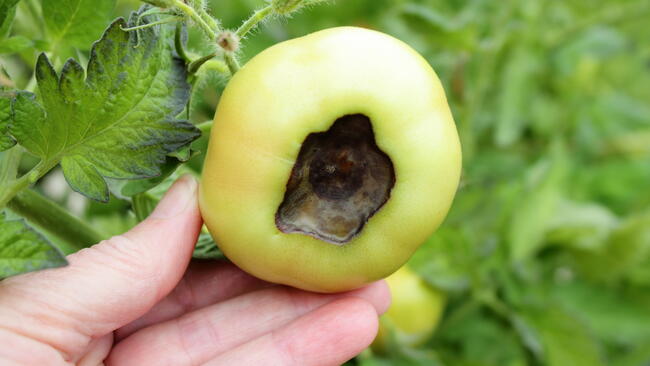
Are your tomatoes developing a dark, sunken spot on their bottoms? Unfortunately, they likely have blossom-end rot. It’s a common problem for fruiting garden plants such as tomatoes, peppers, eggplants, and squash. Blossom-end rot is a disorder in which the tissue of the blossom end (the “bottom”) of the fruit breaks down and rots, thus reducing the quality of the fruit and the overall yield from the plant.
What Causes Blossom-End Rot?
Thankfully, blossom-end rot isn’t caused by a disease or pest. Instead, it is the result of a lack of calcium in the plant. This lack of calcium may be due to low calcium levels in the soil or—more often—soil that is over- or underwatered. Wide fluctuations in soil moisture reduce the plant’s ability to take up calcium from the soil. When the demand for calcium exceeds the supply, the tissues in the fruit break down, and blossom-end rot occurs.
In addition to watering issues, calcium deficiency during fruit formation may also be caused by:
Too much nitrogen-heavy fertilizer
Improper soil pH
High salt levels in the soil
Damage to plants’ roots
Awareness of these causes when caring for tomatoes and other garden plants is the best way to prevent blossom-end rot.
Some blossom-end rot is more or less normal in the first tomatoes of the season since the plants are usually under stress during the initial fruit set. It also tends to happen more often in plants grown in containers, as the soil is more susceptible to fluctuations in moisture. In other words, the plants dry out too much, and their fruit is affected.
If the damaged portion of the fruit is small, you can trim it off and enjoy the rest of the fruit. Hopefully, the problem will fade with the prevention tips below!
Blossom-end rot starts out as a small, bruised area near the bottom of the fruit. Photo credit: Chris Burnett
Identification
Signs of Blossom-End Rot
Usually, blossom-end rot appears while the fruit is still green or ripening, so it often affects the first fruits formed on the plants.
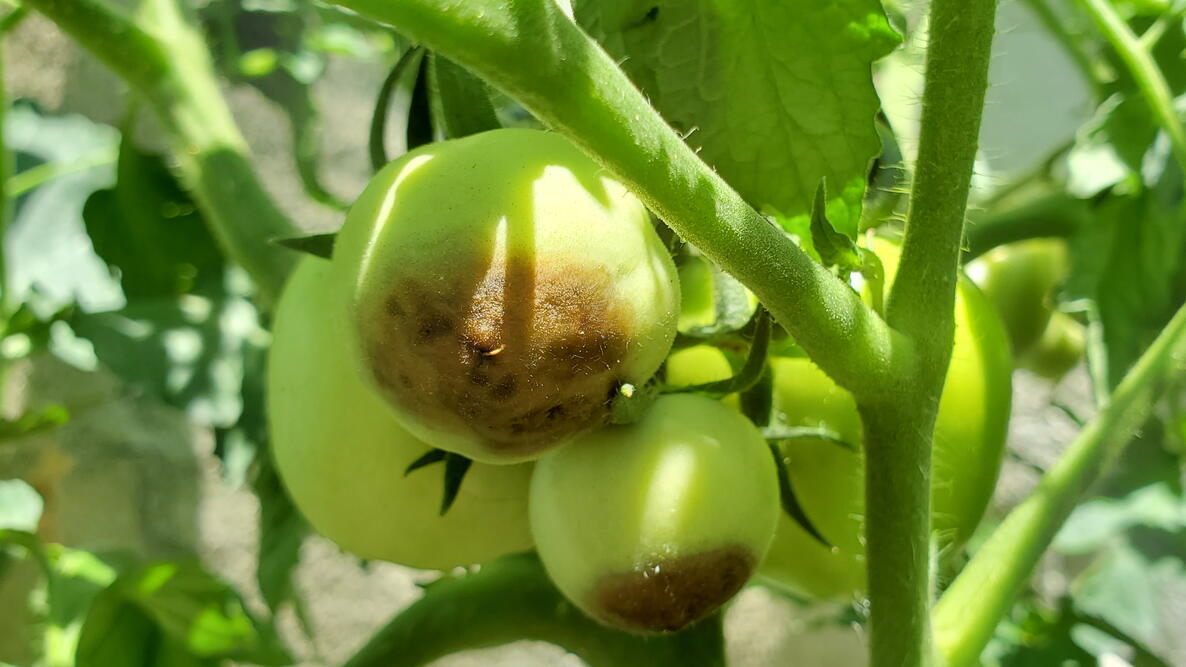
Blossom-end rot starts with a small, depressed, water-soaked area on the blossom end of the fruit (the bottom, opposite the stem). The spot starts off looking like a dark bruise. As the spot enlarges, it becomes sunken and turns black or dark leathery brown in color. Half the fruit may eventually be affected.
Blossom-end rot appears as brown, sunken spots on the bottom of the fruit. Photo Credit: North Carolina State University.
As mentioned above, blossom-end rot is a condition caused by a lack of calcium. Unfortunately, the rot will not go away once a fruit is already affected, but following the advice below can stop the rot from progressing further and from affecting other developing fruit.
First, choose vegetable cultivars that are tolerant of calcium deficiencies and less likely to show blossom-end rot symptoms.
Inconsistent watering is the main cause of calcium deficiency. Avoid watering your plants too much or too little. Instead, water consistently and evenly. If you forget to water, do not overwater. If it’s rainy, ensure plants have good drainage and the soil dries out (but do not cease to water completely). Overall, plants need about 1 inch of water (about 0.6 gallons) per square foot per week.
Use mulches to retain soil moisture during dry periods.
Have your soil tested periodically to determine if there is sufficient calcium in the soil. If you’re using new, store-bought soil, it will likely have more than enough calcium in it already. However, if you’re growing in older soil, calcium levels may be depleted. If your soil test confirms this, add an organic source of calcium such as lime, bonemeal, or finely crushed eggshells.
Check the soil pH on a regular basis, particularly if you use lime as a calcium source. A pH of about 6.5 (slightly acidic) is ideal for growing most vegetables, as it allows for the best nutrient uptake.
Because blossom-end rot is caused by a calcium deficiency, you might be tempted to just fertilize your plants more. However, in most cases, there is already sufficient calcium in the soil; the plants just cannot absorb enough of it. Overfertilization is also harmful, and having too much nitrogen, magnesium, and potassium in the soil can actually make blossom-end rot worse. If you are going to fertilize, follow this advice:
Consider using a fertilizer that is formulated to contain more calcium.
Use a product that contains nitrate nitrogen instead of ammonium nitrogen (as the latter may contribute to more blossom-end rot).
Avoid over-fertilizing during early fruiting, when blossom-end rot is more likely to occur.
Avoid cultivating or digging near the roots of plants, as root damage can affect their ability to absorb water and nutrients.
Staking plants like tomatoes while still young and more adaptable is also a good idea. See our video on properly staking tomatoes.
Catherine Boeckmann loves nature, stargazing, and gardening so it’s not surprising that she and The Old Farmer’s Almanac found each other. She leads digital content for the Almanac website, and is also a certified master gardener in the state of Indiana.
I have been told that crushed tums is a good source of calcium for the garden. I have not tried it yet but plan to next year.
Reply to comment
<span>M. Smith</span>Thu, 05/03/2018 - 08:52
Did the crushed Tums resolve the calcium issue?
Reply to comment
<span>Ken Stockley</span>Sat, 07/12/2014 - 10:35
I keep on hearing about blossom end rot over the years and usually end up with some of my plants. I keep getting told to increase the calcium level for the plants, but I can never find out where to get the calcium from. I have been told to mix crushed eggshells, but I live on my own, so consequently don't get many. I've asked friends, but they are all in the same situation.
Most garden centers carry calcium or bonemeal. Probably on Amazon as well
Reply to comment
<a title="View user profile." href="/author/editors">The Editors</a>Tue, 07/15/2014 - 08:20
If you have a calcium deficiency in your soil, it all starts with soil preparation next year. Start out by adding lime into the to 12 inches of the soil.
To know how much lime to add, it would be best if you knew your soil pH. You want a pH of 6.5 to 6.8 to free up calcium. If you do a soil test, the results will tell you the amount of lime to add. Usually, your county cooperative extension will give you a free soil test.
Adding crumbled egg shells to your compost or burying them in the garden is also a good idea over time.
Also, avoid over-fertilizing, especially with nitrogen which ties up the calcium in the soil.
It also helps to use mulch to keep the soil moisture even.
Keep the soil moist and water evenly. Using a soaker hose at the plant's base is best.
Some readers use calcium sprays as a short-term fix. You'll want to ask your garden center about a spray.
Reply to comment
📣The Gardening Club Just Got Better! 3 Deliveries, 10% Store Discount, and more!
Hi Kriss,
Late blight is very hard to get rid of. Please read our blog about late blight at
www.almanac.com/blog/gardening-blog/avoid-blight-right-tomato