
Planting
When to Plant Aloe Vera
You can plant aloe indoors at any time of the year—yep, they’re that easy! I find they settle in best when planted in spring, which is when they’re actively growing.
Where to Plant Aloe Vera
Sunlight: Place your potted aloe vera where it gets at least 4-6 hours of bright, indirect sunlight. A south- or east-facing windowsill that pets can’t reach is a great choice for indoor aloe vera plants.
If keeping your potted aloe plant outside, pick a sunny spot that gets some shade during the hottest part of the day, especially if you live in a hot climate.
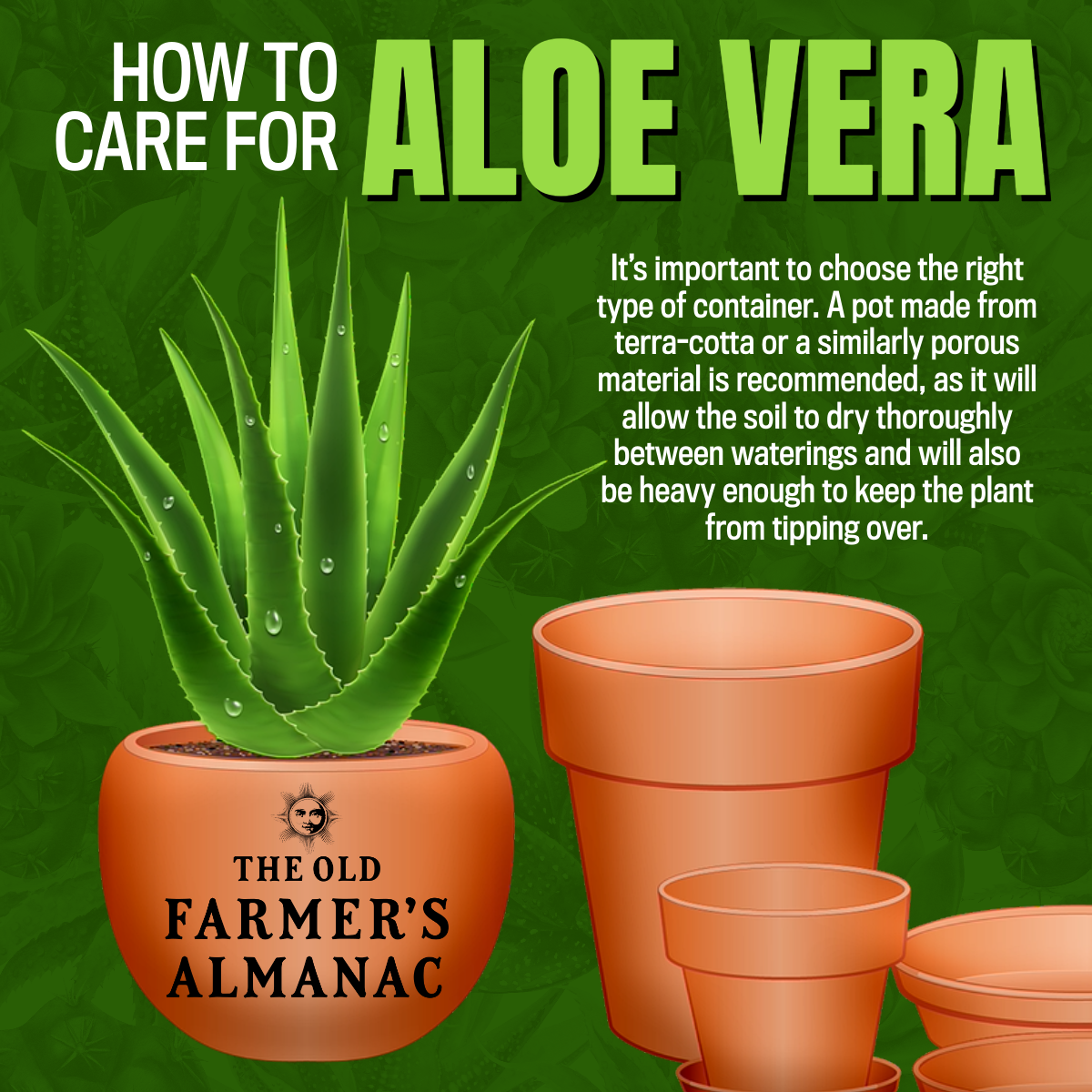
Pot type: Use terracotta pots (the familiar reddish-brown clay kind) with holes in the bottom so extra water can escape.
Terracotta pots dry out faster than plastic ones, which can help prevent roots from staying too wet and rotting. They’re also heavy enough to keep plants from tipping over.
Pot size: Choose a pot that’s 1-2 inches wider across than the clump of roots and soil around your plant, called the root ball. Aloe plants don’t have extensive root systems, so they don’t need much room under the soil.
Small aloes grow well in pots measuring 4- to 6-inch across, though you may need to move them to larger pots as they grow. Learn more about when and how to repot aloes and other houseplants.
Potting mix: Use a potting mix labeled for succulents and cacti. These potting mixes are “well-draining,” meaning they’re designed to let water pass through fast so the roots don’t stay too wet.
You can also make your own aloe vera potting mix—just blend 2 parts standard potting mix, 1 part perlite or pumice, and 1 part grit or horticultural sand.
Did you know? If winters are mild where you live, you can plant aloes in a sunny spot in your garden. Just make sure it’s in a spot where the soil drains well.
How to Plant Aloe Vera
- Carefully remove the aloe plant from the pot it came in. Support the leaves with one hand to avoid accidentally breaking them. If the plant won’t come out easily, run a butter knife gently around the inside edge of the pot to loosen the soil.
- Add potting mix to the bottom of the new pot—several inches is usually a good starting point. Gently remove some of the old soil or potting mix from around the plant’s roots.
- Place the aloe in the new pot at about the same depth it was in its original pot. Add potting mix and gently press it down with your fingers, leaving about an inch below the rim for watering.
- Let the aloe plant settle in for several days before watering.
Harvesting
When to Harvest
- Harvest aloe gel when plants have had time to settle in, and the outer leaves are plump and healthy.
- I find that leaves have the most gel several days after watering!
How to Harvest
- Use a sharp, clean knife to cut an outer leaf off where it meets the stem. Avoid cutting the smaller leaves so that they can keep growing.
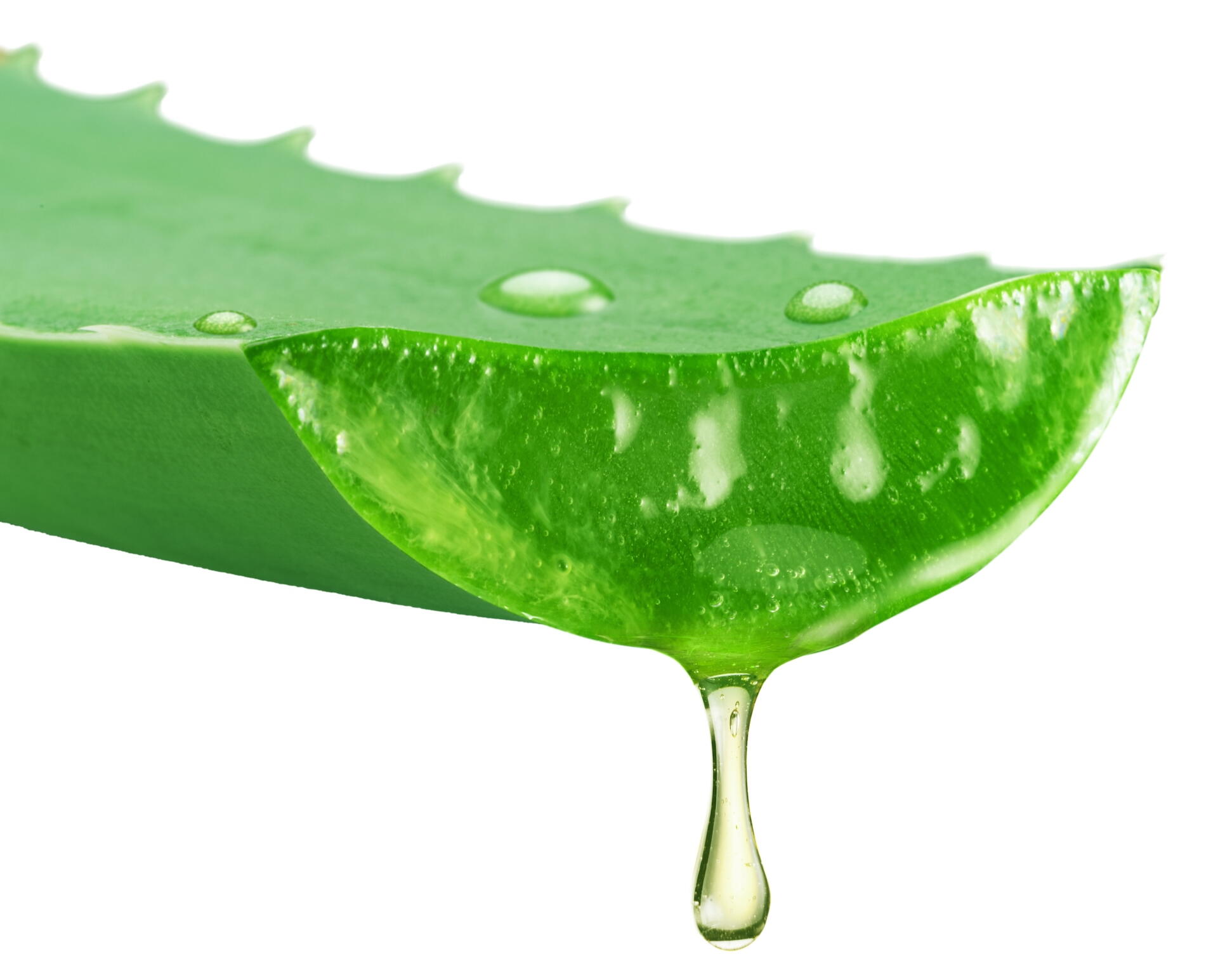
- Stand the leaf in a cup with the cut end facing down for about 15 minutes. This process allows some of the yellow sap, a natural latex, to drain out. That natural latex can irritate skin—the last thing anyone wants from aloe gel!
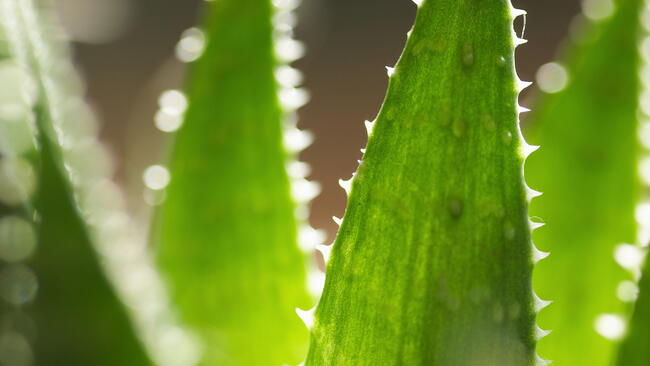
- Rinse and dry the leaf well afterward. Lay the leaf on a cutting board and use a sharp knife to trim away the thorny edges.
- Cut off the white base and pointed tip, leaving only the gel-filled section.
- Slice off the top and bottom green skin and lift it away, kind of like you’re filleting a fish. This exposes the gel. You can also use a spoon to scoop out the gel.
- Rinse the gel with clean water before using it on your skin.
Storage
- Store fresh aloe gel in an airtight container in the fridge—I find that it stays good that way for about 1 week.
- If you want your aloe gel to last longer, pop it into ice cube trays, freeze it, and store the frozen cubes in a freezer-proof container. I store mine this way for up to 6 months.
Did you know? You can use a blender to get your aloe gel extra smooth!
Credit: Valentyn Volkov
Pests and Problems
Even low-maintenance plants like aloe vera can have problems from time to time.
Here’s how to spot common problems, pests, and plant diseases that might affect your aloe plants, and what to do next.
| What You See | Likely Cause | What to Do |
| Brown, mushy leaves | Overwatering | Check that your pot has drainage holes. Let the soil dry before watering again, and avoid letting the plant sit in water. |
| Yellowing leaves | Overwatering or too much sun | If the leaves feel soft or mushy, overwatering is likely to blame. Allow soil to dry out more between waterings. Repot if the soil isn’t drying quickly. If the leaves feel firm, your plant may be getting too much sun. Move it to a spot with less intense sunlight. |
| Drooping leaves | Overwatering, underwatering, or too little light | Push a finger into the potting mix. If it feels damp, wait before watering again. If it’s dry and the leaves look thin or wrinkled, water thoroughly and let the extra water drain away. |
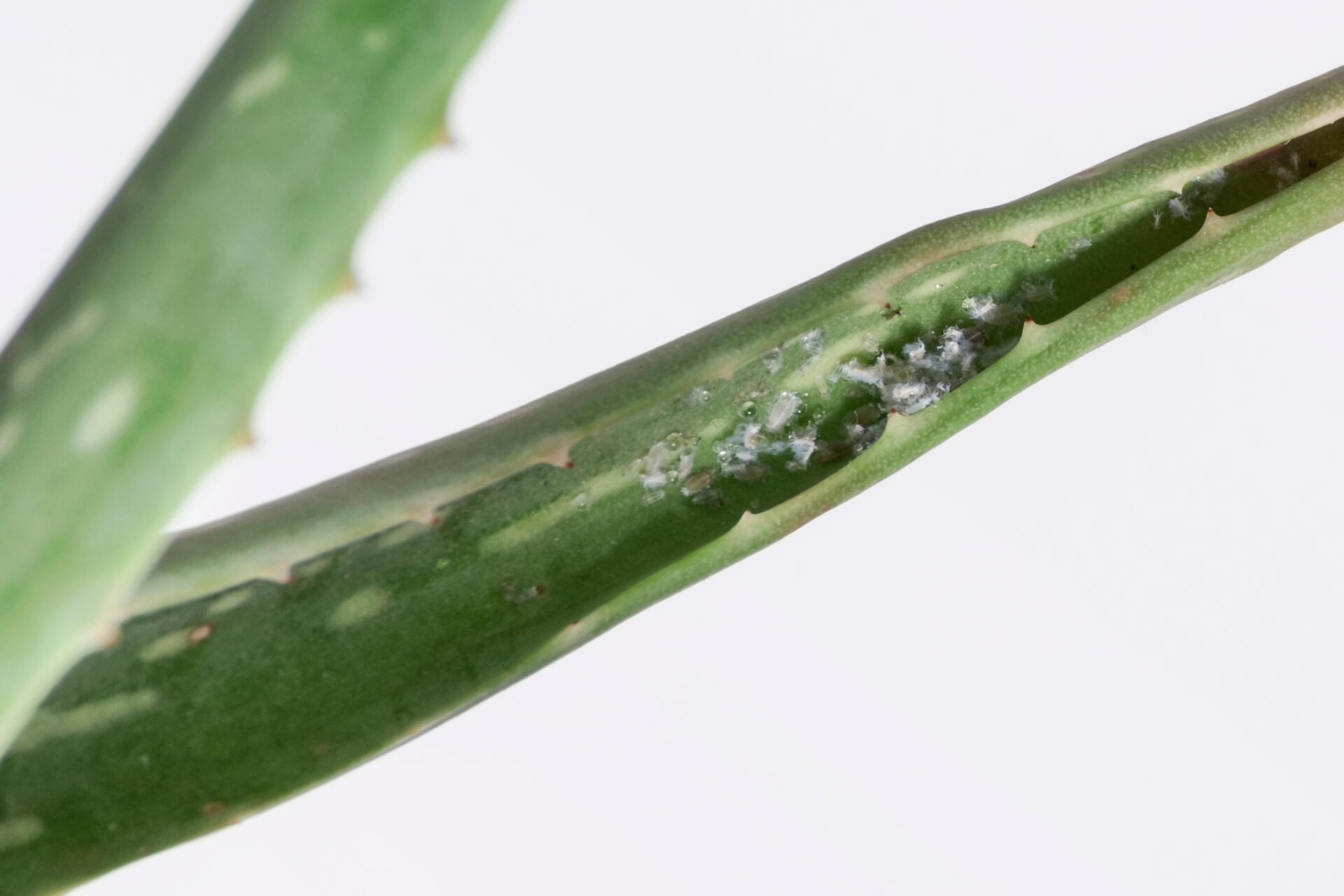
| Pests that look like cottony fluff in joints and crevices | Mealybugs | Wipe insects off with a cotton swab dipped in rubbing alcohol, or spray your plant with organic insecticidal soap or horticultural oil. |
| Pests that look like dark bumps on leaves | Scale insects | Wipe insects off with a cotton swab dipped in rubbing alcohol, or spray your plant with organic insecticidal soap or horticultural oil. Scale insects can be hard to treat, so reapply sprays if needed. |
| Mushy stems/roots, plant falling over | Root rot (from overwatering) | Let potting mix dry completely before watering. Repot your aloe in a new pot with better drainage holes if necessary. |
| Dark, sunken spots on leaves; wilting | Fungal stem rot (often from overwatering) | Prune away damaged leaves. Make sure the potting mix is draining properly. Let potting mix dry completely before watering. |
Credit: LuciaR
Types
There are over 500 distinct species of aloe plants, according to NC State Extension.
Don’t let that overwhelm you, though. Here are a few beginner-friendly varieties to try:
- Aloe vera: Upright green leaves that grow fast and are filled with soothing gel. It’s the classic “true aloe,” used as a folk remedy for many years.
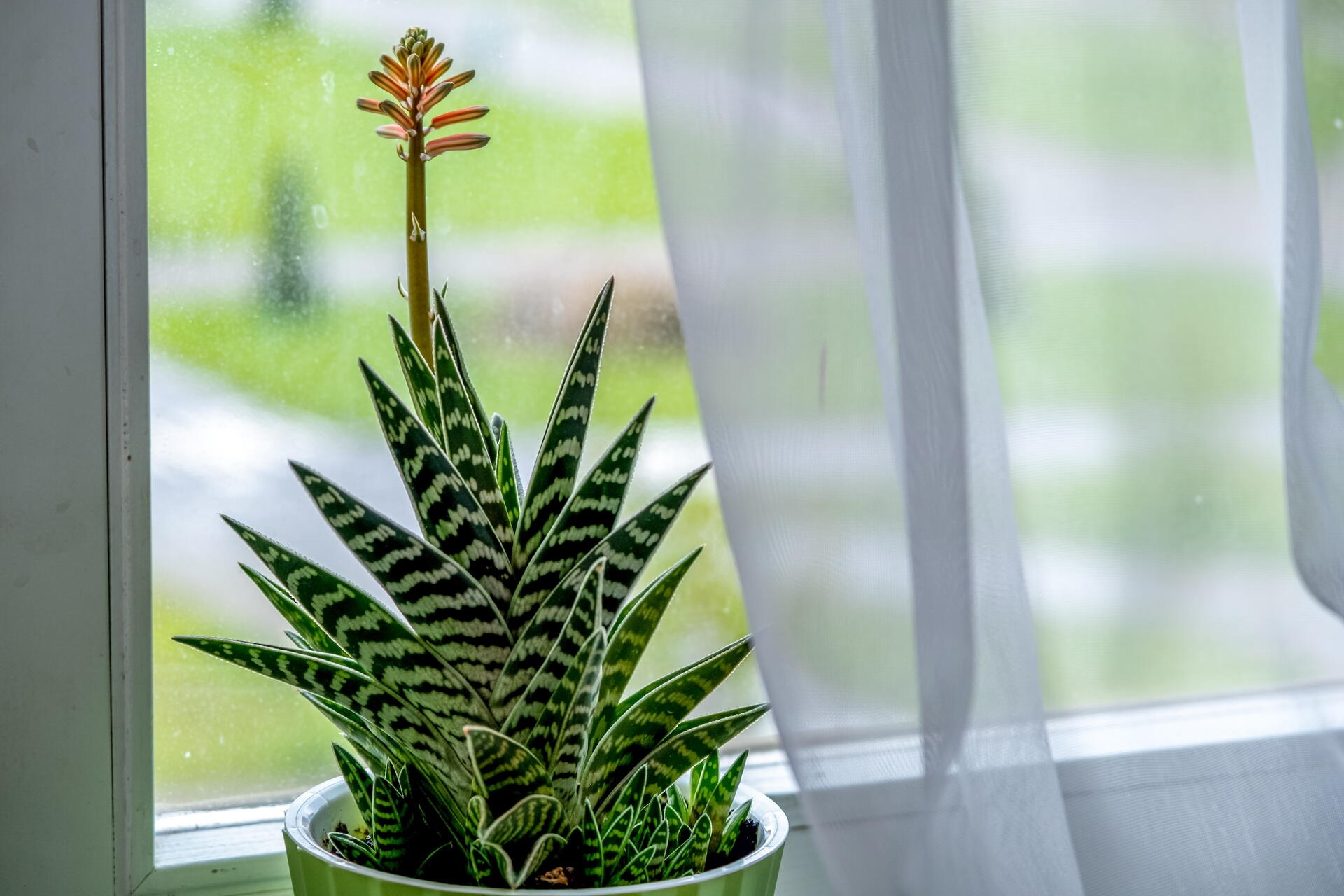
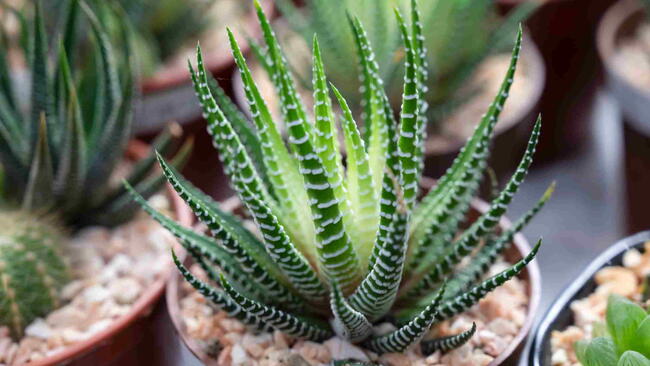
- Tiger aloe (Gonialoe variegata): Smooth leaves and uneven white striping (hence the tiger name)! This aloe stays small and fits well on windowsills or in small spaces.
- Lace Aloe (Aristaloe aristata): White-spotted leaves that have fine “teeth” along the edges. May tolerate cooler weather better than other varieties.
- Blue Aloe (A. glauca): Gorgeous silvery-blue leaves—it really lives up to its name! Grows bigger than the other aloes listed here.
Credit: sakavichanka
Frequently Asked Questions
-
When should I repot my aloe vera plant?
Repot aloe vera when its roots crowd the pot or grow through the drainage holes. Spring is a good time to repot aloe vera, when the plant is actively growing. Choose a slightly larger pot with drainage holes and use a potting mix intended for succulents and cacti.
-
Does aloe vera flower?
Yes! Aloe plants can produce yellow or orange flowers once they’re a few years old. Aloe grown indoors might not bloom, so if you don’t see any flowers, it doesn’t necessarily mean your plant is unhealthy!
-
Is aloe vera a succulent or a cactus?
Aloe vera is a succulent, but it is not a cactus. Its thick, fleshy leaves store water, which helps it tolerate dry conditions and explains why it needs less frequent watering than many other houseplants.
-
Will my aloe vera grow new leaves after harvesting?
Yes, a healthy aloe vera plant can continue producing new leaves after you harvest an outer leaf. Just be sure to give the plant time to recover after each harvest.
-
Can I grow aloe vera from a leaf cutting?
Separating pups—the small plants that grow beside the parent—is more reliable than trying to grow aloe vera from a leaf cutting. Choose a pup with its own roots, gently separate it from the parent, and plant it in a small pot with drainage holes and a potting mix intended for succulents and cacti.
Sources
- South Dakota State University Extension — Aloe Vera: Houseplant How-To
- NC State Extension — Aloe vera


If the plant is not in soil or any other type of media, then it's likely an air plant. These should be sprayed with water every once in a while and soaked in room-temperature water every few weeks. After a ten-minute soak, turn the air plant upside-down and let it dry completely before putting it back in its spot.
Look up pictures of air plants to see if that's what yours is. If it's not an air plant and is in fact a succulent, doing the above will kill it!
It sounds like your aloe plant may be succumbing to rot. When you water, is the soil still moist? The soil should be almost entirely dry when you water again. Make sure that you're also watering deeply, and not just getting the top layer of soil wet.
It's best to use freshly harvested gel, if possible. We would discard the gel if it turns brown or has an unappealing odor to it.
Cutting and replanting an aloe vera stem is not without risk, but it can be done. Here's how:
- Remove any old leaves and leaf "skins" left on the stem before making the cut.
- Cut the stem, leaving about two inches attached to the leaves.
- Place the cut plant in a warm area that gets indirect light until a callous forms over the wound. Direct sunlight can be too intense and may dehydrate the aloe.
- After a callous has formed, dust the entire stem with rooting hormone (this can be bought at a local garden center or online). Rooting hormone encourages plants to put out new roots.
- Plant the aloe vera in a well-draining succulent mix, putting the entire stem in the soil, so the leaves are just above ground. Water sparingly, letting the top 1–2 inches of soil dry out before watering again.
- The plant should root within 1–2 months. Keep it in a warm area and out of direct sunlight until it has rooted.
Again, this process is not guaranteed to work, so keep that in mind before you make the cut. Be sure to let us know how it goes!
- « Previous
- 1
- 2
- …
- 10
- Next »

Comments