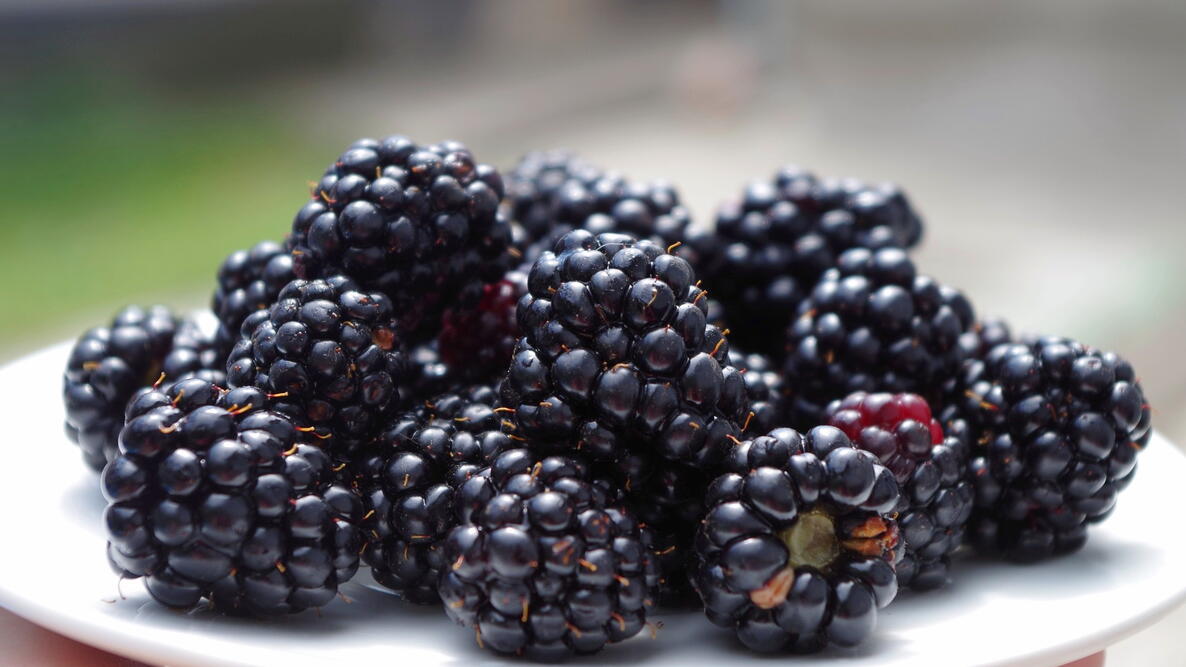
Image Credit:
Pixabay
Botanical Name
Rubus fruticosus
Grown as
Toxicity
Sun Exposure
Water Needs
Height
Spread
Soil pH
Bloom Time
Flower Color
Special Features
Resilience
Plant Type
Types
Basically, there are three types of blackberries:
- Erect thorny blackberries
- Erect thornless blackberries
- Trailing thornless blackberries
Erect blackberries are bushes that support themselves, while the trailing blackberries have long canes that must be trellised for support.


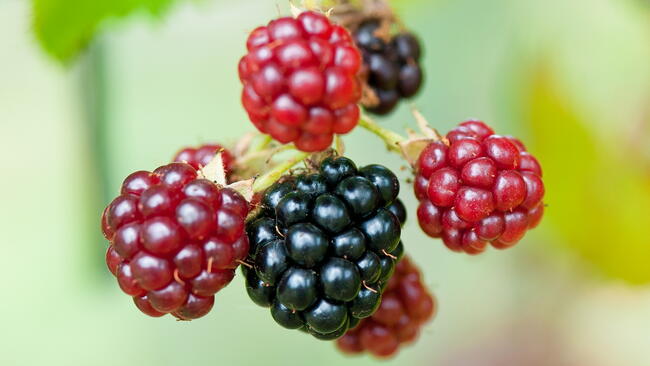
Our blackberries are producing well and at the beginning of the season were very large and plump. Now the berries are much smaller and sour. We do not pull them off but they will fall off when touched. What can we do next year to make sure they are sweet the entire harvest?
It sounds like the berries have the Spotted Wing Drosophila fruit fly larvae in them. This will cause the berries to be very bitter and will make them just drop to the ground. Get some of the berries and put them in a closed jar after a few days see if you can see some very small whitish insects flying around inside the jar. If you know someone that has a microscope you can the eggs and larvae under the skin of the drupelets. Or you can take some of the berries to the local county agents office to get them to test the berries for insects.
I am concerned about viruses in my wild blackberries. If my blackberries are producing normally and fervently can I assume they are free of virus?
Is there any way to treat the virus in wild blackberries?
there are mot any effective chemical control for any virus in blackberries that I know about. The only thing you can do is dig up infected plant before it infects the rest of the plants. last year I had 3 plants with orange rust that I dug up. The plants the virus was on is resistant to that virus, BUT just because it is resistant doesn't mean it wont get the virus just less likely. i would recommend going to oklahoma state univ. website and dept of ag on that site then scroll down to Damon Smith pdf file of blackberry diseases to see some of the diseases as well as what they look like on the plants.
I was hoping for an answer to my last question, but since I didn't get one I'll try again.
I have wild blackberries growing near my house. The new canes look very green and healthy but the ones with berries on them are brown and almost look dead (they do have green leaves on them). In years past they have produced very small, hard and dry fruit. Does this sound like the virus that has been mentioned here? I have been using Miracle Gro fertilizer this spring to, hopefully, produce better results this year. Any Comments?

There are many types of viruses. Unfortunately, in most cases, infected plants should be removed and destroyed to minimize the spread of viruses. The best prevention for the future is to spray fungicides in the winter before growth starts, avoid excessive nitrogen fertilizer, thin plants to improve air circulation, control weeds, irrigate early in the day so that foliage can dry out in the afternoon, and avoid leaf wetness. Also, remove and destroy all old canes after the final harvest and remove any new canes that have lesions.
I had the same problem this year as in previous years, so I suspect that my plants are infected. I cut all the canes and tilled the soil and will be adding new topsoil. I will be attempting to start a new crop from seeds (from another source) in the spring, and plant the new canes in the same spot.
Can I treat the soil with a fungicide before I plant the new canes and, if so,what fungicide should I use?
Thanks in advance for your response and I really appreciate your website.
Jack if your plants have a virus then after you get rid of the plants completely, you nee to wait at least 3 years before planting more berry plants in that location.
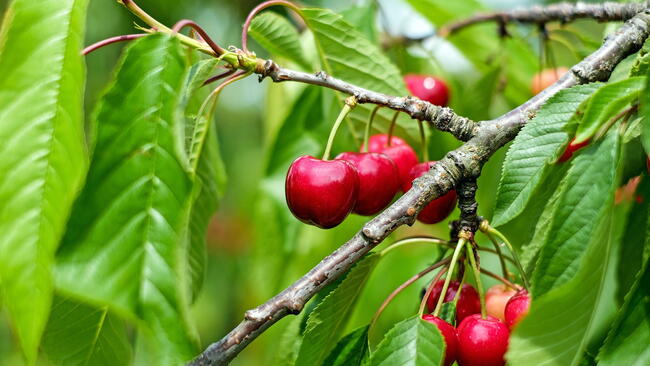
I have a tree that produces enough berries in a typical year to make two pies. This year the fruit yield is at least 15 times what is typical. I live in NE Ohio. I was picking some berries then I noticed the most ripe ones are on the ground. What do I do with them to make sure they're safe to eat? There are bats living in the tree.
- « Previous
- 1
- 2
- …
- 10
- Next »
📣The Gardening Club Just Got Better! 3 Deliveries, 10% Store Discount, and more!

Comments