Types
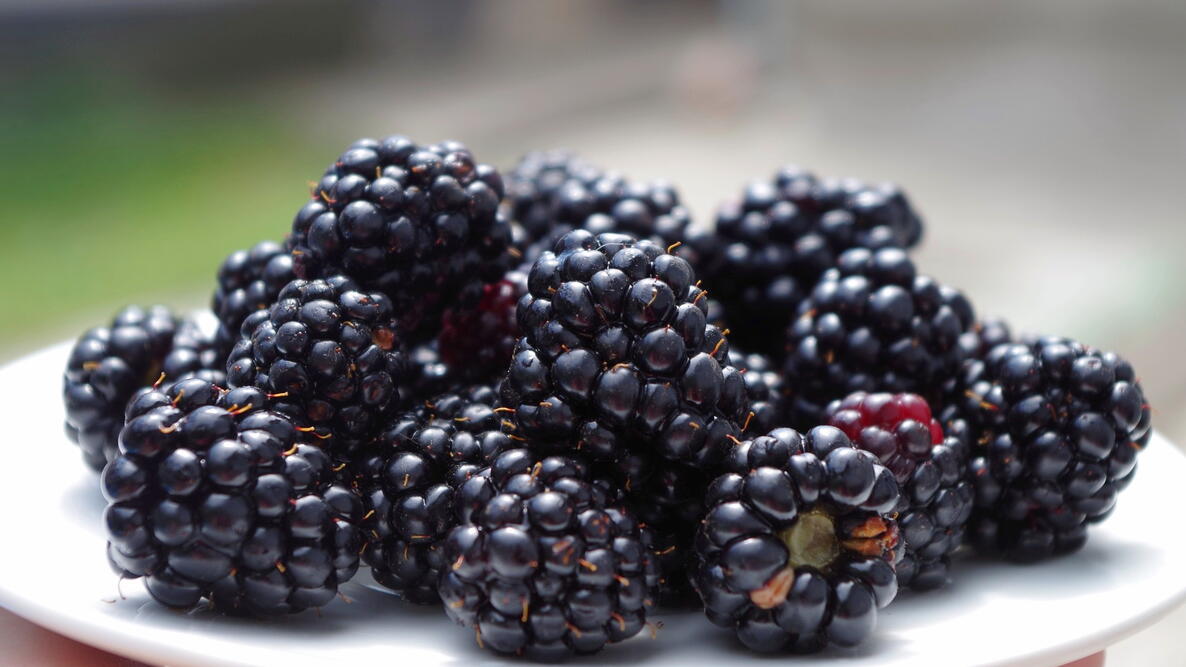
Basically, there are three types of blackberries:
- Erect thorny blackberries
- Erect thornless blackberries
- Trailing thornless blackberries
Erect blackberries are bushes that support themselves, while the trailing blackberries have long canes that must be trellised for support.


Comments

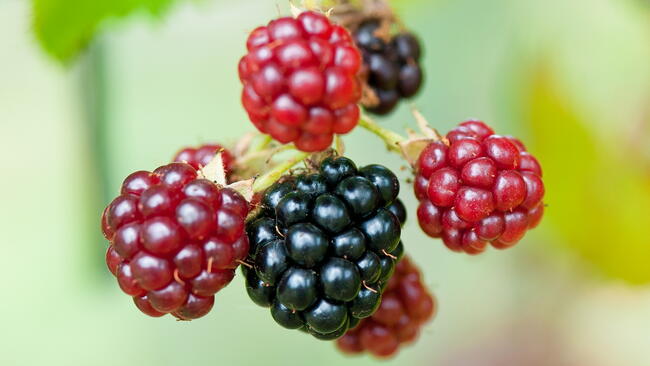
It could be redberry mite. This condition prevents berries from ripening uniformly and tends to affect late-bearing varieties such as Chester, Triple Crown, Navaho, and Apache. And, yes, it could be due to the hot weather. The bushes probably get plenty of moisture if they are near the creek (and it has not dried up with the lack of rain). We hope this helps.
This variety needs 400 to 500 hours of chill; is it getting that? It also needs rich organic soil (soil is often the source of the problem for many gardeners). Are you fertilizing? a complete fertilizer, such as 8-8-8 or 10-20-10 or 13-13-13 in early spring as a side dressing in early spring before bud swell. Broadcast evenly around each plant, starting about 9 inches from the stem and extending outward to about 2 feet.
We hope this helps!
Give them a good home. Prune all the old canes (dead floricanes) down to the base and discard or burn. This allows room for new canes to grow. At this time, you can thin, too. In the spring, you can prune further if needed to avoid tangling or train to a trellis. Weed. Improve the soil with rich, organic matter. Fertilize in the spring (see two questions above here), and see the general care tips in the article above.
We are so envious of your bounty of berries, Wendy! Nothing beats a blackberry straight from the vine. However, as you know, blackberries are highly perishable and will only last a few days once harvested, even with refrigeration. But they can be stored by canning, preserving, or freezing. Techniques used for freezing blueberries can also be used on blackberries. Click here: https://www.almanac.com/blog/gardening/celeste-garden/frozen-berries-how-freeze-blueberries
- « Previous
- 1
- 2
- …
- 10
- Next »

Root cuttings are best made in the fall by cutting roots the size of a pencil or larger into 3- to 6-inch lengths and storing them at 32°F in moist, not wet, peat moss. These can be planted in mid-winter (depending on your zone) to early spring. However, propogating plants from those of a neighbor can introduce unwanted root-rot organisms or viruses into your soil. It is best to purchase disease-free plants from a nursery.