Growing
- Place plants outside where they will receive a couple of hours of daily sunlight and have wind protection.
- Slowly expose them to more sunlight over the next week or two, bringing them indoors if night temperatures drop below 40°F.
- Dig small holes with a trowel or dig a furrow with a shovel.
- Place the seedlings 15 to 18 inches apart and fill the soil around them so that the plant is at the same level it was in its pot.
- Water the plants in, or use a transplant starter solution high in phosphorus and low in nitrogen and potassium.
- Factor this into your calculations, ensuring you start your seeds early enough for them to mature before a hard freeze.
- Once the seedlings are 4–6 inches tall and have 2–4 sets of leaves, they are ready to transplant outdoors.
- Hardening off the seedlings (acclimating them to outdoor conditions) before transplanting is recommended.
- When seedlings reach about 5 inches tall, thin to leave the desired space between them. If you wish, transplant the thinned seedlings elsewhere.
- Mulch thickly around the area to retain moisture and regulate soil temperature.
- Water 2 inches per square foot per week.
- The optimum soil temperature for growth is 60° to 65°F. Young plants exposed to temperatures below 45°F for an extended period of time may bolt or form loose heads. Cover plants if cold weather is expected.
- Fertilize 2 weeks after transplanting with a balanced (10-10-10) fertilizer.
- Three weeks later, add a nitrogen-rich fertilizer; cabbage needs nitrogen in the early stages.
- Practice crop rotation with cabbages to avoid a buildup of soilborne diseases.
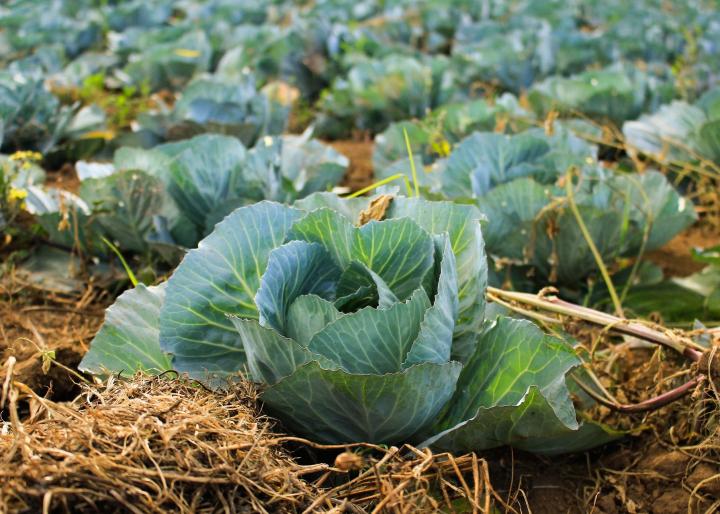
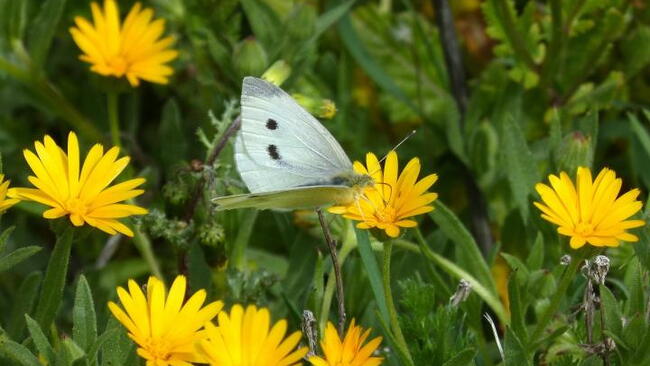
Protect seedlings against birds with wire mesh, and use netting during the summer months to stop butterflies from laying their eggs on the leaves. It’s also worth growing nasturtiums nearby as a sacrificial crop, as cabbage worms will be more likely to eat the nasturtiums instead of your cabbages. Mint can be used to help deter flea beetles.
Keep cabbages watered. Weed between plants with a hoe or by hand. During exceptionally cold weather, winter cabbages may need to be protected with row covers or cloches. In very cold regions, growing cabbages in a greenhouse or cold frame will keep them safe.
“As cabbage heads mature, they become prone to splitting in response to heavy rainfall, especially following dry weather. To minimize head splitting, avoid late-season fertilization, provide adequate water throughout the growing season, and harvest heads as soon as they are firm. In addition, pruning roots with a shovel on one side of the plant, or twisting the plant after the heads have firmed, will break roots and prevent the uptake of excess water,” explains John Schoenhals, Agriculture Educator at Ohio State University Extension.
Pests and Problems
Some old folklore tells us: Scatter elder leaves over your cabbage to keep the bugs away.
| Pest/Disease | Type | Symptoms | Control/Prevention |
|---|---|---|---|
| Aphids | Insect | Misshapen/yellow leaves; sticky “honeydew” (excrement); sooty, black mold | Grow companion plants; knock off with water spray; apply insecticidal soap; put banana or orange peels around plants; wipe leaves with a 1 to 2 percent solution of dish soap (no additives) and water every 2 to 3 days for 2 weeks; add native plants to invite beneficial insects |
| Black rot | Fungus | Yellow, V-shape areas on leaf edges that brown and progress toward leaf center; leaves eventually collapse; stem cross sections reveal blackened veins | Destroy infected plants; choose resistant varieties; provide good drainage; remove plant debris; rotate crops |
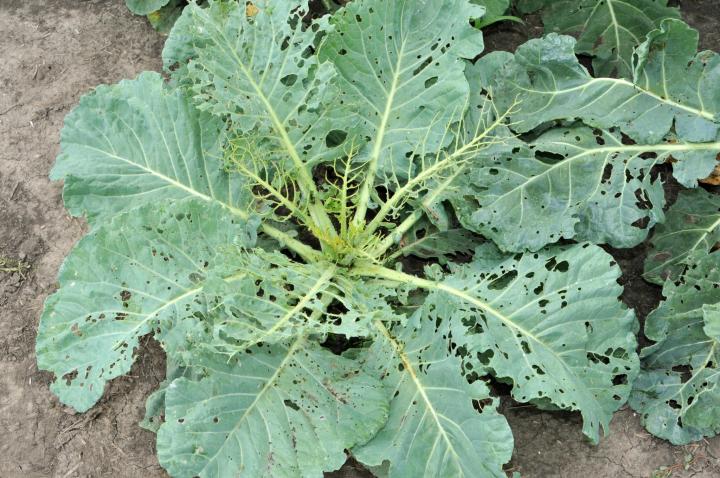
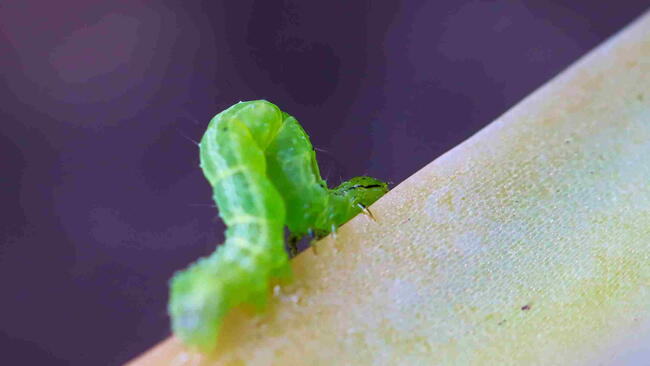
| Cabbage loopers | Insect | Large, ragged holes in leaves from larval feeding; defoliation; stunted or bored heads; excrement | Handpick; add native plants to invite beneficial insects; spray larvae with insecticidal soap or Bacillus thuringiensis (Bt); use row covers; remove plant debris |
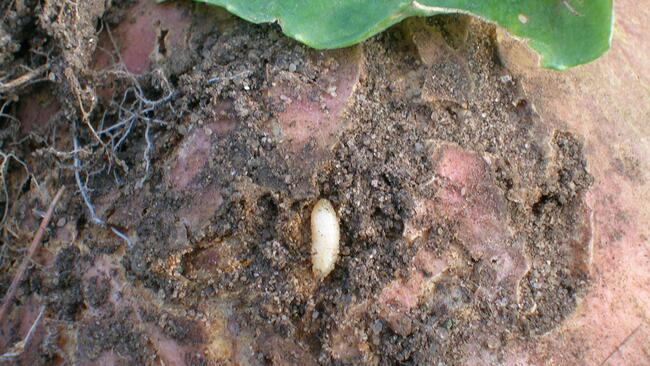
| Cabbage root maggots | Insect | Wilted/stunted plants; off-color leaves; larvae feeding on roots | Use collars around seedling stems; monitor adults with yellow sticky traps; use row covers; destroy crop residue; till soil in fall; rotate crops |
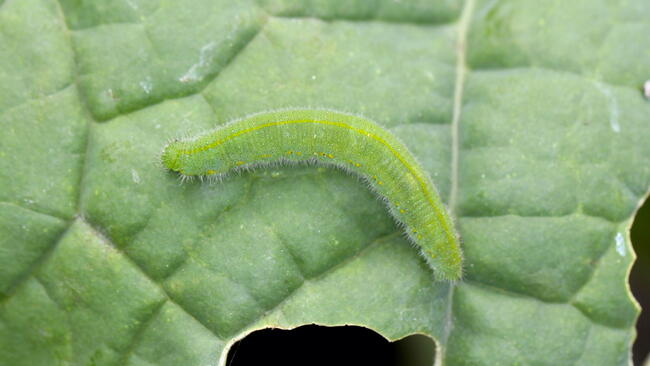
| Cabbage worms | Insect | Leaves have large, ragged holes or are skeletonized; heads bored; dark green excrement; yellowish eggs laid singly on leaf undersides | Handpick; use row covers; add native plants to invite beneficial insects; grow companion plants (especially thyme); spray Bt |
| Clubroot | Fungus | Wilted/stunted plants; yellow leaves; roots appear swollen/distorted | Destroy infected plants; solarize soil; maintain soil pH of around 7.2; disinfect tools; rotate crops |
| Downy mildew | Fungus | Yellow, angular spots on upper leaf surfaces that turn brown; white/purple/gray cottony growth on leaf undersides only; distorted leaves; defoliation | Remove plant debris; choose resistant varieties; ensure good air circulation; avoid overhead watering |
| Flea beetles | Insect | Numerous tiny holes in leaves | Use row covers; mulch heavily; add native plants to invite beneficial insects |
| Slugs/snails | Mollusk | Irregular holes in leaves; slimy secretion on plants/soil; seedlings “disappear” | Handpick; avoid thick bark mulch; use copper plant collars; avoid overhead watering; lay boards on soil in evening, and in morning dispose of “hiding” pests in hot, soapy water; drown in deep container filled with 1/2 inch of beer, or sugar water and yeast, and sunk so that top edge is slightly above ground; apply 1-inch-wide strip of food-grade diatomaceous earth as barrier |
| Stinkbugs | Insect | Yellow/white blotches on leaves; eggs, often keg-shaped, in clusters on leaf undersides | Destroy crop residue; handpick (bugs emit odor, wear gloves); destroy eggs; spray nymphs with insecticidal soap; use row covers; weed; till soil in fall |
| Thrips | Insect | Leaves, especially in folds near base, have white patches or silver streaks; brown leaf tips; blistering/bronzing on cabbage leaves; curling or scarring | Remove plant debris; choose resistant varieties; add native plants to invite beneficial insects; use row covers; use straw mulch; monitor adults with yellow or white sticky traps; use sprinklers or other overhead watering |
| White mold | Fungus | Pale gray, “water-soaked” areas on stems, leaves, and other plant parts that enlarge and develop white, cottony growth, later with black particles; bleached areas; crowns rot; plants wilt/collapse | Destroy infected plants; ensure good air circulation; water in morning; weed; destroy crop residue; rotating crops on 5-year or longer cycle may help |
Types
There’s a fantastic range of cabbage varieties to choose from, offering different colors, shapes, and textures.
- For an early harvest, try ‘Primo’ or ‘Stonehead’.
- Quick-maturing ‘Golden Acre’ and ‘Quick Start’ yield 3-pound heads.
- For Savoy types, try ‘Alcosa’, an early variety, or ‘Wirosa’, a late variety that overwinters as-is in southern gardens but needs protection in the North.
- ‘Early Jersey Wakefield’ resists splitting. It’s an heirloom, with slightly pointed, 2- to 3-pound heads.
- ‘Gonzales’ produces softball-sized heads, making it good for small gardens.
- Disease-resistant varieties include ‘Blue Vantage’ and ‘Cheers’.
- If you are planting for a fall harvest, try red or Chinese cabbage. Good varieties include ‘Integro’ and ‘Ruby Perfection’ (reds) and Li ‘Ren Choy’ (baby bok choy).
Cabbage heads, or hearts, can be rounded or conical, with leaves that are light green, dark green, red, or purple. Red cabbages are popular for braising or pickling.
Some types have a smooth, almost glossy appearance, while others, like the Savoy cabbage, produce deeply crinkled leaves that are perfect for mopping up sauces or gravy.
Cabbages are grouped according to when they’re harvested. Spring cabbages, which may also be harvested young, as ‘spring greens,’ are ready from mid- to late spring. Summer cabbages crop from summer into early autumn, while fall cabbages and winter varieties cover the remainder of the year.
Savoy cabbages have a long harvest period stretching from autumn all the way through winter to early spring.
Our Garden Planner can show you recommended sowing, transplanting, and harvesting times for different types of cabbage in your location.

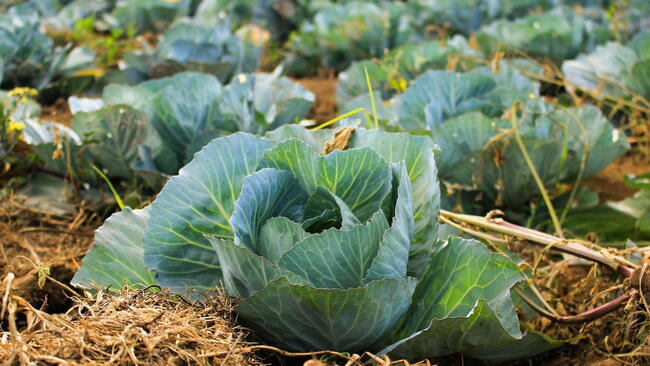

Growing red cabbage is no different than growing green cabbage. It really depends on the variety that you buy because there are some types that mature earlier and some that mature later. In general, transplant early cabbage soon enough that it matures before the heat of summer. Many varieties take 70 to 75 days to mature. Late cabbage is seeded mid-summer, but it develops its main head during the cooling weather of fall.
- « Previous
- 1
- 2
- …
- 10
- Next »

Comments