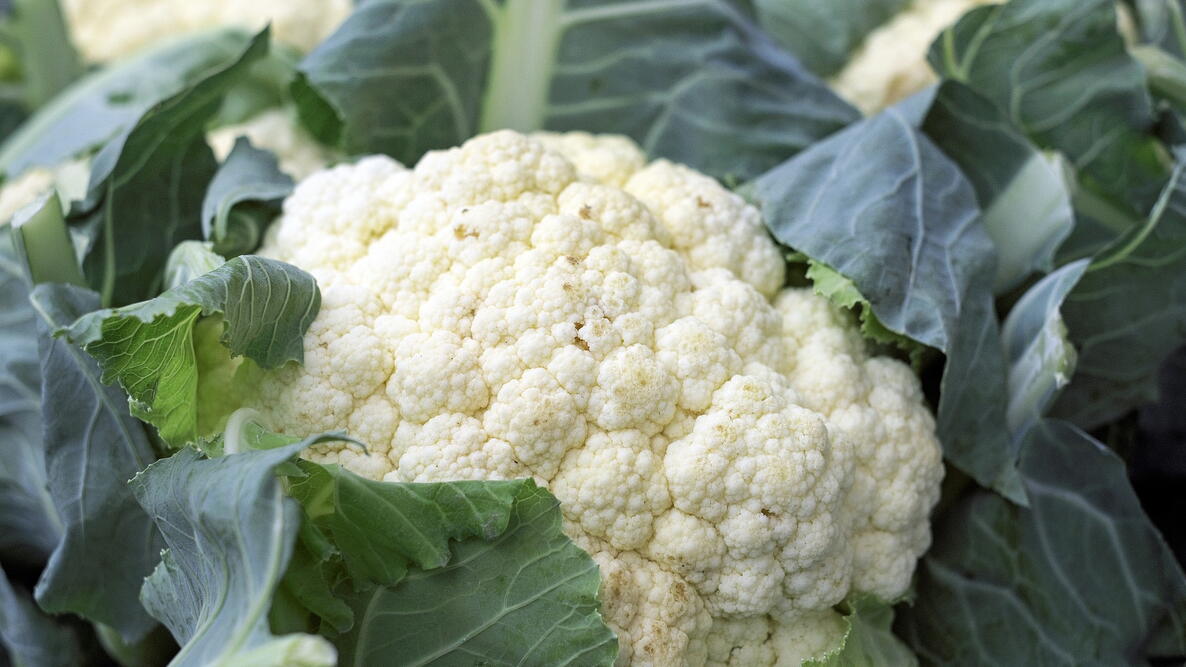
Planting
Cauliflower should be grown in a spot that gets full sun (6 to 8 hours of sunlight per day). Lack of sunlight may produce thin, leggy plants and subpar heads. In summer, shade plants from the hot sun, if necessary.
Soil needs to be very rich in organic matter; mix aged manure and/or compost into the bed before planting. As an alternative, apply 5-10-10 fertilizer to the planting site. Fertile soil helps to prevent heads from buttoning.
When to Plant Cauliflower
- Cauliflower grows best as a fall crop (cool weather is best for head formation), but can be grown in spring, too.
- We suggest buying cauliflower seedlings (aka “transplants”) versus starting them from seed, as cauliflower can be finicky.
- Spring Planting:
- If you start from seed, sow seeds indoors 4 to 5 weeks before the last spring frost date.
- Plant seedlings outdoors 2 to 4 weeks before the last spring frost date.
- Fall Planting:
- Plant a fall crop 6 to 8 weeks before the first fall frost date, but after daytime temperatures are regularly below 75°F.
How to Plant Cauliflower
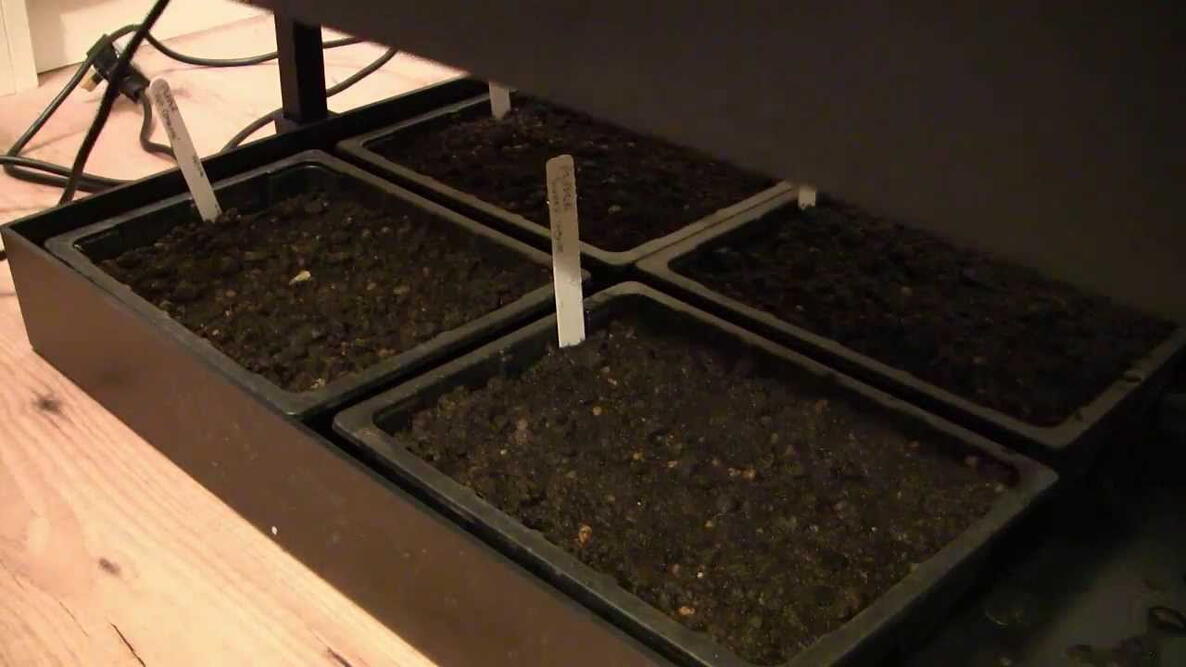
- Sow seeds in rows 3 to 6 inches apart and up to ½ inch deep.
- Set plants 18 to 24 inches apart with 30 inches between rows.
- In early spring, be ready to protect plants from frost by covering them with old milk jugs, if necessary. Extreme cold can halt growth and/or form buttons.
- Water consistently during germination and growth. Add mulch to conserve moisture.

Types
- ‘Graffiti’: purple; tends to be milder and sweeter than the white varieties.
- ‘Snowball’: smooth, white, medium 6-inch heads; a good yield throughout the growing season.
- Orange varieties, such as ‘Cheddar’ and ‘Flame Star’, are creamier and sweeter than white varieties, with more vitamin A.

Credit: Wendy Hagen.

More Like This


Comments

It is impossible to know exactly what might be causing your caulis to collapse, Claire. Here are a few thoughts:
• is the soil good composted matter?
• what is the soil pH? it should be 5.5 to 7.5 (see here: http://www.almanac.com/content/ph-preferences)
• assuming all conditions are favorable, sometimes plants need a little time to get used to the transplant and set roots
• are you watering often enough?
• did you give them a little help when planted, for example a spoonful of fertilzer: chicken poop pellets (not raw poop) or liquid seaweed diluted in water or a a fistful of nice compost?
• have you "collared" the plants to deter hungry pests from crawling up the stem and eating leaves, ultimately weakening the plants? A strip of aluminum foil works well, lightly wrapped around the stem (don't choke the plant)
We hope this helps.
Cauliflower is a cool-weather crop that requires cool even temperatures to mature. Transplant your seedling outdoors in a spot that will be shaded from the hot afternoon sun.
Cauliflower can turn pink for a few reasons.
1) Some varieties naturally turn pink. 'Snow Crown' may turn pinkish in the heat of summer.
2) White forms, even if self-blanching, will sometimes have a pinkish tinge if exposed to too much sunlight. To keep the head white, cover the developing head by lifting the leaves loosely over it to protect it from the sun; secure the leaves with a clothespin or string.
3) Weather fluctuations can also cause pink or purple tinges. Hot weather followed by cool can trigger it. Very cool temperatures at harvest time can also cause pinking in the interior branches.
4) Age can cause purpling of the curds.
Hi Alison,
Brown cauliflower is not good to eat. Sometimes you can cut off the brown parts and use the inside parts that are white.
- « Previous
- 1
- 2
- …
- 10
- Next »

Cauliflower usually produces only one head per plant. It doesn't have the smaller lateral heads that broccoli does.