Planting
When to Plant Hydrangeas
Timing matters because a new hydrangea needs a chance to settle in before the weather turns extreme.
| Season | When to Plant |
|---|---|
| Spring | After the danger of frost has passed and before summer heat arrives. |
| Fall | Early enough for roots to begin establishing before hard freezes. |
Where I live in Maine, winters arrive early and stay long, so I almost always plant in spring. That gives a new shrub a full season to settle in before the cold returns. Gardeners in milder climates have more flexibility, and fall can be an excellent choice there.
If I have a choice, I’d rather plant a hydrangea on a cool day than during a spell of blazing heat. Newly planted shrubs need consistent moisture while they establish, and avoiding hot weather spares them some early stress.
Where to Plant Hydrangeas
Choose a spot with moist, well-drained soil and the right amount of light for the type of hydrangea you’re growing. Morning sun and afternoon shade is a good starting point for many hydrangeas.
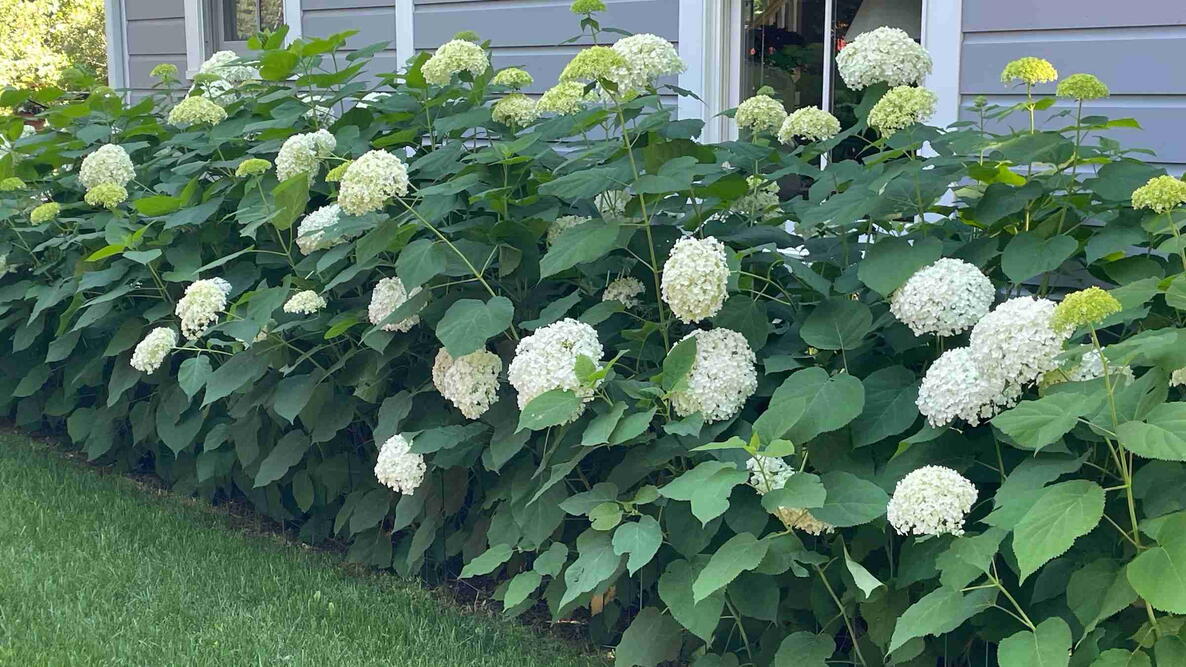
Bigleaf hydrangeas especially appreciate afternoon shade in hot climates, while panicle hydrangeas can take considerably more sun. Smooth hydrangeas, including the classic ‘Annabelle,’ do well in partial shade. Oakleaf hydrangeas also tolerate more sun than bigleaf types, though some afternoon protection is helpful in hotter climates. Climbing hydrangeas are among the more shade-tolerant types.
Avoid soggy spots where water collects, and protect bigleaf hydrangeas from hot, exposed sites. Too much shade can also reduce flowering in bigleaf hydrangeas, so aim for some direct morning light rather than deep shade all day.
I always check a hydrangea’s mature size before I dig. Some stay compact, while others can become very large shrubs—certain panicle hydrangeas can reach 10 feet or more in both height and width. It’s much easier to give one enough room from the start than to wrestle with it later.
How to Plant Hydrangeas
- Water the hydrangea before planting. Give the root ball a thorough drink while it’s still in the pot; a dry root ball can be difficult to rewet once it’s in the ground.
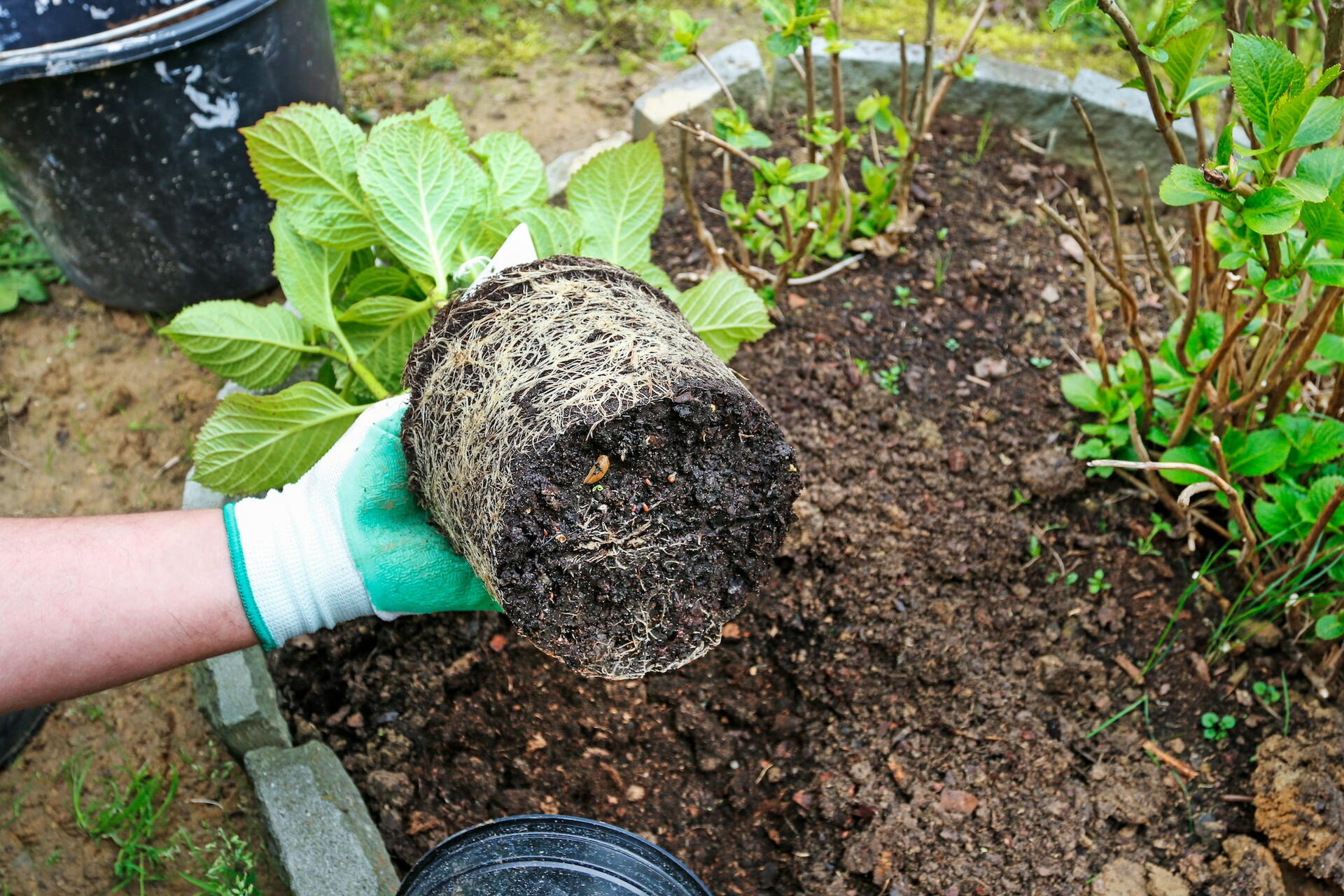
- Check the roots. Gently slide the hydrangea from its container. If roots are tightly circling the outside of the root ball, loosen them with your fingers or make a few shallow cuts so they can begin growing outward.
- Dig wide, not deep. Make the hole about as deep as the root ball and at least twice as wide. The loosened soil around the hole gives new roots somewhere easy to grow.
- Check the planting depth. Set the hydrangea in the hole with the top of the root ball level with the surrounding soil. Planting too deeply can cause problems later.
- Backfill with the soil you removed. Fill around the root ball with the native soil, gently firming it as you go. Water thoroughly to settle the soil and remove large air pockets.
- Finish with mulch. Spread 2 to 3 inches of organic mulch over the root area to help conserve moisture and moderate soil temperature, but keep it away from the stems.
My tip: Before I start filling the hole, I step back and check the planting depth one more time. It’s much easier to raise a hydrangea now than after you’ve shoveled all that soil back in.
Growing
Watering Hydrangeas
Hydrangeas like consistent moisture, especially while they’re getting established, but they don’t want to sit in soggy soil.
- Water deeply, then check the soil before watering again rather than following a rigid schedule.
- Newly planted hydrangeas need more water than established shrubs, especially in hot, dry weather or sunnier spots.
- Water at the base of the plant, ideally in the morning or late afternoon. A soaker hose or drip line helps keep the leaves dry.
- Add mulch to help the soil stay evenly moist and buffer temperature swings.
I usually check the soil before reaching for the hose. Hydrangeas can wilt dramatically on a hot afternoon, but if the soil is still moist, more water isn’t always the answer.
Fertilizing
Hydrangeas growing well in reasonably fertile soil may need little or no fertilizer. Too much nitrogen can give you a beautiful crop of leaves—and disappointingly few flowers.
- Weak growth isn’t always hunger. Poor drainage, dryness, or the wrong soil pH are all possible reasons. Start with a soil test if you’re unsure what the soil needs.
- If fertilizer is needed, use a balanced, slow-release product in spring as new growth begins, following the label rate.
- Don’t overdo it. More fertilizer does not mean more blooms.
I tend to leave a healthy, blooming hydrangea alone. If it’s growing well, I’d rather not feed it just because the calendar says I should.
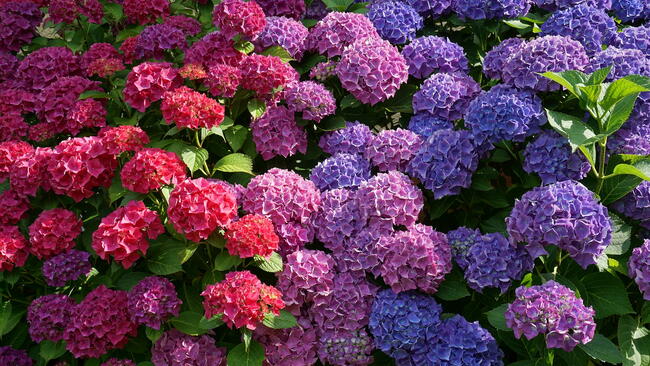
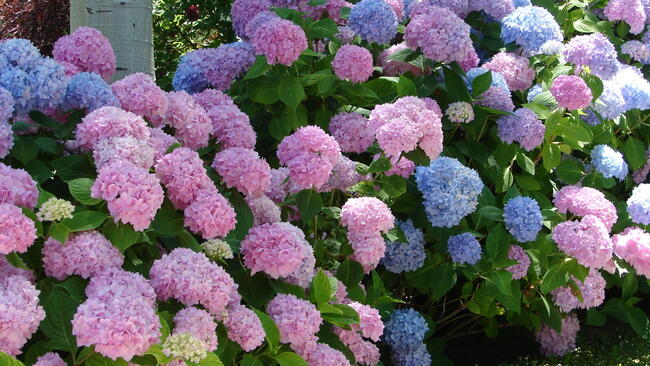
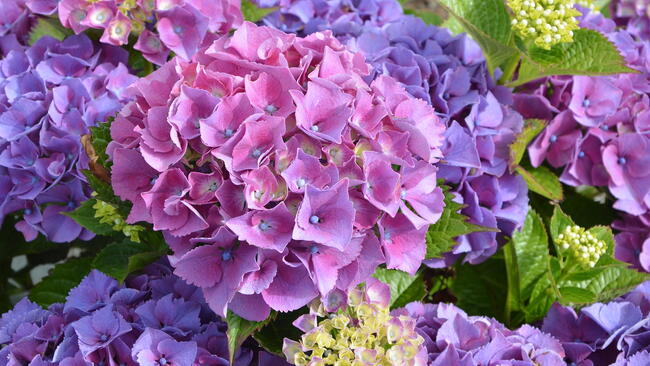
What about blue and pink hydrangeas? Some bigleaf and mountain hydrangeas change flower color depending on how acidic or alkaline the soil is. If you want to influence the color, test the soil first and adjust it gradually rather than simply adding more fertilizer.
Pruning Hydrangeas
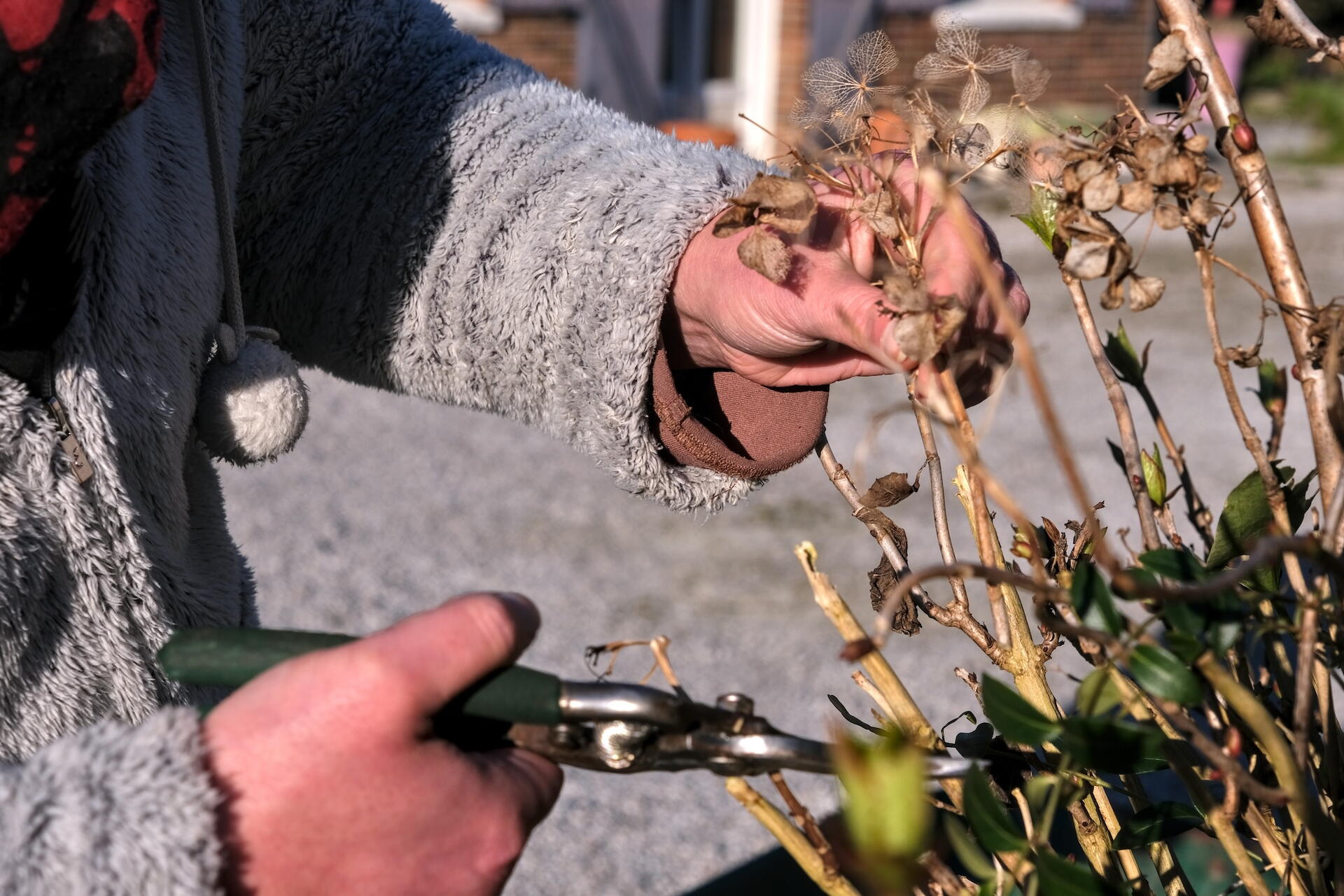
I don’t prune a hydrangea until I know which type I’m dealing with. Cutting some hydrangeas at the wrong time can mean cutting off next year’s flower buds.
- Bigleaf, oakleaf, and mountain hydrangeas generally bloom on old wood—stems that grew the previous year. If they need pruning, do it in summer, soon after flowering, before they begin forming next year’s flower buds.
- Panicle and smooth hydrangeas bloom on new wood and can be pruned in late winter or early spring, before new growth begins.
- Some newer reblooming bigleaf and mountain hydrangeas flower on both old and new growth, so their pruning needs are more flexible.
For pruning times by type, refer to the Almanac’s complete Hydrangea Pruning Guide and Chart.
Seasonal Care
- Summer: During hot, dry spells, keep the root zone evenly moist and maintain a layer of mulch. Bigleaf hydrangeas are especially prone to heat and drought stress; panicle and oakleaf types generally handle heat better.
- Winter: In cold climates, protect the root zone with mulch after the soil cools. Bigleaf hydrangeas may need extra protection in exposed locations because their flower buds can be damaged by severe cold or late freezes.
I usually leave the faded flower heads in place for winter—they add some interest to an otherwise sleepy garden, and there’s no rush to reach for the pruners.
Types
Hydrangeas come in several main groups. Knowing which type you have helps you understand how much sun it can take, how large it may grow, and how to care for it.
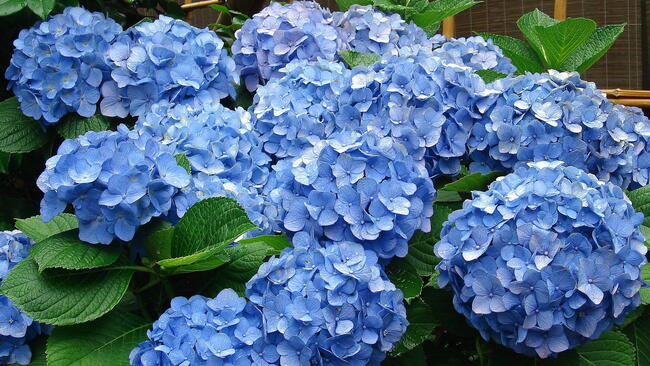
- Bigleaf hydrangeas (H. macrophylla) are the classic pink, blue, or purple hydrangeas with rounded mophead or flatter lacecap flower heads. They prefer some afternoon shade, especially in hot climates.
- Panicle hydrangeas (H. paniculata) have cone-shaped flowers and tolerate more sun and cold than most hydrangeas. Some grow into very large shrubs or small trees.
- Smooth hydrangeas (H. arborescens), including the familiar ‘Annabelle,’ have rounded white or pink flower heads and are hardy, reliable bloomers.
- Oakleaf hydrangeas (H. quercifolia) have cone-shaped blooms and distinctive oak-like leaves that often turn red or burgundy in fall. They handle heat better than bigleaf types.
- Mountain hydrangeas (H. serrata) are smaller, more compact shrubs, often with delicate lacecap flowers. They appreciate protection from intense sun and wind.
- Climbing hydrangeas (H. petiolaris) are woody vines rather than shrubs. They tolerate considerable shade and need a sturdy wall, fence, or other support to climb.
Want help choosing one? See our guide to the best hydrangea types and varieties, with photos and recommended varieties for different gardens.
Sources
- Oregon State Extension — Hydrangea Location and Planting
- Clemson Home and Garden Information Center — Hydrangea Care and Planting Tips
- University of Minnesota Extension — Pruning Hydrangeas
- University of Maryland — Watering Treees and Shubs
- UConn Home & Garden Education Center — Fall Planting


Your hydrangeas need to be pruned! This will encourage stronger stems that are less likely to droop over with the weight of big flower heads. We're not sure which variety of hydrangea you own and the pruning differs by variety so please see this page for more information on pruning.
There are several reasons for no blooms on hydrangeas. 1. Too much high nitrogen fertilizer results in lush foliage at the expense of blooms. 2. Too much shade is another problem. 3. Cold weather or frosts which kill flower buds or a cultivar which is not bud-hardy for your zone. 4. If you prune at the wrong time, you could be removing the flower buds. This 4th reason is the most common.
- « Previous
- 1
- 2
- …
- 10
- Next »

Comments