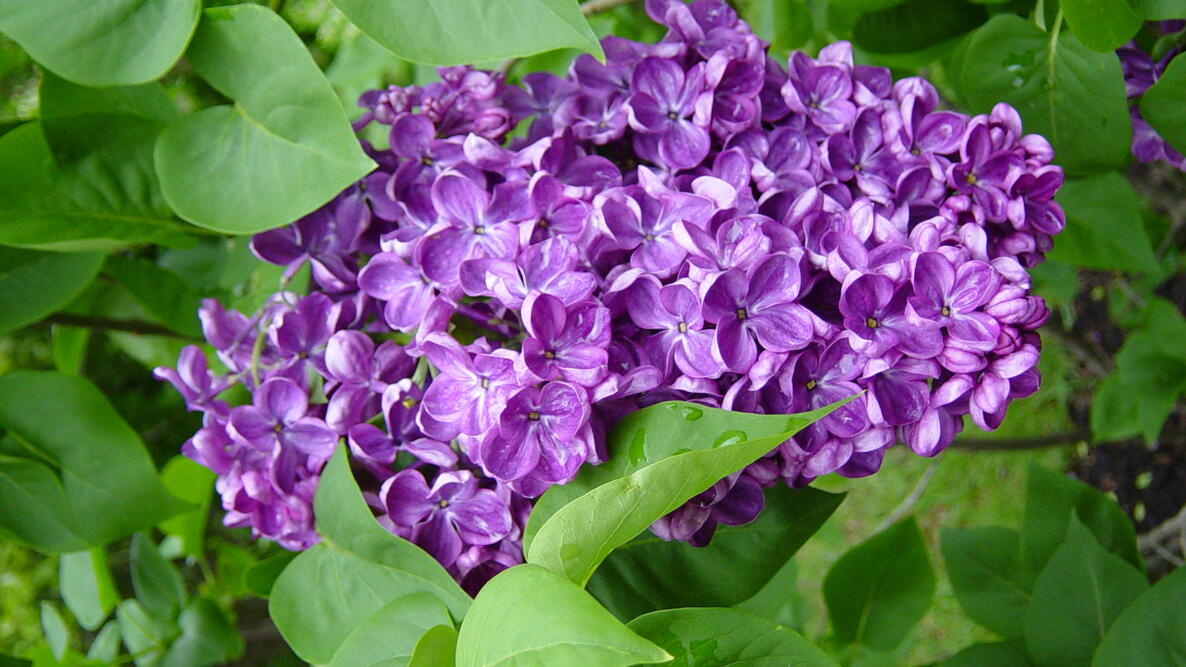
Caption
Huge blooms, wonderful scent.
Types
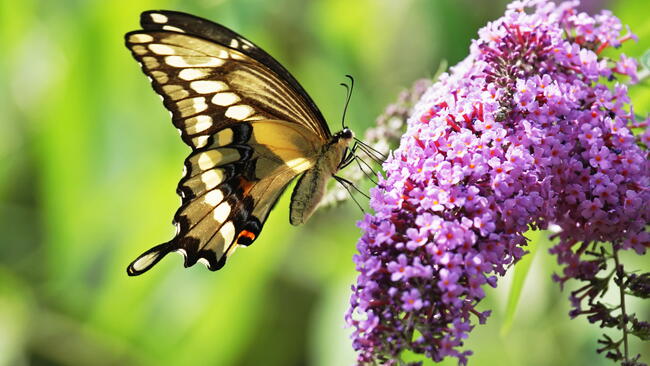
For early flowers, try Syringa x hyacinthiflora hybrids; they bloom 7 to 10 days before S. vulgaris. Its fragrant blooms attract butterflies and hummingbirds.
The most common and fragrant lilacs are of the S. vulgaris variety:
- Try ‘Charles Joly’, a double magenta flower, an early bloomer.
- Mid-season lilacs include ‘Monge’, a dark reddish purple, and ‘Firmament’, a fine blue.
- Late-season beauties include ‘Miss Canada’, a reddish-pink, and ‘Donald Wyman’, a pink-purple flower.
Uncommon types/varieties include …
- S. x ‘Penda’ Bloomerang Purple: flowers in spring, pauses, then flowers again from midsummer through fall.
- Although common lilacs love cold weather, a few thrive as far south as Zone 8, including cutleaf hybrid S. x laciniata, with fragrant, pale lavender flowers, and S. pubescens ssp. patula ‘Miss Kim,’ with pale, lilac-blue blooms that fade to white.
Small Lilacs
For gardeners, especially those in urban spaces, who just don’t have the room for the traditional larger lilac, there are compact varieties! They’ll even grow in a container on your patio or balcony.
- ‘Baby Kim’ grows only 2 to 3 feet high (and 3 feet wide) in a nicely rounded shape with purple flowers that attract butterflies. Extended hardiness from Zones 3 to 8.
- ‘Little Lady’ (S. x) is a compact lilac that matures to 4 to 5 feet tall and wide with dark pink buds that open to lilac-pink flowers. Hardy in Zones 2 to 7.
- ‘New Age Lavender’ and ‘New Age White’ (S. vulgaris) are super-compact, growing from 4 to 5 feet tall and wide, and bred for mildew resistance. Their fragrant flowers attract butterflies and hummingbirds. Hardy to Zone 4.

Comments

Lilacs transplant very well and spring is the best time to do it. Make sure to get as much of the rootball as you can. Dig a hole in the new location that is double the size of the rootball and add plenty of compost into the hole. Place the lilac in the hole to the same depth level that it was in its original location. Fill the hole with a mix of soil and compost and water deeply.
Hi Kenny,
Your lilacs would benefit from some pruning. See our pruning advice above. Just remember to prune right after they have bloomed.
Hi Wilda,
Make sure that your lilacs have good drainage and full sun. If you haven't fertilized the bushes lately add some bonemeal and compost or aged manure to the soil. Lilacs like slightly acidic soil that is not too rich in nitrogen.
It doesn't sound like anything to worry about. Lilacs go through these weather situations. They haven't started blooming.
- « Previous
- 1
- 2
- …
- 10
- Next »

Why, lilacs bloom when grasshopper eggs hatch! I don't suppose this is the answer you're seeking.
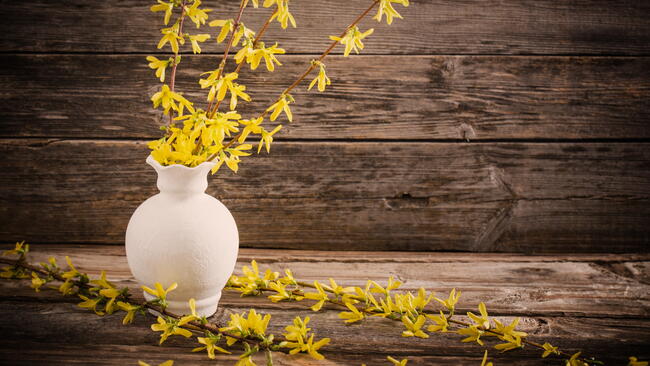
They are one of the first flowering bushes/shrubs to bloom just after the forcythia (another cue!)
Lilacs generally bloom in late May for 2 weeks and, as you said, their blooms don't last long. However, there are late-blooming varieties which bloom in early June.
June 14 seems a bit late, however, it is highly dependent on weather and hard to predict. It's possible that the lilacs will still be blooming if we have have a late, snowy spring.