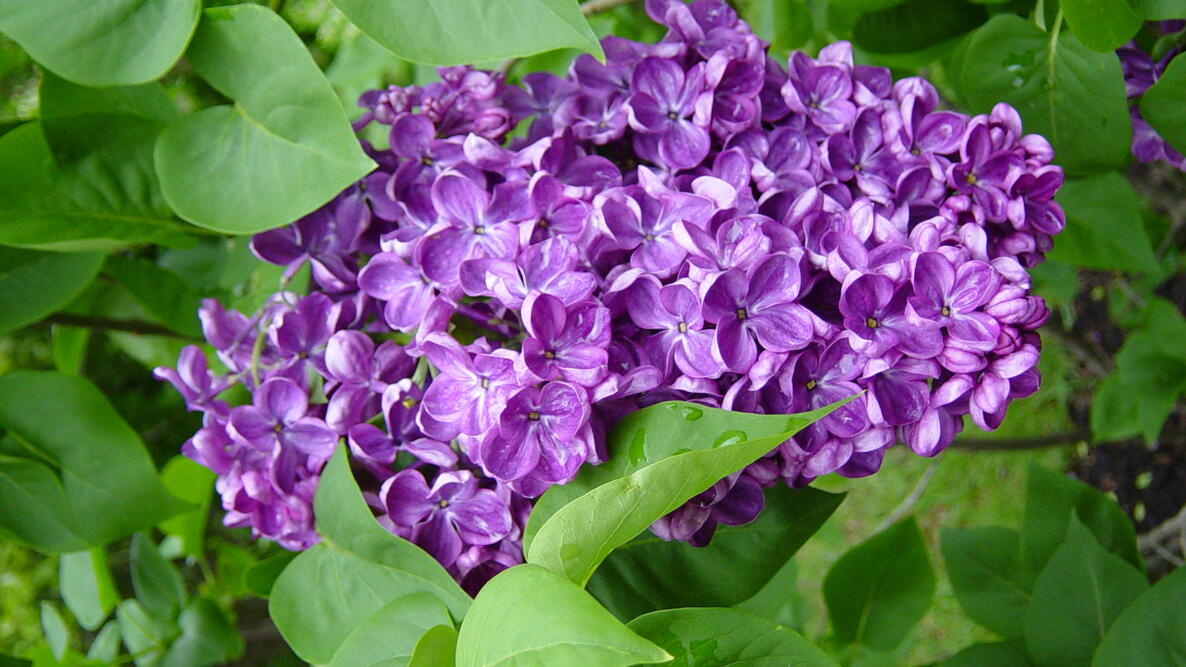
Caption
Huge blooms, wonderful scent.
Image Credit:
Wally Patrick
Botanical Name
Syringa spp.
Grown as
Toxicity
Sun Exposure
Water Needs
Height
Spread
Soil pH
Resilience
Plant Type
Types
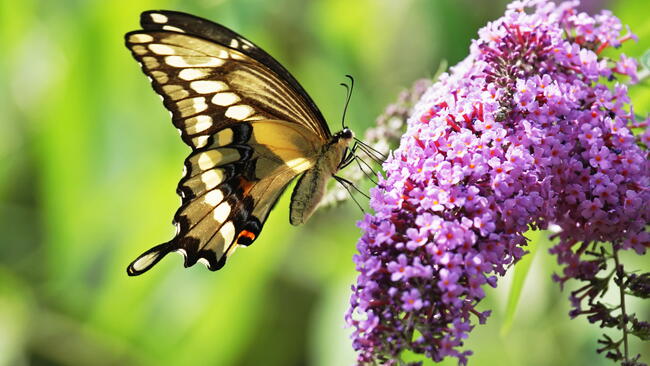
For early flowers, try Syringa x hyacinthiflora hybrids; they bloom 7 to 10 days before S. vulgaris. Its fragrant blooms attract butterflies and hummingbirds.
The most common and fragrant lilacs are of the S. vulgaris variety:
- Try ‘Charles Joly’, a double magenta flower, an early bloomer.
- Mid-season lilacs include ‘Monge’, a dark reddish purple, and ‘Firmament’, a fine blue.
- Late-season beauties include ‘Miss Canada’, a reddish-pink, and ‘Donald Wyman’, a pink-purple flower.
Uncommon types/varieties include …
- S. x ‘Penda’ Bloomerang Purple: flowers in spring, pauses, then flowers again from midsummer through fall.
- Although common lilacs love cold weather, a few thrive as far south as Zone 8, including cutleaf hybrid S. x laciniata, with fragrant, pale lavender flowers, and S. pubescens ssp. patula ‘Miss Kim,’ with pale, lilac-blue blooms that fade to white.
Small Lilacs
For gardeners, especially those in urban spaces, who just don’t have the room for the traditional larger lilac, there are compact varieties! They’ll even grow in a container on your patio or balcony.
- ‘Baby Kim’ grows only 2 to 3 feet high (and 3 feet wide) in a nicely rounded shape with purple flowers that attract butterflies. Extended hardiness from Zones 3 to 8.
- ‘Little Lady’ (S. x) is a compact lilac that matures to 4 to 5 feet tall and wide with dark pink buds that open to lilac-pink flowers. Hardy in Zones 2 to 7.
- ‘New Age Lavender’ and ‘New Age White’ (S. vulgaris) are super-compact, growing from 4 to 5 feet tall and wide, and bred for mildew resistance. Their fragrant flowers attract butterflies and hummingbirds. Hardy to Zone 4.



Our neighbor just cut their lilac bush down to about 18 inches tall from over 8 feet tall. Needless to say all that is left are bunch of cut off canes with no branches at all. We would like to somehow grow a new plant from this if possible. What part of what is left would we need? Or should we just give up on it and look for one from a nusery?

You can propagate lilacs by either digging up suckers or taking cuttings from the bush. Your best bet is finding a sucker (ideally 2 to 3 foot tall). With a spade dig down around the sucker. You'll find a connecting root leading back to the main stem. Cut this root off just outside of the sucker's root ball. Remove the sucker with the roots and plant it in a big pot with potting soil. Water well.
We planted a lilac bush 2 weeks ago. It has 3 main branches and all the leaves on the middle one are curling in or shriveling. The plant was already done blooming when I purchased it at a local nursery. The weather is in the upper 80's all this week. I started watering it regularly when I noticed this but I don't want to over water it. Should I be concerned?
Fall and spring are the best times to plant. Keep watering the lilac and make sure that the soil stays moist. Add some compost or bonemeal to the soil. Good luck!
Can I start a new purple lilac by soaking or just putting the branches I cut off the tree.?
It is possible to grow a new lilac from a very young cutting, but it is very challenging and it usually fails. You need to use a cutting that from new growth that is between 4 and 6 inches in length, no more. Dip the fresh-cut end in water and then rooting hormones; then plant in a hole with moist potting soil If it takes, roots will form in 6 to 8 weeks. Grafting is much more successful than propagation by cuttings.
We have 4 very large bushes of lilacs at our new house in Manitoba that we just moved into and I just noticed blooms(June 20) but they are very sparse and small. There seems to be a lot of brown hardened blooms (are these old blooms from this year or pevious years) and there is quite a few empty holes with just branches, no leaves. What is the best way for me to get these big and healthy again?
Barring any diseases, such as blight, your lilacs may just need rejuvenative pruning. When lilacs get older, they may stop leafing out along the lower branches, and they flower less vigorously, and usually only at the top of the bush. Many lilacs bloom best on wood that is about 3 to 5 years old.
To rejuvenate an old lilac, to renew its form and encourage flowering, you can prune all stems in late winter, when the plant is dormant, down to about 6 or 8 inches high. This will encourage new shoots to develop during the growing season. The next late winter, select a few large, healthy stems and prune out the rest. For the stems that remain, cut back to a bud to encourage branching. With this drastic method, you may not get flowers until two or three years later.
Another way to rejuvenate an old lilac, and one that is easier on the plant but takes longer, is that first late winter, remove about a third of the old stems (to ground level). The next late winter, remove about half of the remaining old stems, and a little of the new growth. Keep some strong stems of the new growth. The third late winter, remove the remaining old growth, and thin out the new growth. With this method, you might have a few flowers the first two years, and then the plant should start flowering fully the third year.
In both methods, once the plant is re-established, prune out a bit of the old growth every 3 to 5 years, in spring after flowers have faded, to keep it productive. (Lilacs bloom on old wood, so are usually pruned for maintenance just after flowering in spring, so that the next year's flowers aren't removed.)
I live in NL Canada and I planted a Lilac tree 3-4 years ago but its only about 2-3 feet tall and has never bloomed but it has lots of healthy green leaves, is there something I am doing wrong
I live on the west coast of NL it took my lilacs 4 years for the first bloom, there is 1 big Custer and still there. 1 more year for you to wait.
- « Previous
- 1
- 2
- …
- 10
- Next »
📣The Gardening Club Just Got Better! 3 Deliveries, 10% Store Discount, and more!

Comments