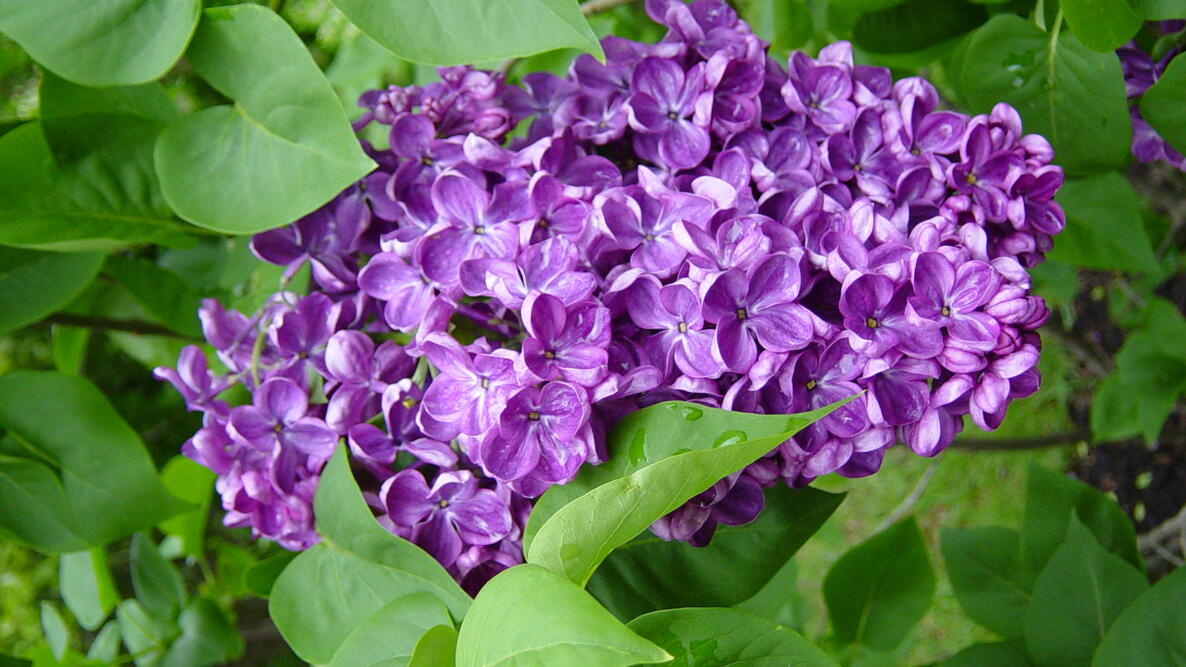
Caption
Huge blooms, wonderful scent.
Image Credit:
Wally Patrick
Botanical Name
Syringa spp.
Grown as
Toxicity
Sun Exposure
Water Needs
Height
Spread
Soil pH
Resilience
Plant Type
Types
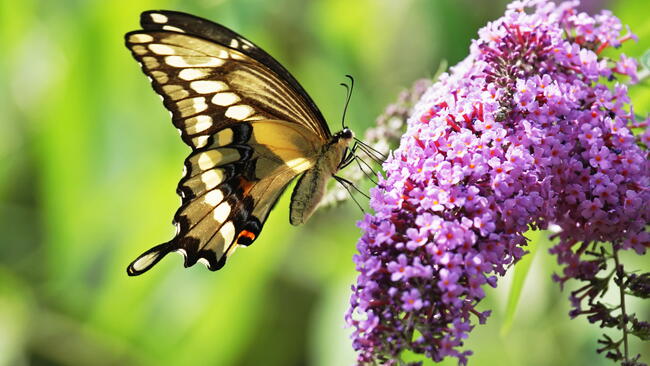
For early flowers, try Syringa x hyacinthiflora hybrids; they bloom 7 to 10 days before S. vulgaris. Its fragrant blooms attract butterflies and hummingbirds.
The most common and fragrant lilacs are of the S. vulgaris variety:
- Try ‘Charles Joly’, a double magenta flower, an early bloomer.
- Mid-season lilacs include ‘Monge’, a dark reddish purple, and ‘Firmament’, a fine blue.
- Late-season beauties include ‘Miss Canada’, a reddish-pink, and ‘Donald Wyman’, a pink-purple flower.
Uncommon types/varieties include …
- S. x ‘Penda’ Bloomerang Purple: flowers in spring, pauses, then flowers again from midsummer through fall.
- Although common lilacs love cold weather, a few thrive as far south as Zone 8, including cutleaf hybrid S. x laciniata, with fragrant, pale lavender flowers, and S. pubescens ssp. patula ‘Miss Kim,’ with pale, lilac-blue blooms that fade to white.
Small Lilacs
For gardeners, especially those in urban spaces, who just don’t have the room for the traditional larger lilac, there are compact varieties! They’ll even grow in a container on your patio or balcony.
- ‘Baby Kim’ grows only 2 to 3 feet high (and 3 feet wide) in a nicely rounded shape with purple flowers that attract butterflies. Extended hardiness from Zones 3 to 8.
- ‘Little Lady’ (S. x) is a compact lilac that matures to 4 to 5 feet tall and wide with dark pink buds that open to lilac-pink flowers. Hardy in Zones 2 to 7.
- ‘New Age Lavender’ and ‘New Age White’ (S. vulgaris) are super-compact, growing from 4 to 5 feet tall and wide, and bred for mildew resistance. Their fragrant flowers attract butterflies and hummingbirds. Hardy to Zone 4.



take a 10 ft lilac bush down to 1 foot? do i understand that correctly? just because it seems really drastic. i want to be sure. and what time of year is best to do that?

It is drastic but lilacs are very hardy. See our pruning tips above. A less drastic method is to prune 1/3 of the bush in early spring. The following spring cut back another 1/3 and prune the last 1/3 the third spring. See our pruning pointers above.
In May we planted three lilac bushes on the west side of our house, usually gets about 6 to 8 hours of sun. They seemed to be doing fine until about a month ago, and I have noticed that some of the branches appear dead and are not bearing any leaves. Also, some of the branches have leaves that are browning around the edges and curling inward. We are in Columbus Ohio, and I am not sure when I am watering too much or when I need to water more frequently. Is it me or did we get unhealthy plants?
Lilacs are usually not fuzzy about the soil but you may be lacking magnesium that they need (symptoms are brown curled leaves). Or you may not be watering enough. During dry hot weather the bushes need frequent deep waterings. Use a hose and soak the soil around the bushes a couple of times a week.
I live in Pennsylvania, I have few Lilac's about 4 years old, first time bloomed this summer but I have noticed white powdery material around the base/stems,some of the brances have dried up too.Do you think this is fungal infection? any remedies?
If it's a white, moldy look, then it's powdery mildew. Don't worry. This is common on lilacs and often arrives in late July or August. It doesn't harm the plants and it will be gone when the leaves drop after a few frosts. Next year: To keep under control, spray before the disease shows up. (Consult with your local garden center on sprays.) In terms of the branches: Are they dead? Cut the old, dead branches out completely back to the ground. This will also help with the mildew by improving air circulation.
I received a healthy lilac bush for a gift. It was doing fine for a week or two in a container. After planting, almost immediately the leaves started drooping and have continued to get worse. It's super hot and dry right now, and I've been trying to balance watering enough w/not watering too much. But it's not looking good.
Your lilac is probably experiencing transplant shock (lilacs are best planted when they are dormant). To help your plant, keep watering when the soil gets dry (not too wet, not too dry); make sure that it isn’t planted too deeply; and provide good drainage. Water from the base; water will burn leaves in hot, sunny weather. Do not fertilize the first year. Provide light shade during the hot weather the first year so that the plant won’t lose as much water as its roots establish themselves; you can create shade by securing burlap to stakes and setting these temporary walls on sunny sides of the plant. Burlap allows some sunlight to penetrate so that the leaves can make food, but the light shade helps to reduce evaporation.
I live in Chicago and would like to plant a lilac bush in a raised flower bed under a window. what variety is best as to not grow too tall that it obscures the front window of our house?
Syringa 'Josee' is a dwarf (grows to max. 6 feet high) that blooms in the spring and reblooms later in the summer. It's hardy in Zones 4-8. Another repeat blooming dwarf variety is fragrant Syringa 'Bloomerang'.
- « Previous
- 1
- 2
- …
- 10
- Next »
📣The Gardening Club Just Got Better! 3 Deliveries, 10% Store Discount, and more!

Comments