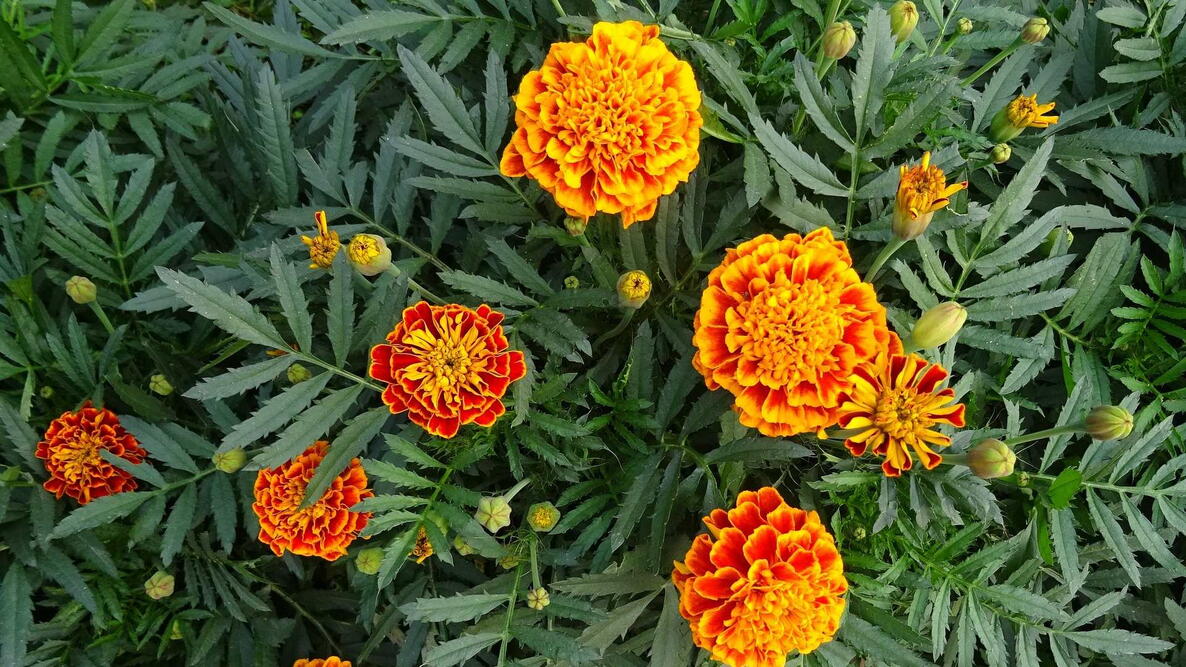
Planting
When to Plant Marigolds
Young French and Signet marigolds can be planted from spring through midsummer, but tall African marigolds are slower to mature and should be planted as soon as the risk of spring frost has passed. Some growers plant marigold seeds directly in the garden, but I like to get a head start by sowing the seeds indoors about 6 to 8 weeks before my last frost date. Then, I harden the seedlings off when the weather warms and plant them outside when there’s no risk of frost.
Where to Plant Marigolds
Marigolds thrive in full sun and can withstand very hot summers. African and Signet marigolds are drought-tolerant, while French varieties can adapt to damper conditions. It’s best to keep these plants out of shady areas though, as low light can reduce flowering and increase the risk of powdery mildew.
While marigolds grow in almost any soil, they do best in moderately fertile, well-draining gardens. You can keep these plants in in-ground gardens, raised beds, or pots that are at least 8 to 12 inches in size. They make exceptional border plants too.
How to Plant Marigolds
French marigolds can easily be started from seed, while African marigolds are trickier to germinate and are best purchased as young plants. If you want marigolds to thrive, blend compost or a balanced or low nitrogen, slow-release fertilizer into the soil before planting and then use these planting tips!
- Starting marigolds from seeds: Fill pots, if you’re using them, with a quality seed-starting mix, then sow marigold seeds—indoors or out—by planting the seeds about 1/4 inch deep and spacing multiple seeds 1 inch apart. Keep the seeds well-watered and in bright light and thin them out to 8- to 10-inch spacing once they’re a few inches tall, or 10- to 12-inch spacing if you’re growing larger African marigolds.
- Transplanting started plants: Nursery-started marigolds don’t need hardening off, but seeds that you started indoors will. After transitioning your plants to outdoor living, dig planting holes that are as deep as your seedlings’ root ball, plant the seedlings using the spacing guidelines above, and water them deeply to help their roots settle.
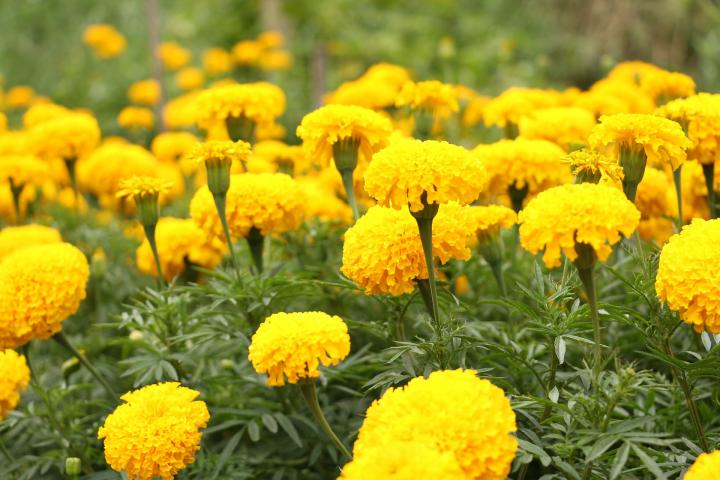
Growing
Watering
Marigolds are fairly drought-tolerant once established, but they appreciate consistent watering—especially during dry spells. I provide my plants with about 1 inch of water per week and water container-grown marigolds more frequently than the marigolds I’ve planted in my garden. Just be sure to let the soil dry out a bit in between waterings, and don’t water too much, as excess moisture can lead to root rot!
Fertilizing
When it comes to fertilizer, marigolds aren’t heavy feeders. In fact, too much nitrogen can lead to lush foliage with fewer flowers. A balanced, slow-release organic fertilizer at planting time or a light monthly feeding with liquid fertilizer throughout the growing season should do the trick.
Pruning and Maintenance
Marigolds don’t need major pruning, but regularly deadheading spent flowers will encourage these plants to flower more profusely. It’s also wise to add mulch around your plants and stay on top of weeding. Too many weeds can compete with marigolds for soil nutrients and sun and lead to stunted growth.
If you want bushier plants, you can take things a little further and pinch off the tops of young marigolds once they’re established in your garden. This keeps the plants from becoming leggy and encourages more frequent flowering.
Seasonal Care
Since marigolds are typically grown as annuals, you don’t need to worry much about overwintering them. Just pull spent marigolds out of your garden when they die back with frost and chuck them into your compost pile. If desired, you can also collect marigold seeds in autumn for future plantings.
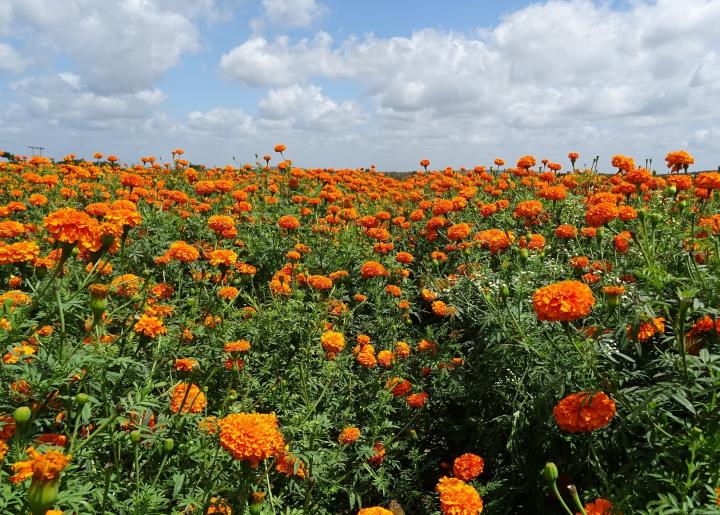
Types
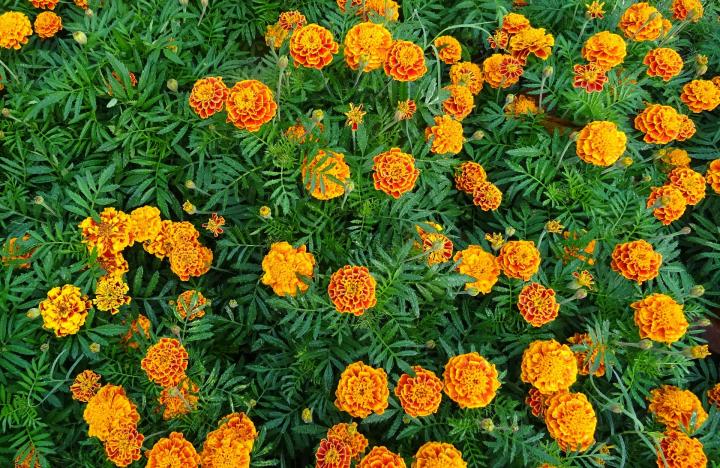
When most people think of marigolds, they envision small plants with orange or yellow flowers. But marigolds come in a tremendous variety that can vary in fragrance level, flower shape and number, bloom time, and more. Here are the main types of marigolds that you may find at local plant nurseries and what sets each apart!
- African marigolds, American marigolds, or Mexican marigolds (Tagetes erecta): These marigolds grow the tallest with big, full flowers on upright stems that stretch 3 to 4 feet in height. Despite the name, these plants are native to Mexico and Central America and thrive even under drought-like conditions. Try out plants like ‘Jubilee’ and ‘Safari’.
- French marigolds (T. patula): This species of marigolds is smaller, bushier, and more compact and typically stays under 2 feet in height. Better suited to rainy conditions than other marigolds, French marigolds have more subtle flowers, but they still catch the eye. Try out plants like ‘Bonanza’ and ‘Aurora’.
- Signet marigolds (T. tenuifolia): These petite marigolds do well in hot, dry sites and make beautiful edging plants as they rarely reach over a foot in height. Try out plants like ‘Starfire’ and ‘Lemon Gem’.

More Like This



For slugs, we have long recommended the beer trap: Pour cheap beer into a shallow saucer or jar lid (use a few if the problem is severe). In the area where the slugs are abundant, set the container into the ground at lip level (so a bit buried; note that it might be easier to pour the beer in once the container is set, not before). Come back the next day. You should find that slugs have drowned in the beer. Discard them and the liquid. Repeat.
Some sources this is equally effective on snails. It certainly is cheap.
Be aware, too, though that other sources suggest that marigolds a slug/snail magnets. You might develop a new favorite flower . . .
The African Marigold, like other marigolds, is an annual, so it will die. Sometime. More than that, we have no idea what your neighbor was referring to.
But you want it to survive and it should: it thrives under hot, dry conditions (that means do not give it too much water!)
Here's some more info on the plant in general: http://www.gardening.cornell.edu/homegardening/scene415d.html
And here's information from a local (Nevada) cooperative extension about a wide variety of plants for your conditions: https://www.unce.unr.edu/publications/files/ho/2001/sp0115.pdf
Yes, you can touch a marigold! Usually, the soft touch approach is best in life, even with marigolds. :-)
- « Previous
- 1
- 2
- …
- 10
- Next »

Comments