Types
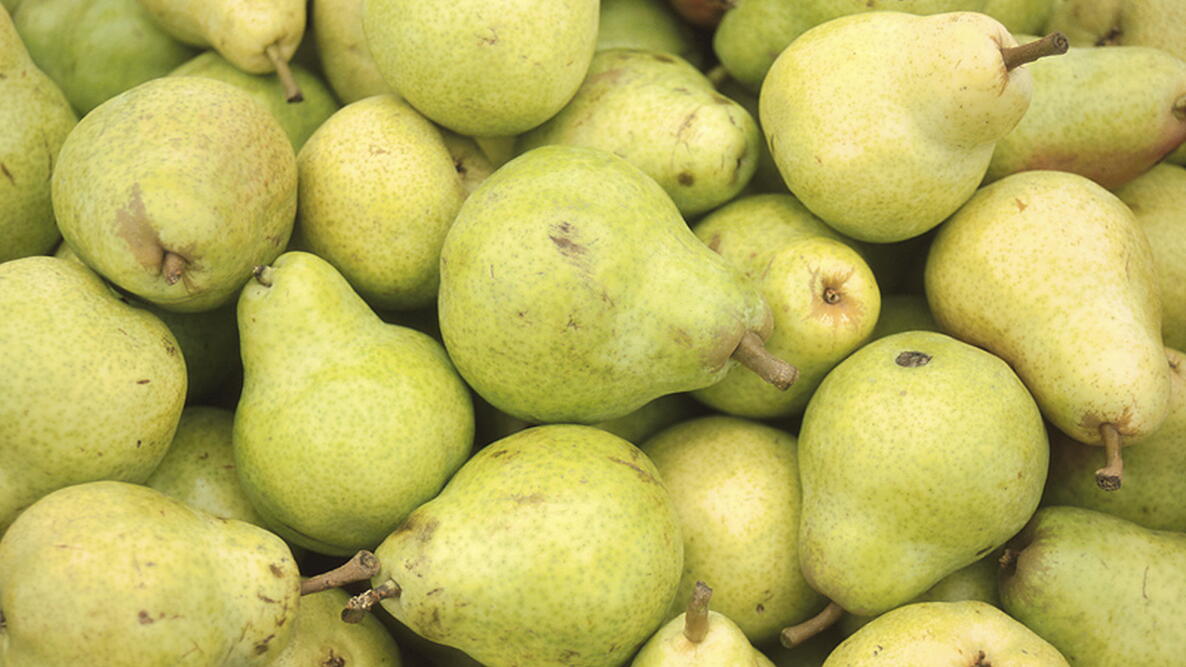
- ‘Bartlett’, which is the standard choice for pear trees. This tree type is average-size and produces medium to large fruits. These pears ripen to a yellow color. However, this variety is very vulnerable to fire blight.
- ‘Kieffer’, which is resistant to fire blight. This type produces medium fruit and can be used in canning.
- ‘Anjou’, which produces light-green fruit with a sweet flavor. This type is a good choice for late-blooming pears. Good for canning and fresh use. This type can store for up to 6 months with little loss in quality.


Hi Lori,
Most pears, unlike apples, do not ripen on the tree. If they are left on the tree for too long, they become mealy and tough. They should be picked when still slightly immature. They then need to undergo and cooling process (for Anjou, it should take 2 to 6 weeks). Next they should undergo a ripening period at 65 to 70 degrees F for 7 to 10 days. They can then be put into brown paper bags with bananas to speed up the ripening process, which relies on the release of ethylene gas. Pears are ripe when the skins yield to gentle pressure. Hope that helps!
Hi, Yvonne: With pears, you never know what you're going to get, do you? If this was a true Bartlett pear, perhaps this resulted from some hybridization or mutation, or even from a late-summer flower that didn't get pollinated. The key is pollination. There are also pears, such as 'Novembra', that do not need pollination and thus do not have seeds. Perhaps you had one of these or a similar. Thanks for asking!
Hi Brendan, Pears grow on trees! We're glad we could end the debate.
Hi Anthony,
That sounds like pear scab. First, bear in mind it isn't a good ide to spray fungicides without knowing the target, as timing is everything and is dependent on the life cycle of the disease or pest. With pear scab, fungicides are applied before the tree even foliates, as a preventative measure. So it's too late now that your tree is infested. Go ahead get rid of all of the infected leaves (from the tree and soil). Sanitation is key. Continue to keep the tree as free of diseased leaves as possible. You can do a bit of pruning if the tree is crowded to increase air circulation and sun exposure (fungi thrives in moist conditions). Keep the leaves as dry as possible by watering the root zone (versus overhead). Keeping this first breakout under control will help to lessen the severity of a secondary infection.
Hi, Stephanie: Please see the reply to Dianne below on Feb. 19, which includes: "To get bigger pears you need to thin the fruit when it first appears. Leave about 6 inches between the remaining pears." Thanks for asking, and good luck!
- « Previous
- 1
- 2
- …
- 10
- Next »

Comments