Types
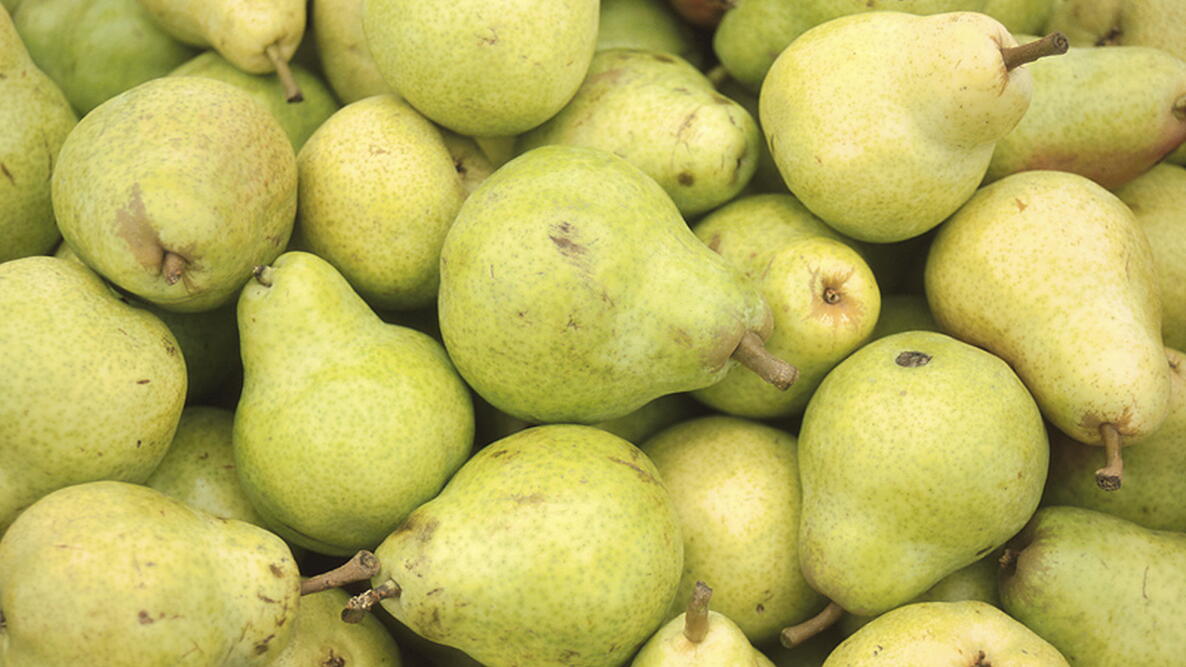
- ‘Bartlett’, which is the standard choice for pear trees. This tree type is average-size and produces medium to large fruits. These pears ripen to a yellow color. However, this variety is very vulnerable to fire blight.
- ‘Kieffer’, which is resistant to fire blight. This type produces medium fruit and can be used in canning.
- ‘Anjou’, which produces light-green fruit with a sweet flavor. This type is a good choice for late-blooming pears. Good for canning and fresh use. This type can store for up to 6 months with little loss in quality.

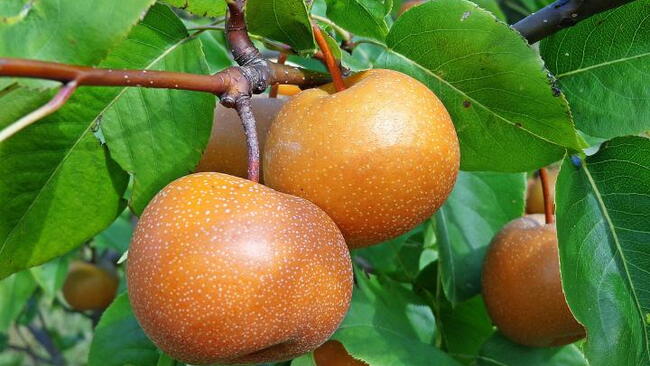

We suspect that raccoons (and maybe squirrels) got to your pears. Raccoons are known to strip a pear tree and leave no trace. They always get the pears before they are fully ripe.
Hi, Melissa: Generally, pears are best picked when slightly soft to the touch, but this can depend on a number of factors. Falling pears are usually ripe, so consider putting some netting or even a (covered) hammock under a tree to save some work (and damage). And if you get to them quickly enough, there's certainly nothing wrong with fallen pears as far as eating goes. We used to play out in some woods that had overgrown an old orchard from a War of 1812 army encampment, and nothing beat dropped pears for a boyhood snack! Thanks for asking!
Check that you are not giving the trees (or lawn surrounding them) too much fertilizer, which will encourage leaf growth over flowering, and also encourages fire blight. Also check that you are pruning correctly. Examine each plant for stresses, such as disease.
If you live in the deep south, it may also be that the trees are not getting enough chilling hours (below 45F). Ayers is hardy in Zones 6 to 8, and requires about 350 to 600 chilling hours (sources vary). Bartlett is hardy in Zones 5 to 8, and requires about 800 chilling hours.
Hi Ginny,
The tree may not have much room for the roots to spread if you plant it 4 feet from the house. The soil is also more compacted near a foundation and it will be harder for the roots to develop. We suggest that you find a spot further away from the house.
Hi Dianne,
Prune pear trees annually in the early spring, before the new growth begins. Pruning results in a bigger crop. Remove dead branches and limbs and then top off the main trunk and any smaller branches. Also thin branches to increase sunlight and air circulation. This will help the overall health of the trees.
Apply a small amount of fertilizer early in the year. Add ⅛ pound of ammonium nitrate per tree multiplied by the number of years the tree has been growing in moderately fertile soil.
To get bigger pears you need to thin the fruit when it first appears. Leave about 6 inches between the remaining pears.
- « Previous
- 1
- 2
- …
- 10
- Next »

Comments