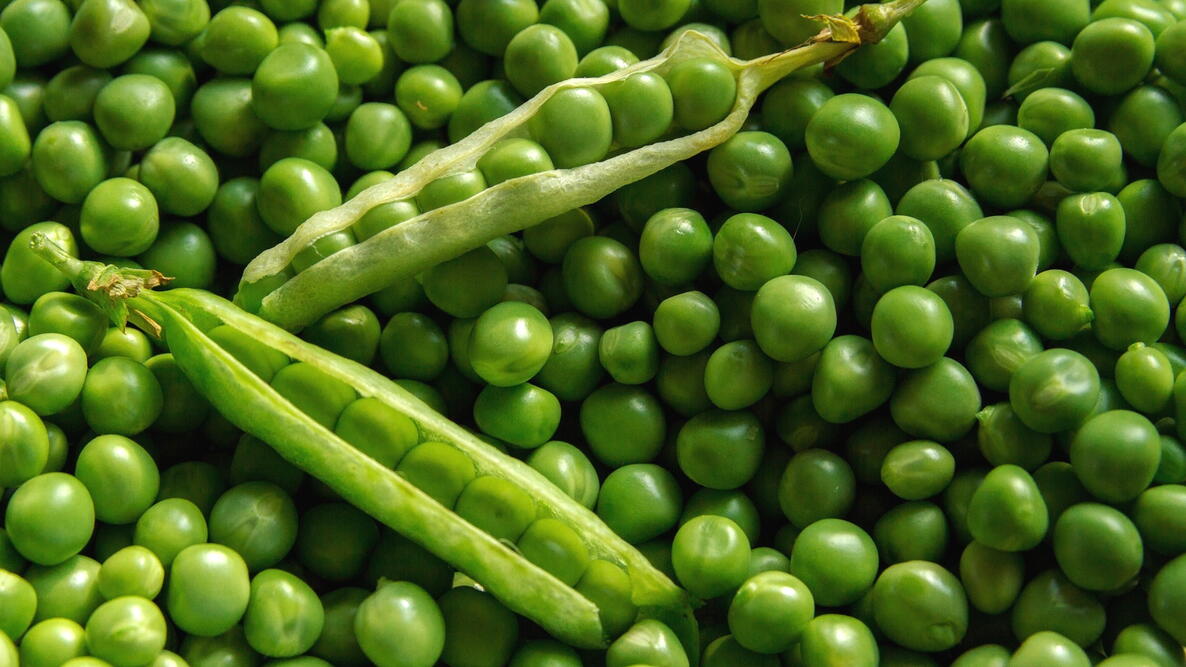
Planting
Where to Plant Peas
Select a sunny location and well-draining soil. Although peas can grow in part shade, they won’t be as sweet or productive as those grown in full sun. Prepare the soil, preferably in the fall, mixing in aged manure and/or compost, and mulch well—peas like well-draining soil.
When to Plant Peas
- Sow seeds 4 to 6 weeks before the last spring frost date when the soil is cool or when it is at the desired temperature. Peas planted in cold (40°F) soil will germinate slowly; peas planted in soil that is at least 60°F (but not more than 85°F) will catch up.
- Snow will not hurt emerging pea plants, but several days with temperatures in the teens might. Be prepared to plant again if the first peas don’t make it. Alternatively, try starting your peas in a cold frame.
- A second round of peas can be planted in the late summer or early fall, approximately 6 to 8 weeks before your first fall frost date.
Here are some more tips on when to start planting peas.
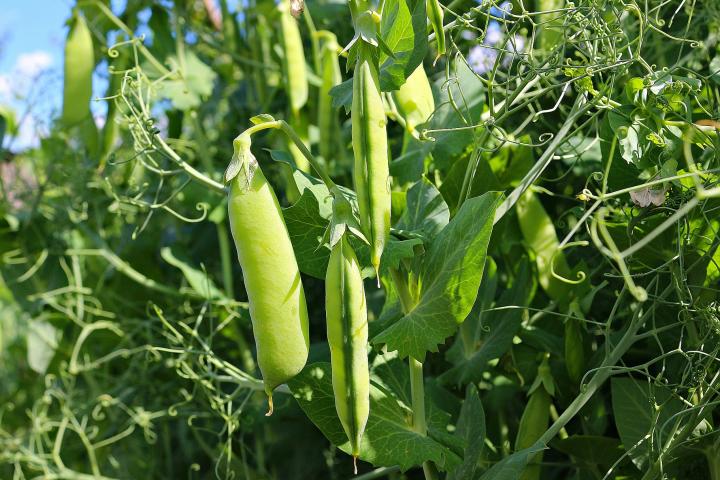
How to Plant Peas
- Peas are best direct-seeded right in the ground and do not like their roots disturbed. But transplanting is possible if you start seeds in biodegradable pots; you’ll transplant the pot and all into the garden, and the pot will disintegrate.
- Where spring is long and wet, plant seeds in raised garden beds.
- To speed germination, soak seeds in water overnight before planting.
- Sow seeds 1 inch deep (slightly deeper if the soil is dry) and about 2 inches apart. Do not thin.
- Plant rows 7 inches apart.
- Regarding crop rotation, do not plant peas in the same place more than once every four years.
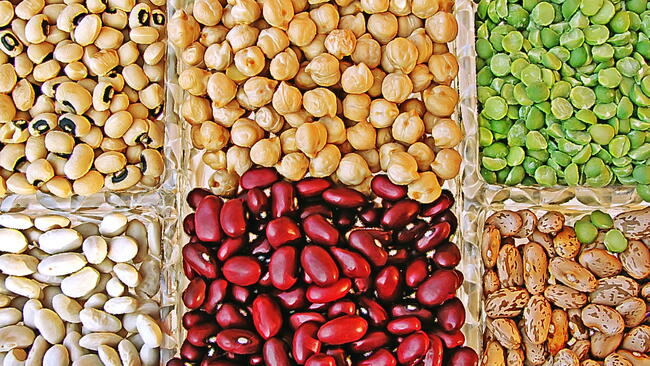
- Like those of other legumes, pea roots fix nitrogen in the soil, making it available for other plants.
- In terms of fertilizer, peas need phosphorus and potassium, but excess nitrogen will encourage foliage growth instead of flowers or pods. Learn more about soil amendments.
- Bush peas can reach 18 to 30 inches tall. Pole types can grow at least 4 to 6 feet tall. Both types benefit from support (especially bush peas above 2 feet and all pole peas). Install thin tree branches or twiggy sticks (pea sticks), trellises, chicken wire, strings, or netting before plants establish their shallow roots. See instructions on how to build trellises and supports for peas.
- Water to keep the soil moist. If seeds wash out of the soil, poke them back into it.
Peas on St. Patrick’s Day
It’s an old American tradition to plant peas on St. Patrick’s Day! Our retired editor, Janice, shows us her trick on how to plant peas in early spring if there’s snow!
St. Patrick’s Day (March 17) is the traditional day for planting peas, one of the easiest plants to grow. It’s said to bring luck come harvest time. And it makes sense: Soil is typically thawed and workable, and these veggies prefer to get started in chilly spring weather.
Great planting companions for peas include: chives, mint, alyssum, carrot, corn, cucumber, radish, turnip, and beans. Learn more about Companion Planting.
Harvesting
How Do You Know When Peas Are Ready to Be Picked?
Most varieties of peas are ready to harvest 60 to 70 days after planting. Peas mature quickly, so check daily once you see the flowers in bloom.
- Pick snow peas when the delicate pods begin to show immature seeds inside.
- Gather snap peas when the pods become plump yet are still glossy and filled with sweet-tasting peas.
- Pick shell peas before the pods become waxy.
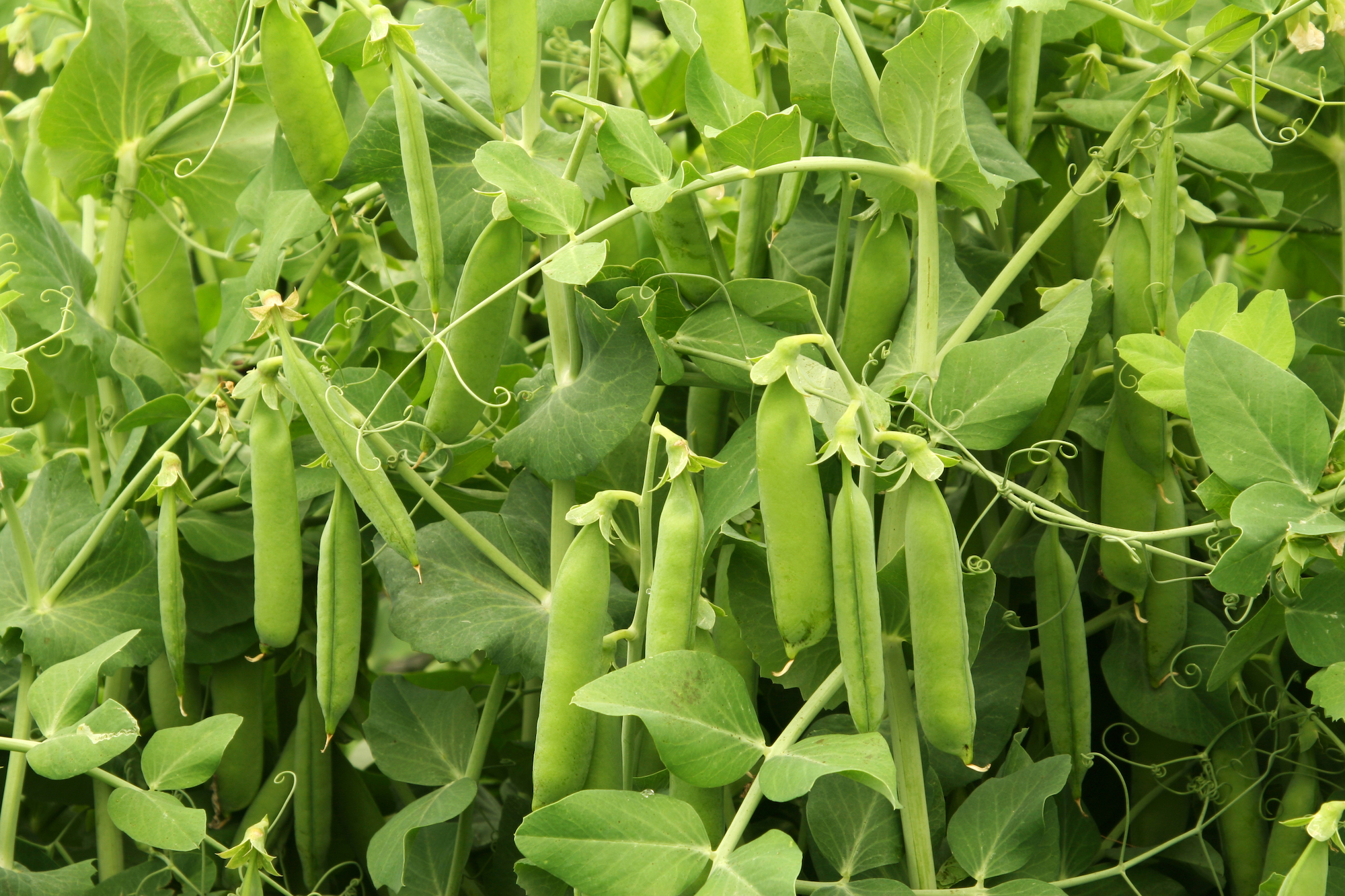
How to Harvest Peas
- Harvest peas in the morning after the dew has dried; they are crispiest then.
- Harvest regularly to encourage more pods to develop.
- Use two hands when you pick peas to avoid damaging the plant. Hold the vine with one hand and pull the pods off with the other.
- Peas are at the peak of flavor immediately after harvest.
- Pea pods that have hardened or turned a dull color are overmature. Mature plants usually stop producing and die back in hot summer weather.
- If you missed your peas’ peak period, you can still pick, dry, and shell them for use in winter soups.

How to Store Peas
- Store peas in the refrigerator for about 5 days. Place in paper bags, then wrap in plastic.
- Or, freeze peas: Shell sweet peas, blanch, immerse in cold water, drain, and pack in sealed containers.
- De-string/trim snow or snap peas and prepare as above.
Types
Three varieties of peas suit most garden and culinary needs:
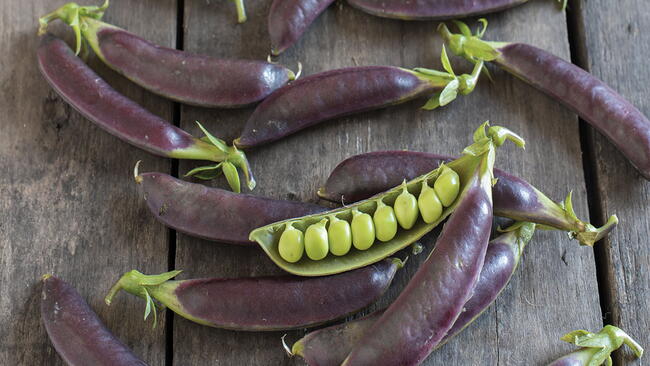
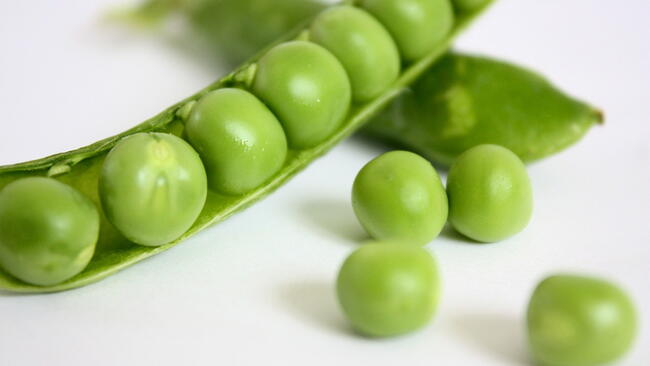
- Sweet peas, aka garden peas or English peas (Pisum sativum ssp. sativum), have inedible pods from which the seeds (peas) are taken.
- Snow peas (P. sativum var. macrocarpon) produce edible, flat, stringless pods containing small peas.
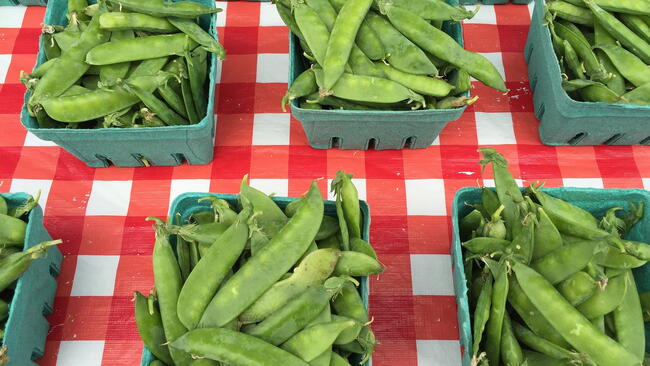
- Snap peas (P. sativum var. macrocarpon ser. cv.) produce thick, edible pods containing large/full-size peas.
Shelling Peas
Also known as garden or sweet peas, these are the most common types of peas available. Some good varieties to try include:
- ‘Green Arrow’: 2- to 3-foot vines; no support required; high yields; tolerant of mildew and fusarium wilt
- ‘Lincoln’: 2- to 3-foot vines; no support required; tolerant of mildew and fusarium wilt
- The classic ‘Wando’: suitable for freezing
- ‘Thomas Laxton’: high sugar content
- ‘Progress No. 9’: good disease resistance
- ‘Little Marvel’: grows only 15 inches tall
Snap Peas
You eat the entire tender pod of snap peas. Some good varieties to try are:
- ‘Sugar Ann’: vines grow only 2 feet tall, no support required
- ‘Sugar Snap’: the original (Calvin’s), just brought back; carried only by Johnny’s Selected Seeds
- ‘Early Snap’: an early-maturing version produces peas 10 to 14 days earlier than ‘Sugar Snap’
- ‘Super Sugar Mel’: produces 4-inch-long, very sweet pods
Snow Peas
Common in Chinese cooking, these flat-podded peas have edible pods. Some good varieties to try include:
- ‘Mammoth Melting Sugar’: 4- to 5-foot vines; stringless pods; wilt tolerant
- ‘Oregon Sugar Pod II’: grows only 2 1/2 feet tall
- ‘Snowbird’: resistant to fusarium wilt

More Like This

If you plan to save seed from your spring crop of (open-pollinated) peas, you can leave the peas on the plant until they dry and rattle in the pod, then harvest (before pods open). Set the pods out on a tray indoors to dry 2 more weeks, then remove the peas from their shells, place in an envelope, label and date, place the envelope in a glass jar, along with a tiny cloth bag or tissue filled with a little powdered milk to absorb moisture, and seal tightly. Store in a cool, dry place, such as the refrigerator.
Hi, Rusty,
Certainly if a freeze is expected, cover the peas. If temps stay below freezing for very long (hard to say exexactly what that means, but more than a passing overnight), you might lose the plants. Similarly, the plants can take a little snow . . . but clear it off and away from them as soon as you can. Overall, think of this as an experiment and take what you get. Remember, too, that we here in New Hampshire are envious of your even trying to grow this time of year.
- « Previous
- 1
- 2
- …
- 10
- Next »

Comments