
More Like This


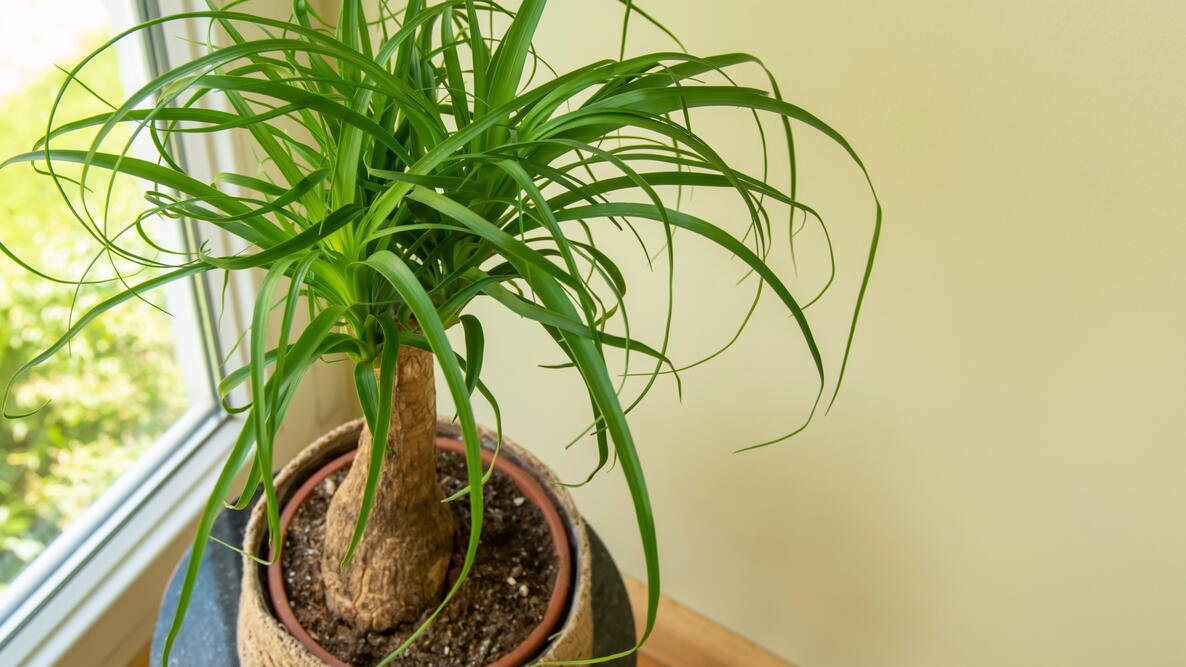
It would be a bad idea to remove the main stem of a ponytail palm, but occasionally, adult plants will produce "babies" or "pups," which are small offshoots stemming from the base of the plant. These can be removed and grown into new plants with the right care. When they're at least 4 inches tall, the pups can be cut from the mother plant and replanted. When you make the cut, make sure you use a sterile knife, and dust the pup's cut wound with rooting hormone if possible. Then, place it in slightly moistened soil (a succulent mix, ideally) and wait. Do not overwater.
It does sound like your ponytail palm has suffered from a freeze, unfortunately. It's really a toss up as to whether it will be able to recover or not, but what you can do it to try to keep it in a warmer place for the remainder of the season and be careful not to overwater it. The brown leaves are dead and can be cut off. It's possible that new leaves will grow in the spring.
While we can't give an exact amount because it depends on the size of your pot and the amount of soil in it, the rule of thumb for watering is to "water deeply, but infrequently." This means that you should water until the water starts to come out of the pot's drainage holes. If the soil is particularly dry or porous, let the pot sit in any water that comes out of the bottom for a little while so that the soil can soak up the water that went straight through. Once you've allowed the pot to sit in the excess water for 10 or so minutes, dump out the dish of excess water.
Ponytail palms require consistently warm temperatures and low moisture. In the US, they can survive outdoors in Zones 9 and warmer, but only where it's also quite dry, such as in the Southwest. We imagine it would get too humid and wet in Mississippi for a ponytail palm to thrive, so it would probably be best to keep yours potted. Consult a nearby Cooperative Extension service for local advice.
- « Previous
- 1
- 2
- …
- 10
- Next »

Comments