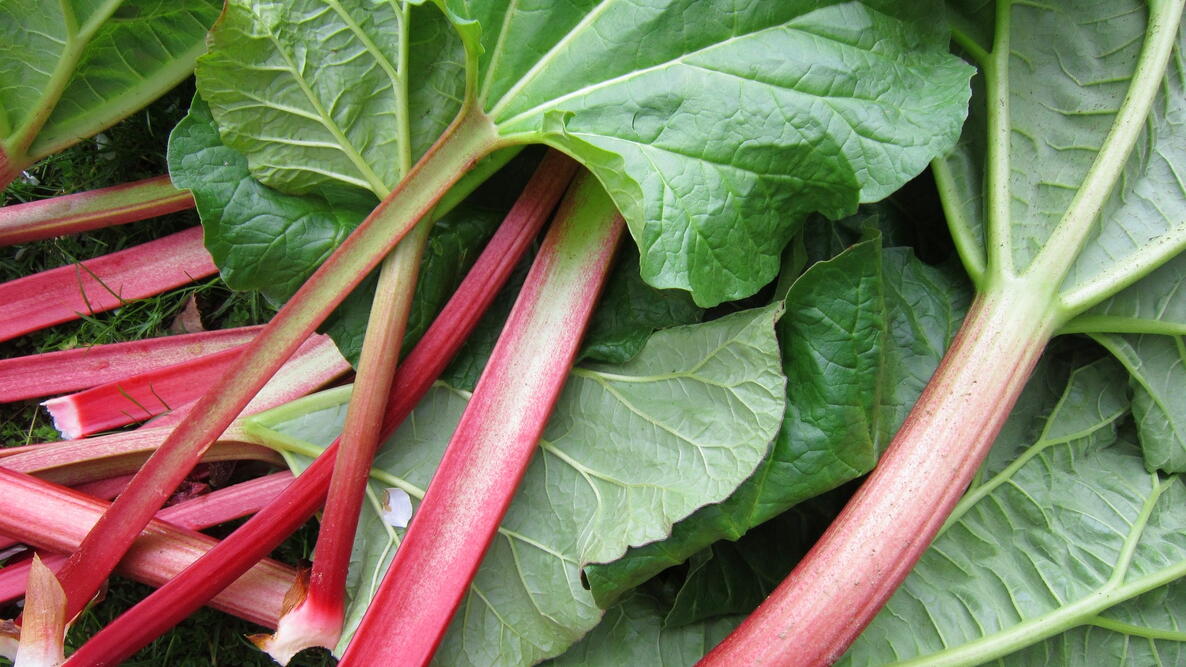
Planting
When to Plant Rhubarb
- Rhubarb can be planted in late fall or early spring.
- Plant rhubarb crowns after dormancy has set in in the fall, and you’ll have rhubarb cropping in the spring!
- In spring, plant crowns when the soil is workable, when the roots are still dormant, and before growth begins (or as plants are just beginning to leaf out). If you have a temperature gauge, soil temperature should be 50°F minimum.

Where to Plant Rhubarb
Rhubarb grows best in full sun but will tolerate partial shade.
Choose a site with soil that is well-draining and fertile. Good drainage is essential, as rhubarb will rot if kept too wet. Mix compost, rotted manure, or anything high in organic matter into the soil. Rhubarb plants are heavy feeders and need this organic matter. Learn more about soil amendments and preparing soil for planting.
Rhubarb gets big! It can grow to 2 to 3 feet tall and wide. Make sure you choose a site where it won’t be crowded.
How to Plant Rhubarb
- Plant 1-year-old rhubarb crowns, which you can find at a garden center or nursery, or order online. Plants will be sold as bare-rooted specimens or young plants already growing in pots, ready for transplanting. (Rhubarb can be grown from seed, but this is not recommended.)
- Before planting, eliminate all perennial weeds in the planting site.
- Dig large, bushel-basket-size holes.
- Space rhubarb plants about 2 to 4 feet apart and 3 to 4 feet between rows.
- Plant crowns so the eyes are about 2 inches below the soil surface with buds facing up.
- Water well at the time of planting.
Check out this video to learn more about how to plant rhubarb:
Growing
Overcrowding is a common problem with rhubarb and can lead to subpar growth. Dig and split rhubarb roots every 3 to 4 years. Divide when plants are dormant in early spring (or late fall). Divisions should have at least one large bud on them.
- Mulch generously with a heavy layer of straw to retain moisture and discourage weeds.
- Water your plant well and consistently. Rhubarb needs sufficient moisture, especially during the hot, dry summer days.
- Remove seed stalks as soon as they appear, as they will only drain energy from the plant that could be used to produce stalks or roots.
- Each spring, apply a light sprinkling of fertilizer (10-10-10) when the ground is thawing or has just thawed. See your local frost dates.
- In the fall, remove all plant debris. Once your ground freezes, it’s best to cover rhubarb with 2 to 4 inches of organic mulch, preferably well-rotted compost. By adding nitrogen to the soil, you’re preparing the rhubarb plants for a good spring season.

Types
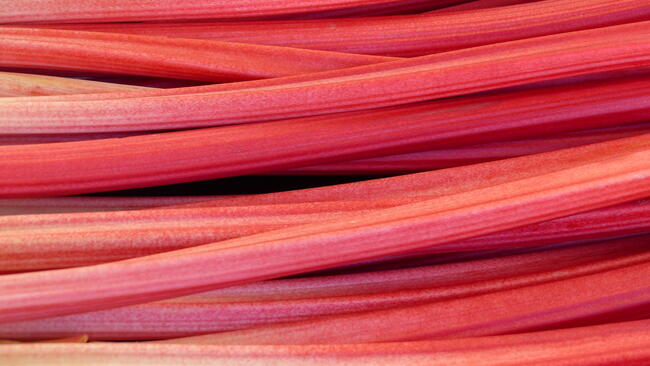
These common varieties have attractive red stalks and excellent growers:
- ‘Canada Red’
- ‘Crimson Red’
- ‘MacDonald’
- ‘Valentine’
In addition to the previous four, there is a reliable, green-stalked cultivar named:
- ‘Victoria’


Comments

You can definitely move the plants for a harvest next year, but rhubarb doesn't grow well in the shade so you will not likely have a good crop this year.
Sounds like you hit the jackpot! If you have nice strong (celery-size) stalks, it's ready to eat—but not the leaves; they are poisonous. Twist off the stalks at the root or use a knife to slice them off. Take as many as you like/need; it should continue to produce for a few weeks. Leave the smaller stalks...they'll get bigger. Enjoy!
Is this an established plant, that had been producing fine but then started to be spindly? If so, it could be that the plant is now overcrowded--sometimes the crown needs dividing every 5 to 15 years, ideally in late winter/early spring or in fall when the plant is dormant. Or, if this is a new plant, does it have enough nutrients to establish itself? Avoid harvesting the first year, and only harvest lightly the second. After those years, only remove 1/3 to 1/2 of the plant, so that there are enough stalks remaining so that the leaves can make food for the plant to keep it healthy. Another problem that sometimes occurs is when the plant is set too deep (more than 1 or 2 inches), sometimes causing weak or delayed growth. You might also check for insects and disease, such as crown rot. Be sure that the plant has enough water (but soil is not waterlogged); if it is growing in part shade, the stems will be more spindly. Hope this helps!
- « Previous
- 1
- 2
- …
- 10
- Next »

Hi, Candy. Some varieties of rhubarb are more prone to producing flowers than others. Do not worry about that. The holes, those you should worry about. If the holes are ragged and fairly big, check for a trail of slime–as slugs sometimes like to eat rhubarb leaves. Tiny to moderate holes in the leaves could be beetles, such as the Japanese beetle. Caterpillars, such as the European corn borer and imported cabbageworm, may sometimes attack leaves or stalks. Other pests, such as aphids or rhubarb curculio, make punctures rather than chewing holes. Look underneath the leaves, and at the base of plants in the soil, for any lurking pest. To learn about garden pests and diseases, check out this page.