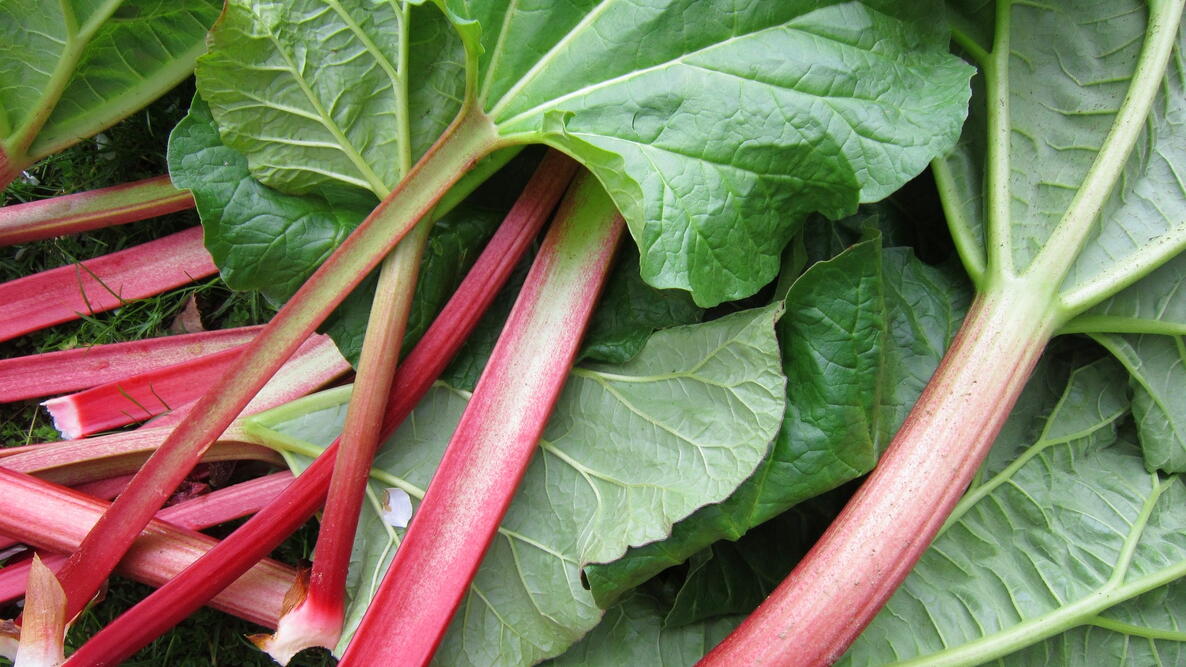
Planting
When to Plant Rhubarb
- Rhubarb can be planted in late fall or early spring.
- Plant rhubarb crowns after dormancy has set in in the fall, and you’ll have rhubarb cropping in the spring!
- In spring, plant crowns when the soil is workable, when the roots are still dormant, and before growth begins (or as plants are just beginning to leaf out). If you have a temperature gauge, soil temperature should be 50°F minimum.

Where to Plant Rhubarb
Rhubarb grows best in full sun but will tolerate partial shade.
Choose a site with soil that is well-draining and fertile. Good drainage is essential, as rhubarb will rot if kept too wet. Mix compost, rotted manure, or anything high in organic matter into the soil. Rhubarb plants are heavy feeders and need this organic matter. Learn more about soil amendments and preparing soil for planting.
Rhubarb gets big! It can grow to 2 to 3 feet tall and wide. Make sure you choose a site where it won’t be crowded.
How to Plant Rhubarb
- Plant 1-year-old rhubarb crowns, which you can find at a garden center or nursery, or order online. Plants will be sold as bare-rooted specimens or young plants already growing in pots, ready for transplanting. (Rhubarb can be grown from seed, but this is not recommended.)
- Before planting, eliminate all perennial weeds in the planting site.
- Dig large, bushel-basket-size holes.
- Space rhubarb plants about 2 to 4 feet apart and 3 to 4 feet between rows.
- Plant crowns so the eyes are about 2 inches below the soil surface with buds facing up.
- Water well at the time of planting.
Check out this video to learn more about how to plant rhubarb:
Growing
Overcrowding is a common problem with rhubarb and can lead to subpar growth. Dig and split rhubarb roots every 3 to 4 years. Divide when plants are dormant in early spring (or late fall). Divisions should have at least one large bud on them.
- Mulch generously with a heavy layer of straw to retain moisture and discourage weeds.
- Water your plant well and consistently. Rhubarb needs sufficient moisture, especially during the hot, dry summer days.
- Remove seed stalks as soon as they appear, as they will only drain energy from the plant that could be used to produce stalks or roots.
- Each spring, apply a light sprinkling of fertilizer (10-10-10) when the ground is thawing or has just thawed. See your local frost dates.
- In the fall, remove all plant debris. Once your ground freezes, it’s best to cover rhubarb with 2 to 4 inches of organic mulch, preferably well-rotted compost. By adding nitrogen to the soil, you’re preparing the rhubarb plants for a good spring season.

Types
These common varieties have attractive red stalks and excellent growers:
- ‘Canada Red’
- ‘Crimson Red’
- ‘MacDonald’
- ‘Valentine’
In addition to the previous four, there is a reliable, green-stalked cultivar named:
- ‘Victoria’

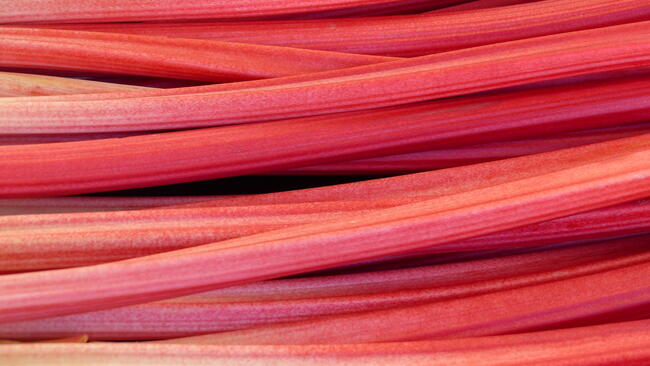


Spongy rhubarb stalks might be caused by a few things. Not enough water, stalks past harvest stage, freeze damage, or perhaps a disease. If the leaves are wilting or blackening, and you've had a freeze, then you should not harvest those soft, mushy or spongy stalks, as there is a possibility that they are not safe to eat; discard them and wait for new ones to appear.
Rhubarb with short spindly stalks can be caused by several things. Some varieties naturally produce thinner stalks than others. Also, young plants will be spindly--it may take a few years for them to produce robust stems. Every 4 to 5 years, some plants may get crowded and need dividing, as their stalks may get short spindly; use a spade to separate the crown so that each piece has a good section of root and a portion of crown with at least 2 to 3 buds; be sure not to injure the crown. Also, its best to prune out any flowering stalk before it blooms, as this expends the plant's energy and may cause weaker stalk growth. Harvesting too many stalks will also weaken the plant, so that next year will produce spindly stalks; only harvest 1/3 to 1/2 of the plant's stalks each year (do not harvest any the first year, and harvest lightly the second year). Certain viruses may cause stunted growth. Make sure that the plant has lots of organic matter--as it is a vigorous feeder; not enough and it will produce weak growth. Hope this helps!
Leave the leaves on the plants and plant them in the ground as soon as possible before the soil freezes. Add some compost or aged manure to the soil when transplanting and water well. The rhubarb needs to be outside in the cold during the winter months to trigger spring growth.
- « Previous
- 1
- 2
- …
- 10
- Next »

Comments